


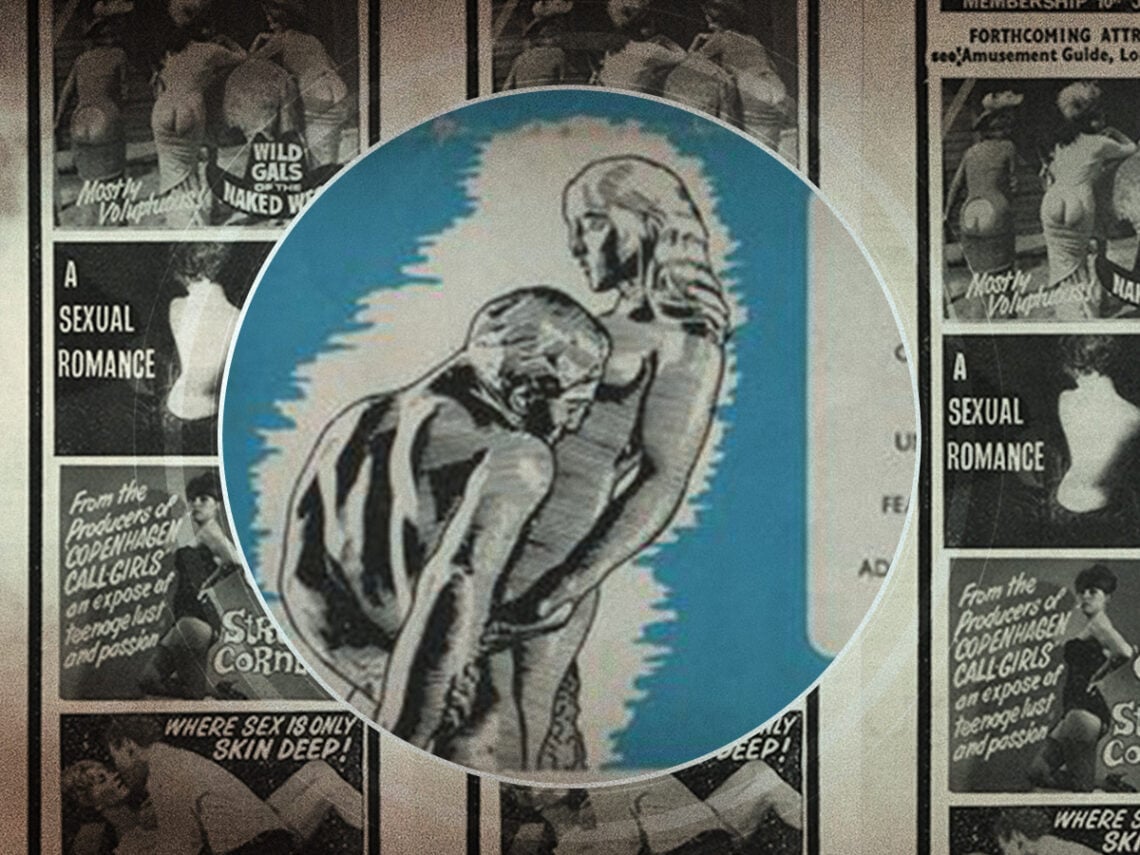
Compton Cinema Club: the London film society that specialised in uncensored, illicit, and banned movies

If you want to pay homage to the exciting world of cinema today, you also have to acknowledge the scandalous picture houses of the past and the fact that many of them were, in reality, porn cinemas.
Or at least, a good amount of them were. You can clutch your pearls all you want, but it is a fact that modern movie theatres would be nothing like what they are today without the pioneering done by nickel houses – the first indoor venues showing movies, but especially the kind of movies you definitely wouldn’t take your kids to.
These establishments changed the game. Before them, going to the movies was largely an activity for the wealthy. It was closer to going to the theatre, with strict expectations around dress and behaviour, while audiences sat through propaganda films, stiff romances or historical epics. But people’s appetite for something more scandalous quickly emerged, and before long, certain cinemas were finding ways around censorship laws to screen more provocative films.
Some of that was obviously blue movies, but these venues played a major role in even allowing things like horror flicks to be shown on big screens. In the grand history of cinema, it’s venues like these that took the slack and dealt with the shutdowns and lawsuits that opened the industry up, leading to things like age ratings, which shut up a good amount of the deafening chorus that was always there to threaten a good, but more wild or extreme, movie.
In London, Compton Cinema Club was at the forefront. Sitting on Old Compton Street, in the heart of Soho, back when Soho was the city’s red light district of bustling nightlife and questionable characters, and not so many £25 cocktails, the venue branded itself as ‘London’s only luxury cinema club’.
But really, what it was was a front for a group of people keen to bring ‘continental’ movies into the comfort of a cinema, and into the energy of Soho. In 1960, it opened with a bang by screening the banned movie, Private Property, giving the American picture its British premiere despite the attempt to squash it.
Compton had figured out a loophole, though. Private Property was an apt first screening as they realised if they treated their business as such, and only let in members, they could really show what they wanted. Compton members had to pay and join up at least an hour before their screening, treating the venue as a cinema club where the only people allowed in were club members. That way, the law couldn’t interfere with what went on behind the closed, private doors.
 The iconic John Waters movie prop that was sold on eBay: “I couldn’t stand to have it in my house”
 Alan Parker once claimed he’d leave the country if Peter Greenaway made another movie: “A load of posturing poo-poo”
 “It seemed they didn’t want me”: the movie role Ernie Hudson was banned from playing on TV
The money from membership also allowed the label of luxury to be realised. The cinema didn’t just have a nice screening room, but had a bar, plush velvety interiors and a programme of landmark films from around the world.
However, every now and then, there was trouble. In 1977, when they tried to screen Salò, or the 120 Days of Sodom, they got a view showings in before getting threatened with legal action thanks to obscenity laws and the film’s uncensored sex scenes. Despite the cinema’s smart thinking, it would still take a while for the authorities to stop being quite so stressed about what was showing on cinema screens.
