


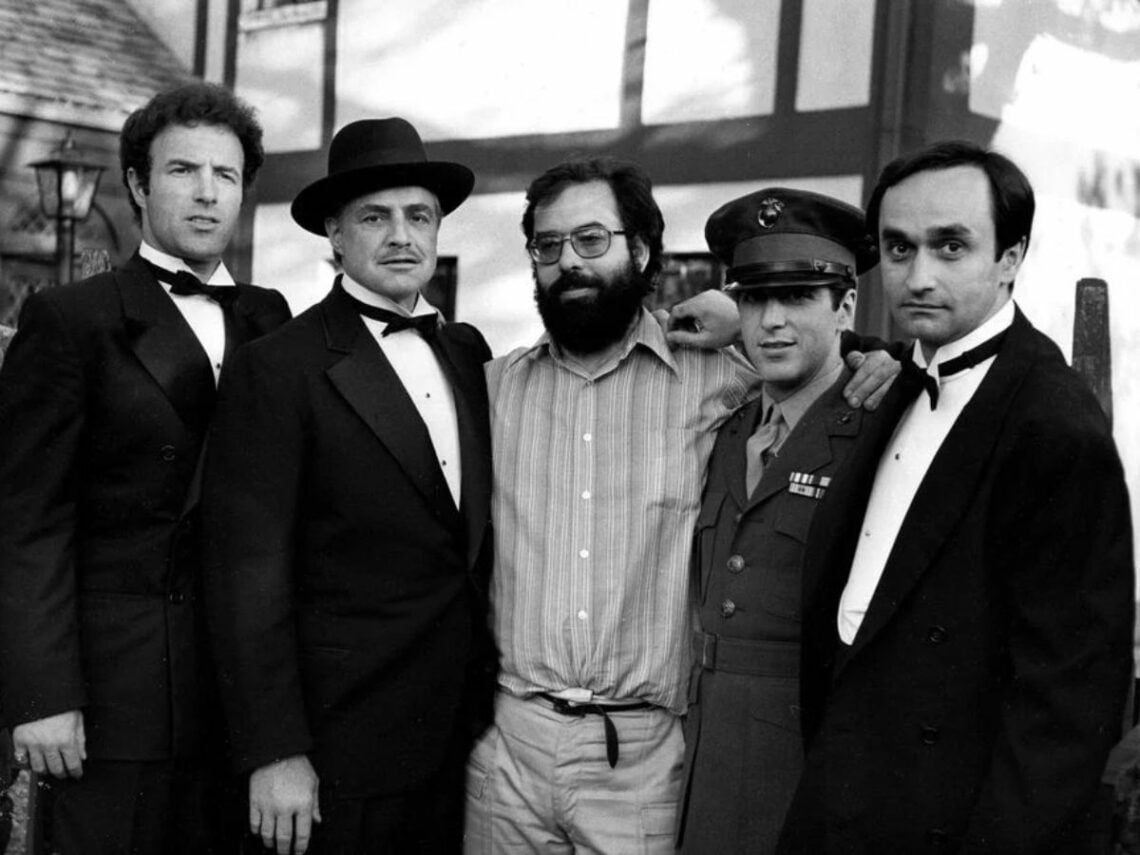
‘The Godfather’: the classic movie Francis Ford Coppola called a “horrible experience”

There is no disputing that Francis Ford Coppola is one of Hollywood’s most influential figures. After directing a few successful feature films, such as Finian’s Rainbow and The Rain People, Coppola gained recognition for co-writing Franklin J. Schaffner’s Patton, winning him an Academy Award for ‘Best Original Screenplay’.
However, when he released The Godfather in 1972, Coppola became one of the industry’s most well-respected filmmakers. The epic crime drama is a cornerstone of the gangster genre, which Coppola utterly reimagined with complexity and nuance. Subsequently, Coppola inspired a whole wave of filmmakers to experiment with the genre, resulting in later films such as Martin Scorsese’s Goodfellas.
When The Godfather was released in 1972, it became the highest-grossing film of the year, receiving a staggering amount of critical praise. Its success led to the creation of two sequels, with many fans believing The Godfather Part II to be superior to its predecessor. Yet, despite the mammoth success of The Godfather, Coppola found production incredibly difficult, going as far as to dub it a “horrible experience”. Filming didn’t get off to the best start, with Coppola telling Cigar Aficionado that Paramount “were convinced that this was the worst picture ever made, that I’m the worst director ever. They hated it”.
During shooting, the filmmaker discovered he was potentially getting fired and replaced by Elia Kazan. He explained, “I had a group in my own movie that was conspiring to get rid of me. My own friends! They figured I was lost.”
“So I took a real chance. I went in—and I knew who all the conspirators were; there were about 16 of them—I fired them all on Wednesday,” Coppola continued.
However, the director faced further issues while filming, such as scenes almost failing to be shot because of time restraints. “In the movies, if you don’t break at the right time for lunch, all the crew gets a fine,” he explained. “So, if you miss the break, it could cost like $10,000. They were there ready with the stopwatch.”
Coppola clarified: “Making the movie was like that. I hated it. I hated it, I wanted to be done with it. It was the most miserable time of my life.” Despite the stress of filming and the pressure placed on him by Paramount, Coppola had a few guiding lights to keep him going. “I had a cast of my friends who remained a really tight little group that supported me. Even though I had all this pressure from without, and nobody liked what we were doing, I had these wonderful actors who were on my side. And I had this concept from Mario Puzo’s wonderful book. That’s what guided us, too.”
He continued: “But I had no idea, until the movie was long finished, what had happened. The struggles went on right through the editing. They pulled the music out and said how they hated the music, or how they told me to take a half an hour out, or they were gonna fire me, and that when I took the half hour out, they said, ‘You ruined the picture.’ Or they said, ‘We ordered a movie, and you brought us a trailer,’ so they put the half hour back in, and then they said, ‘Look how brilliant we are, we put that in.'”
Coppola does not reflect on his time shooting the film fondly: “To me, it was just a horrible experience. I hated it. I still hate the memory of it. I didn’t even know the picture was any good until a friend of mine that I called to give me some advice looked at it and said, ‘This is terrific.'”
Despite everything, Coppola’s determination paid off, and he is now regarded as one of the most vital directors of all time. The landscape of cinema was entirely changed by The Godfather, with many of the greatest films owing their debts to Coppola’s epic mafia tale.
