


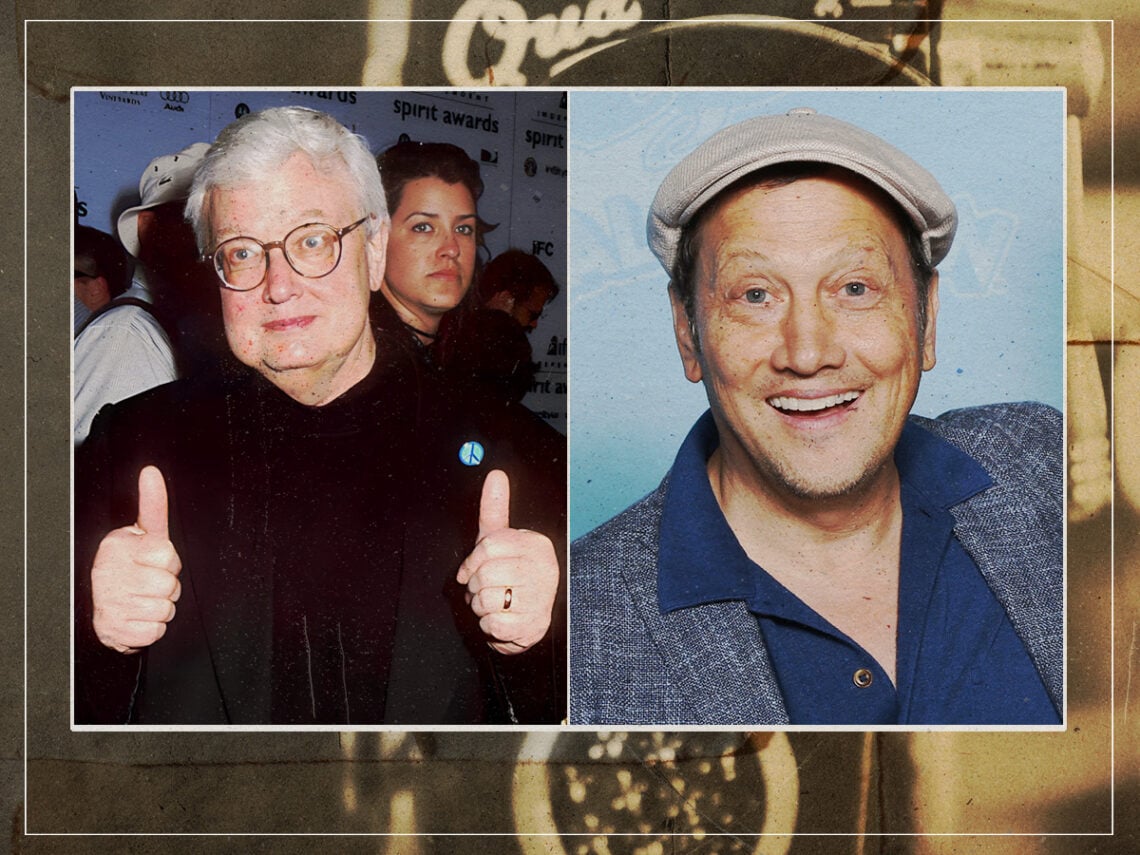
The feud between Roger Ebert and Rob Schneider: “Your movie sucks”

Roger Ebert is one of the most influential film critics of all time, known for his undeniable way with words that showcased an unwavering passion for cinema. Ebert’s stamp of approval had the power to elevate or bruise the career of any filmmaker, with an audience that reached cinephiles, creatives and casual cinema-goers alike. With a fairly ruthless approach to his writing, it’s safe to say that he wasn’t always on good terms with the people he criticised, with one incident in 2005 leading to a long feud between himself and Rob Schneider.
Perhaps most well-known for his work on Saturday Night Live, Schneider turned his hand to filmmaking when he starred in comedies Hot Chick, Grown Ups and Click, working with Adam Sandler on a long list of (debatably questionable) films during the 1990s and early 2000s. However, he mostly had supporting roles in these films, and his first solo feature came around with Deuce Bigalow: Male Gigolo, a film about an aquarium cleaner who accidentally destroys a gigolo’s house and finds himself in need of money to repair the damage, becoming a gigolo himself. From the moment the film was released, it was met with rightfully harsh criticism, with critics and tabloids lamenting about the state of mainstream cinema and critics such as Patrick Goldstein commenting on the crumbling studio system and the film’s bad-quality jokes.
Unsurprisingly, Schneider was made aware of these comments, and when the actor publicly responded to them, Ebert jumped into the ring to defend his fellow critic. His following comments led to some bitterness between himself and Schneider.
After watching Deuce Bigalow: American Gigolo himself, Ebert published a zero-star review of the film, describing it as “aggressively bad, as if it wants to cause suffering to the audience. The best thing about it is that it runs for only 75 minutes”. After this, he then directly addressed Schneider’s poor response to Goldstein’s review and petty bickering after the actor had questioned the validity of the critic’s response due to the fact that he hadn’t won a Pulitzer prize.
Ebert responded to this in his review by saying, “As chance would have it, I have won the Pulitzer Prize, and so I am qualified. Speaking in my official capacity as a Pulitzer Prize winner, Mr. Schneider, your movie sucks”. Interestingly enough, Ebert’s 2007 book Your Movie Sucks was inspired by this damning statement, a compilation of his most scathing reviews.
Despite the public back-and-forth and wave of creative insults, the pair found a peaceful equilibrium in 2007 after Ebert’s cancer diagnosis. The critic revealed that he had received a touching level of support and well wishes, with flowers being sent to him from Schneider himself, along with a note wishing him a speedy recovery signed ‘his least favourite movie star’.
This gesture moved Ebert, and later revisited his controversial 2005 film, offering a written truce in which he referred to the flowers sent by Schneider and said they “were a reminder, if I needed one, that although Rob Schneider might (in my opinion) have made a bad movie, he is not a bad man, and no doubt tried to make a wonderful movie, and hopes to again. I hope so, too.”
The act of sharing anything creative is very vulnerable, and as Ebert said, no one sets out to make a bad film. Whilst the relationship between the artist and critic can be tumultuous, Ebert and Schneider show us that it ultimately exists to bring out the best in a piece of work, and despite the occasional personal attack, it never is that personal.
