


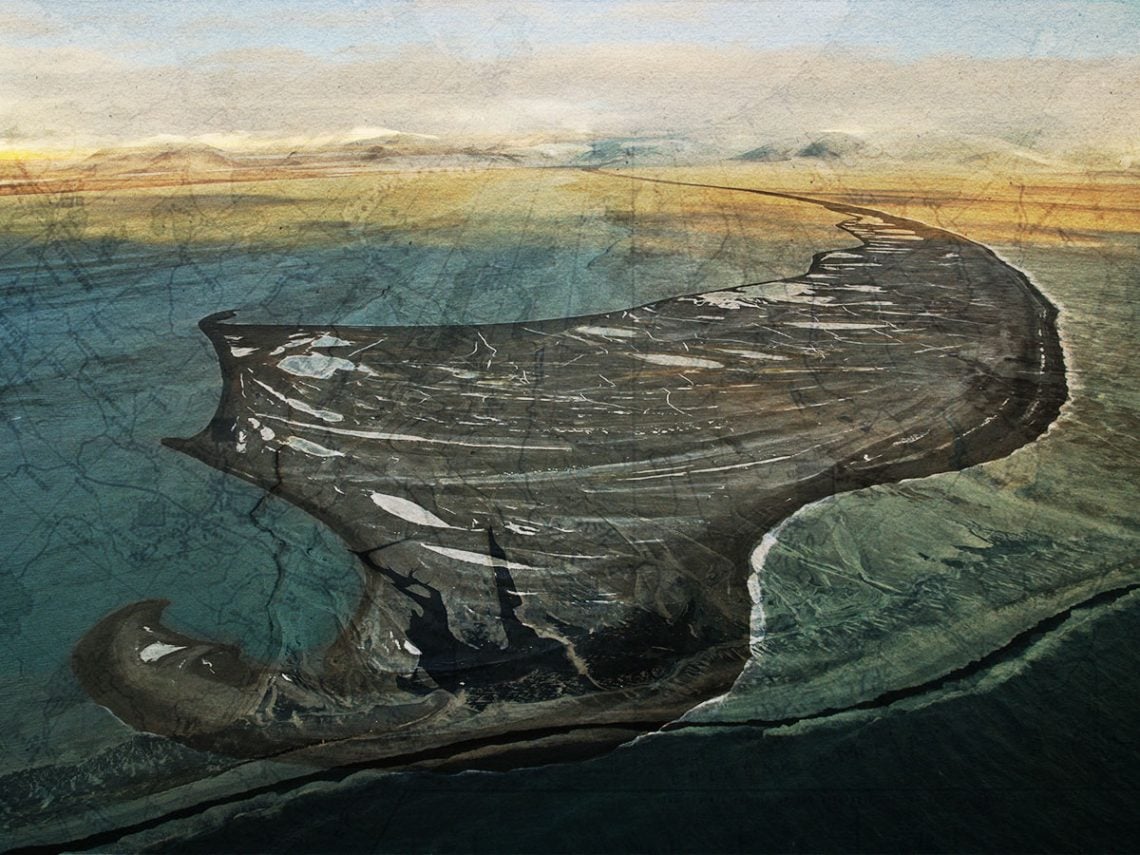
Frozen in time: Exploring Wrangel Island, home of the last mammoth

For centuries, Wrangel Island was little more than a legend. The Chukchi people of Siberia spoke of a realm locked behind walls of snow and ice, a lost continent where the Krachaians ( or Krahays) had fled long ago. Every year, they would watch the reindeer make their annual migration across the ice towards a fog-clad land just beyond their reach, and every year, they would tell stories of what it might hold within its shores.
Countless Arctic explorers risked their lives trying to occupy this remote and hostile land, including its namesake, Ferdinand Wrangel, who came within 50 miles of its shores before making his retreat back to the Russian mainland. The sea ice was much thicker and far more expansive back then, and the frequent stormy weather did much to conceal the island from view.
40 years after Wrangel’s failed expedition, The USRC Corwin made the first successful landing on Wrangel Island. What the crew discovered was a land frozen in time. During the Pleistocene era, rising sea levels cut off Wrangel Island from the mainland, trapping and preserving a population of Woolly Mammoth. This isolated community outlived their mainland kin by 7000 years or so, surviving until the 37th century BC, meaning that there were mammoths walking around centuries after the Great Pyramid of Giza was built in Egypt. Though no direct evidence of mammoth hunting has been found on the island, the presence of flint arrowheads and mammoth skeletons suggests that humans may have hastened the mammoth’s eventual demise. That and a whole lot of inbreeding.
The Corwin had been sent to locate the whereabouts of two missing whalers, which, like so many boats that strayed too close to Wrangel Island, were crushed in the sea ice and sunk. One of the men aboard the more fortunate Corwin was the naturalist and writer John Muir, who documented and classified the Island’s native flora and fauna. He also remarked upon the abundance of polar bears and walruses, as well as the presence of curved tusks, which lay half-buried in the frozen earth.
To this day, fossilised teeth and tusks of extinct animals can still be seen poking out of the tundra. Of the island’s polar bears, Muir observed: “We found them everywhere in abundance along the edge of the ice, and they appeared to be very fat and prosperous, and very much at home, as if the country had belonged to them always. They are the unrivaled master-existences of this ice-bound solitude, and Wrangell Land may well be called the Land of the White Bear.”
By the time the ill-fated Canadian Arctic Expedition arrived in 1914, Wrangel Island had been declared the property of the equally ill-fated Russian Empire. The crew of the Karluk, headed by Vilhjalmur Stefansson, were marooned on the frostbitten island for nine months after their ship was crushed by sea ice. Eleven of the 25-person crew died before rescue arrived in the form of a motorized fishing schooner summoned by Captain Robert Bartlett, who had walked across the frozen Chukchi sea to search for help.
A few years later, Stefansson sent five hand-picked settlers to plant the Canadian flag on Wrangel Island, fearing the Japanese might get there first. One of the crew, an American called Fred Maurer, had already spent eight months on the island in 1914 after the sinking of the Karluk. His luck wasn’t any better the second time around. After a failed attempt to relieve the group in 1922, the four male crew members died, leaving Ada Blackjack, an Inupiat woman from Nome, Alaska, who lived for two years on Wrangel Island, as the sole survivor of the expedition.
Though incredibly inhospitable to humans, Wrangel Island has long served as a sanctuary for animals on the brink of extinction. As well as homing Europe’s last woolly mammoth, the island continues to provide refuge for a wealth of arctic life, including polar bears. As the summers strengthen and sea levels rise once again, Wrangel Island provides polar bears with a critical terrestrial refuge. However, this, too, is under pressure from a range of emerging and established threats, such as new military infrastructure, potentially unsustainable tourism, oil and gas exploration, shipping and climate change.
Wrangel Island may be the land of the white bear, but who knows for how long.
