


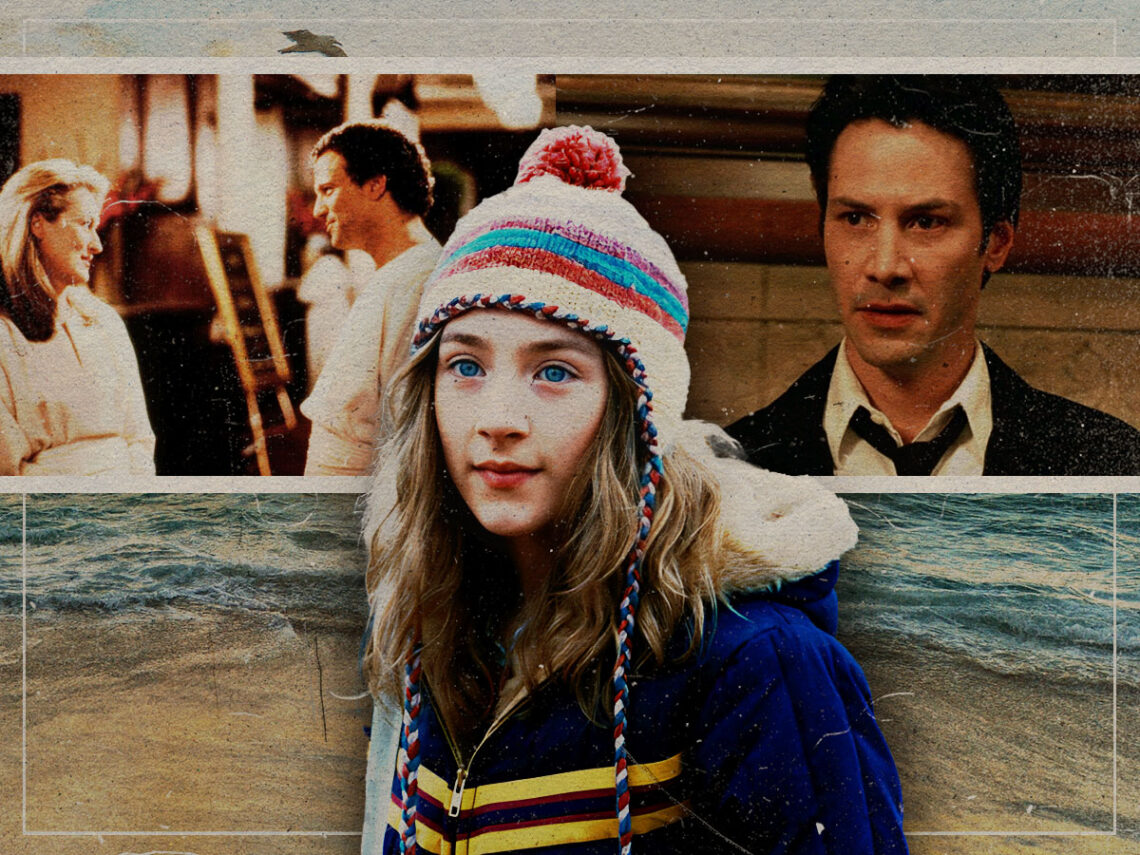
‘Visions of the Beyond’: Exploring the afterlife through five key movies

The most fascinating thing about the afterlife is that we’ll never be able to reach or see it until it’s too late – that’s why the question of its very existence has caused no shortage of doubters. Regardless of religion, since its first possibilities arose in the minds and hearts of humankind so many millennia ago, the anxiety of living beyond our bodies remains in all of us.
However, art can provide solace and insight for those yearning for a life beyond death or even in those atheists with just a twinge of a latent hangover from their Judeo-Christian upbringings, and the cinematic medium can be especially beneficial in bringing visions of the beyond into our hearts.
Throughout cinema’s rich history, there have been several fascinating explorations of the afterlife, whether they be depictions of the underworld with burning torture or more tender portrayals in which the leftover emotions of our corpses are given the room to be expressed one final time.
Below, we’ve compiled five movies that give the most intriguing, heart-breaking and beautiful examinations of what may wait for us beyond our mortal world. So, from emotive Japanese cinema to Keanu Reeves’ action horror, let’s head into the light (and darkness).
Five key movies that explore the afterlife:
After Life (Hirokazu Kore-eda, 1998)
The first film on this list is undoubtedly the most beautiful, typical of the emotionally tender cinema that Japan often delivers. Hirokazu Kore-eda’s vision of the afterlife in his 1998 movie sees a post-world reality in which the memories of the recent dead are processed.
The events take place in a quiet and shabby administration building where those who have died arrive to pass over to their final resting place while choosing just one memory to take with them, with just one week to decide. The ‘staff’ of the building are those who could not choose just one memory, and they are responsible for creating a film version of the dead’s memories.
As David Byrne once said, “Heaven is a place where nothing ever happens,” and Kore-eda’s film is perhaps a testament to that, though it goes one further in putting forward the beautiful notion that the afterlife is the place where we constantly relive the moment from our lives that made us the happiest.
Constantine (Francis Lawrence, 2005)
Departing from that emotional, heart-wrenching depiction of the afterlife for just a moment, it’s worth peering into the hellish nature of Francis Lawrence’s 2005 directorial debut, the supernatural horror action movie Constantine, starring Keanu Reeves as John Constantine, an exorcist who has the ability to communicate with angels and demons.
Constantine is a wonderful examination of the kind of afterlife that’s posited in Catholicism, and it doesn’t shy away from delivering its hellish nature in the glorious intensity expected of an action film. The film shows that the Christian afterlife is eternally linked to the mortal world and that angels and demons continue to look over God’s subjects.
The scenes in which the exorcist visits Hell are some of the most stultifying visions of the afterlife we’ve seen, with all the typical fires and demonic landscapes that we’d expect of Satan’s realm. This differs from the positive version of the afterlife, but it’s well worth considering from that guilty Catholic perspective.
Defending Your Life (Albert Brooks, 1991)
Now that we’ve briefly dipped our toes into the potential terrors that await us sinful with Constantine, it’s time to return to the lighter side of our earthly mortality with Albert Brooks’ take on the afterlife. His 1991 romantic-comedy fantasy Defending Your Life tells of a man waiting for a trial in heaven to see whether he will be reincarnated.
The court depicted in this movie is, like Constantine, indebted to the Christian faith in how it deals with judgment after our lives have ended, but perhaps the very nature of reincarnation touches on Buddhism, too. Daniel Miller initially enjoys his guilt-free “holiday” in heaven, but when it comes time to assess his past life, the tables turn.
As with some of the movies on this list, our lives in the beyond are forever linked to our lives on earth, and it provides scope to examine our actions and judge ourselves for what we did wrong. There’s also the idea that love is imperative to our lives and is essential to what might arrive in our existence beyond this reality.
Enter the Void (Gaspar Noé, 2009)
The films of Gaspar Noé are just about as viscerally intense as they come, and his 2009 experiment art film Enter the Void takes his physical cinematic experience and delivers it in one of the most visually insane movies of all time. It sees Oscar, a young drug dealer, killed by the police, but he continues to ‘live’ as a spirit throughout the film.
The action takes place in the neon-heavy nightclubs of Tokyo and is shot in the first-person perspective of Oscar as he floats through the city, looking back at the key moments of his life. Noé’s film is typically divisive, but it’s one of the most interesting looks at what happens after we die.
Enter the Void looks into the moments of the afterlife that occur immediately after our lives end and perhaps posits that we never really leave this world but rather float through it without a physical body tying us to the earth.
The Lovely Bones (Peter Jackson, 2009)
The year 2009 looks to have been a big year for heavenly cinema as it also saw the release of Peter Jackson’s The Lovely Bones, the New Zealand director’s adaptation of Alice Sebold’s 2002 novel of the same name, starring Mark Wahlberg, Rachel Weisz and Susan Sarandon, among other headliners.
The film tells of a young murdered girl who watches from heaven (called ‘the in-between’) over her family, who are torn between healing and finding their vengeance, and Jackson’s film puts forth the longstanding spiritual idea that the dead cannot rest until their lives on earth have been satisfied.
For Susie Salmon, that means having the knowledge that her family are at peace, and The Lovely Bones is perhaps the saddest movie on this list in that our spirits will always be bound to our mortal lives, even if only in the hearts of our loved ones. In this instance, heaven already lies in those who will miss us when we are gone.
