


‘Portrait of a Young Man Drowning’: Catholicism in African cinema

Since the works of filmmakers such as Ousmane Sembène and Djibril Diop Mambéty took the world by storm, more and more people have been discovering the magic of African cinema. While the discourse around African films has gained a lot of momentum in recent years, there are too many gems that never received the attention they deserve from global audiences.
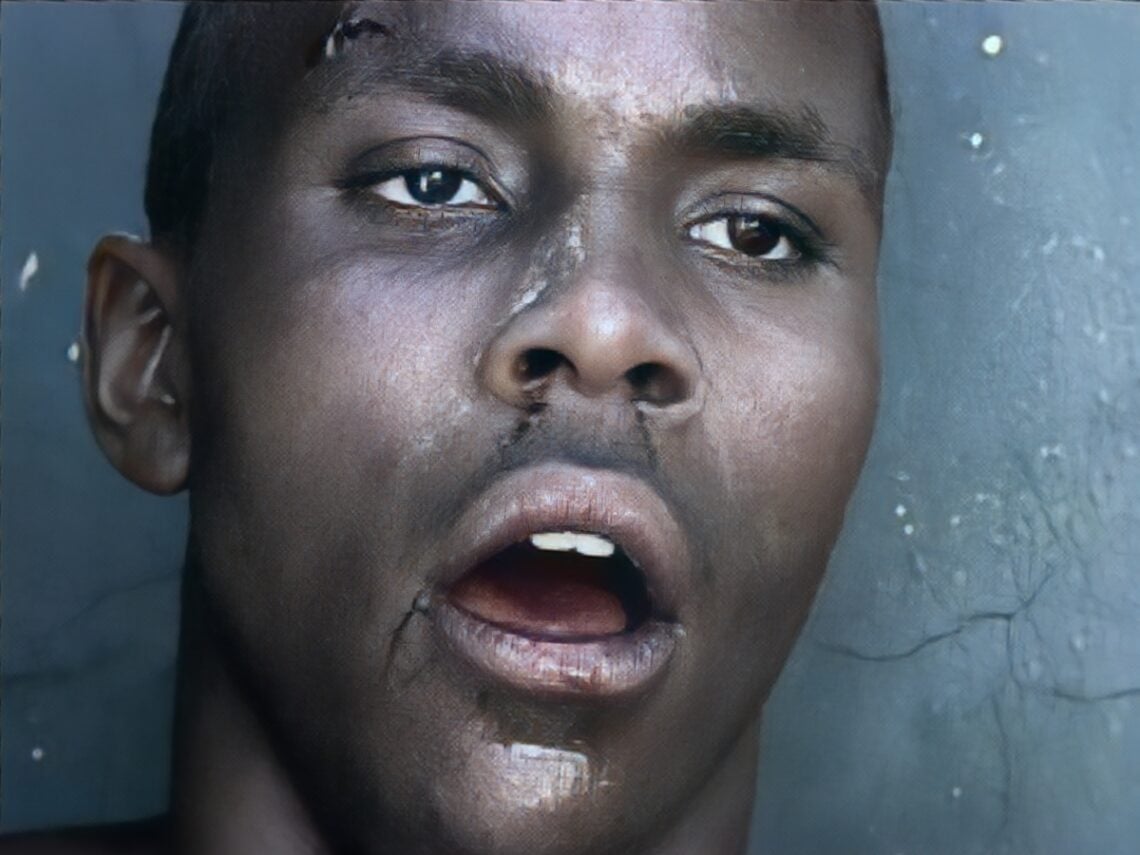
One such film is Teboho Mahlatsi’s Portrait of a Young Man Drowning, a relentlessly bleak vision of a man called Shadow who limps through a desolate landscape while clutching a wound that doesn’t stop bleeding. He embarks on a search for water to take a bath and clean his wound, but there’s no water available to him except the sweat that is drawn out by the unbearable heat.
Portrait of a Young Man Drowning is a transparently Catholic film, contextualised by the dark history of colonialism in the African continent. The Catholic imagery in the film was deeply influenced by Mahlatsi’s background and his experiences with religious institutions during his formative years. According to Mahlatsi, the inherent contradiction of Catholic guilt and his African identity played a huge part in the formation of his artistic sensibilities.
During a conversation with IndieWire, Mahlatsi said: “I was born and raised in the rural part of the country. Catholic school, Catholic church. (I) love the contradictions of being African and dealing with Catholic guilt. The symbolisms still pop up in my work. I’m essentially an outsider, an observer. At school, I was that shy, awkward, skinny kid in the corner (who) wanted to be left alone (and) wrote poetry, short stories, (and) listened to punk music.”
While talking about his childhood, the director added: “The Clash ruled. My friends thought I was weird. I was obsessed with Westerns (still am), which we saw in our local hall and wanted to make films. The Good, The Bad and the Ugly, acrid landscapes, gunfights. I then left to come to Johannesburg to study film, people thought I was insane, they didn’t know what making movies is. They thought I wanted to become an actor, to be on the screen.”
The way in which Mahlatsi frames the ruined township is incredibly fascinating, especially because there is a constant sense of claustrophobia and exhaustion that haunts the audience. Unrest and threats of violence permeate the torrid environment, threatening to consume the viewers with its incessant calls for impending doom. Amidst it all, Shadow continues his futile search for redemption in a world that is unapologetically unforgiving.
Water is the most important element in Portrait of a Young Man Drowning because it symbolises a return to purity, baptism and a medium which can facilitate the closure of eternal wounds. Mahlatsi’s film deservedly won the Silver Lion at the Venice Film Festival, but it has tragically been forgotten in the years that have followed.
Watch Portrait of a Young Man Drowning below.
