


‘Blood Tea and Red String’: an experimental stop-motion classic 13 years in the making

There have been many stop-motion films made over the years that became tests of perseverance and resilience, with some filmmakers spending years in production to bring their intricate masterpieces to life.
Works such as Coraline, Isle of Dogs and Fantastic Planet all exist as testaments to the power of creativity itself, with the directors using benign objects like popcorn and sexual lubricant to bring their stories to life in weird and wonderful ways. However, the process of bringing a stop-motion animation to life is notoriously tedious and time-consuming, with Henry Selick describing how over 500 animators worked to bring Coraline to life over four years. The art form is not for the impatient and faint-hearted, but there is one director who took this to a whole other level after spending 13 years on her film.
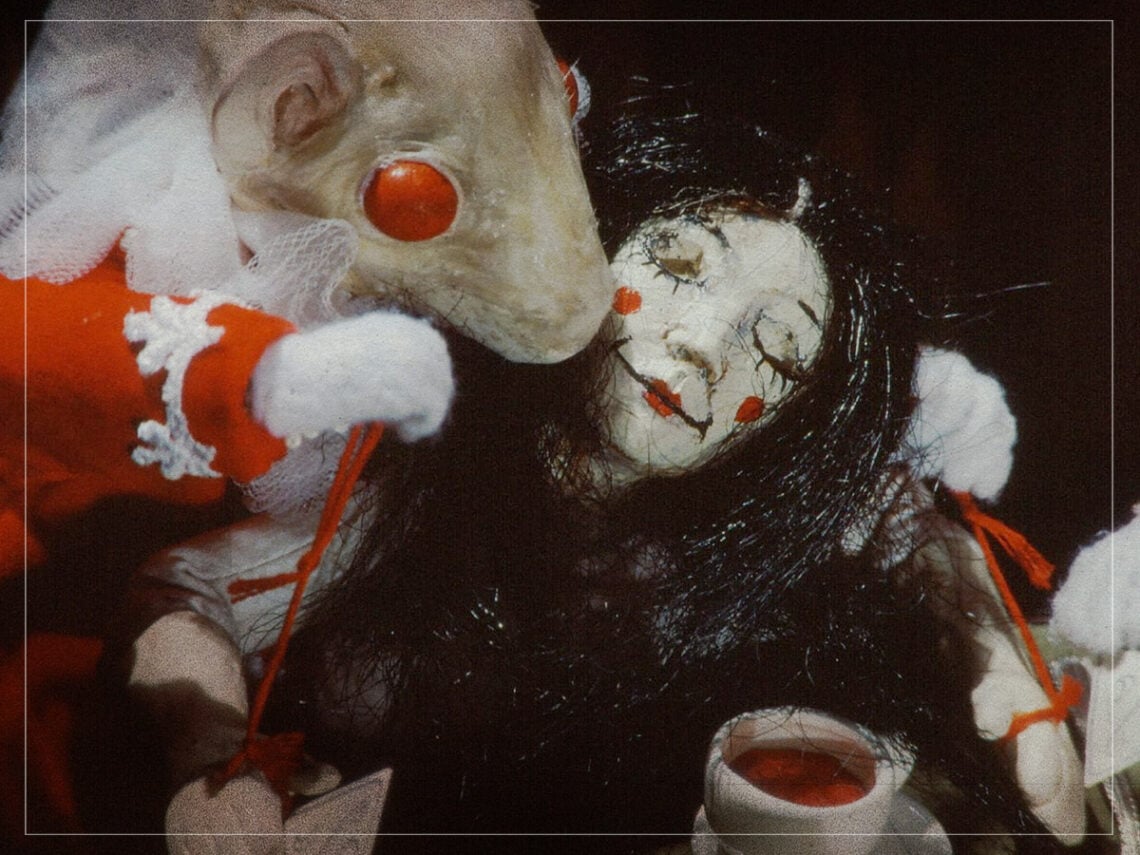
Blood Tea and Red String, directed by Christiane Cegavske in 2006, appears to be a charmingly innocent project featuring tiny felt creatures who wear human clothes and dance around a forest. The story follows a group called The Creatures Who Dwell Under the Oak, who are visited by red-eyed white rats that task them with creating a doll in the shape of a woman. However, this doll soon comes to bear more importance to the creatures, who revere it as a symbol of Mother Nature herself, and when the rats try to collect the doll, the creatures refuse, insisting that they do not understand its importance.
Despite the sweetness of the movie’s exterior, it unravels into a rather gothic and terrifying story, punctuated by no dialogue and extensive squeaking and screeches from the animals. The film alludes to motherhood and religion, with the fairy-tale-esque nature reflecting the allegorical subject matter.
However, what is even more chilling than the story itself is the painstaking effort that the director put into bringing her vision to life. Cegavske spent 13 years crafting each element of the film in her apartment. She built all of the sets and creatures herself, essentially living in this mystical forest as she realised her beautifully odd vision.
The film evokes a feeling of disturbing nostalgia, with an eerie mood that reminds us of the stories we watched as children but didn’t quite understand. The thematic undercurrent of the story becomes painfully understood as we unpack the symbolism of these felt creatures in the forest.
The imagery is deceiving because while it looks peaceful and comforting, it creates feelings that work against the visual style, creating a uniquely jarring and disturbing experience. There are some scenes that feel more akin to Ari Aster’s work, with the director luring audiences through the film’s sugar-sweet appearance and using it to comment on something much more complex.
Like many fairytales, the movie is about the contradictions present within these stories, trying to both soothe and challenge the viewer through this strange concoction of nostalgia and horror, encouraging the audience to think of the inherent power of women and how this image is commodified for our enjoyment, creating a thought-provoking and chilling film that entirely catches you off guard.
