


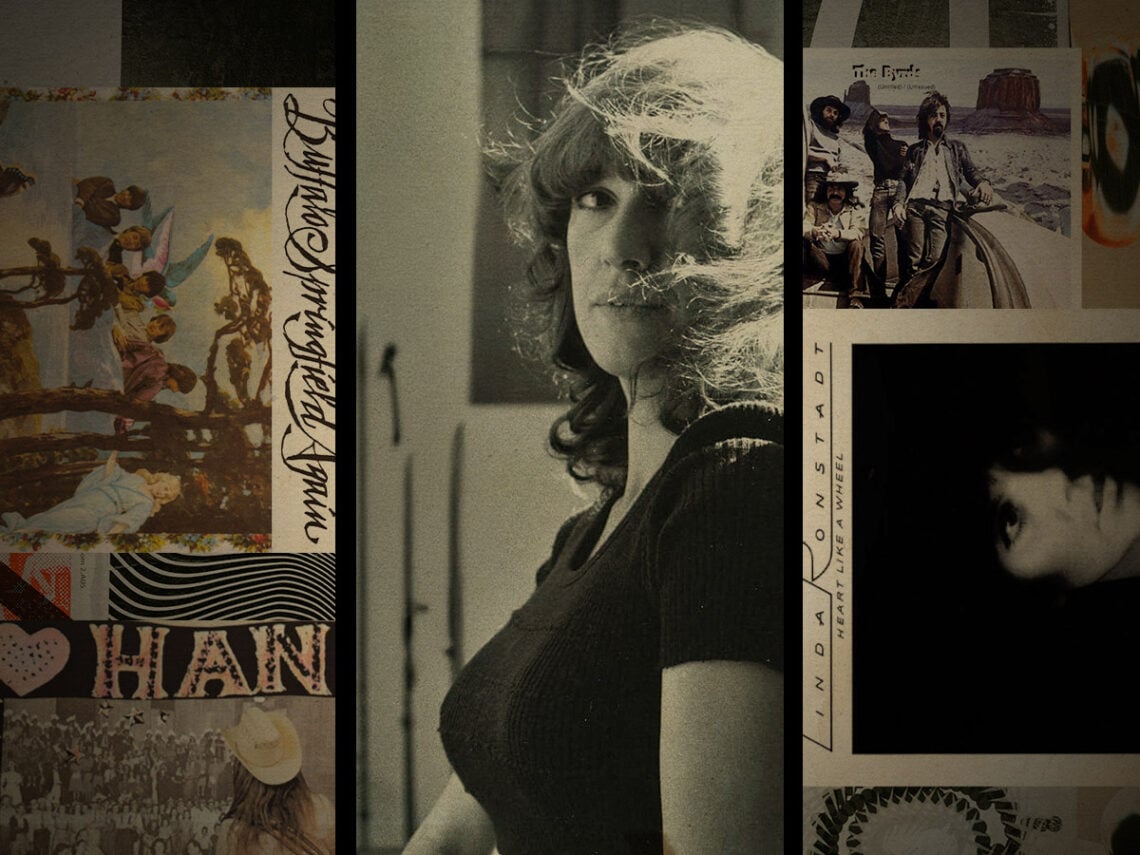
Eve Babitz’s five best album covers

“I want to tell you a little about myself,” Eve Babitz writes in the introductory line to her first published collection of semi-autobiographical fiction, Eve’s Hollywood. “I am really an artist, not a writer.”
Babitz was an artistic chameleon who personified her native Los Angeles. The daughter of Sol Babitz, a classical violinist for 20th Century Fox, and the goddaughter of composer Igor Stravinsky, a penchant for fame was in her blood and ground into her home soil. She was a “daughter of the wasteland”, as she affectionately referred to Los Angeles.
“Culturally, LA has always been a humid jungle alive with seething LA projects that I guess people from other places just can’t see,” she writes in an essay of the same name. From her distinct point of view, the city was an all-consuming world of hedonism and promise, too often misunderstood, all qualities she naturally assumed for herself as she came into adulthood.
By circumstance, Babitz brushed shoulders with everyone worth knowing in Los Angeles’ insular microcosms. She could easily befriend Hollywood royalty, find herself backstage at a rock show and make her presence known at every art museum and gallery across the city. Earning recognition for posing naked opposite Marcel Duchamp during a chess match, immortalised in a now-iconic photograph, Babitz was never afraid of infamy; one could say she even embraced it.
The press that surrounds her memory largely focuses on her various romances and affairs, but for those familiar with her charismatic voice and singular cultural presence, her love life is a small facet of the fascinating life she led. She chronicled her beloved city and moved through it with a brazen, unapologetic tone, proud of Los Angeles’ haunting undertone and willingly enthralled by its glamorous facade. Thinking not just as a writer, but as a fully-fledged artist (and a ravenous one, at that), Babitz got her start designing some of her era’s most recognisable images, with a job as an album cover artist.
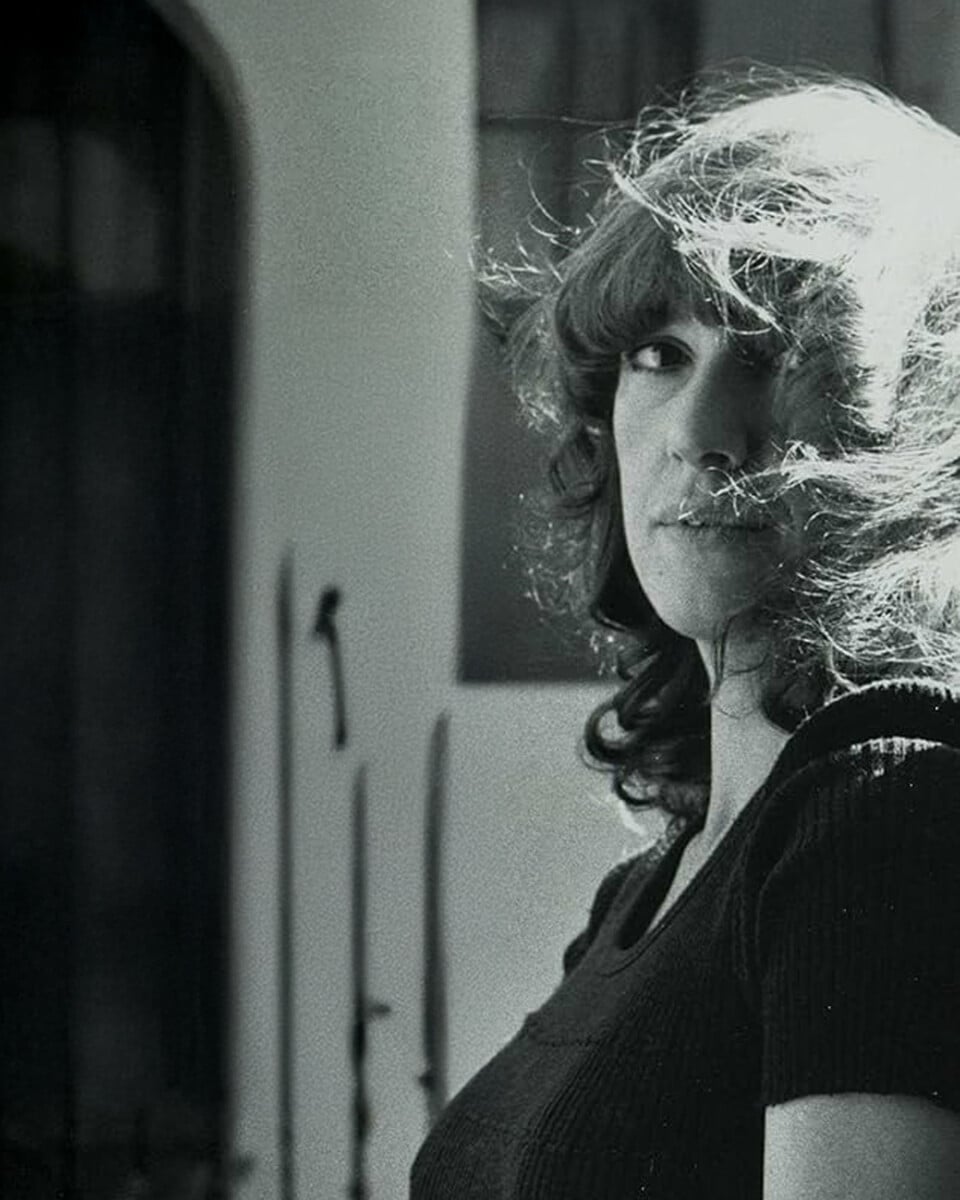
Her first proper job was at Atlantic Records, hired by Ahmet Ertegun, “the record company president of my choice”, as Babitz commemorates in Eve’s Hollywood. Working with her original photographs and concepts, she showed a natural gift for understanding music beyond the perspective of a mere fan, able to translate an album’s sonic vision into a tangible work of art.
Of course, her being raised in a musical family honed her ear for craft, but, as she developed her own tastes, her love of music never faltered.
“Studio musicians and musicians in general,” she writes, “men who have grown up practicing minute things their whole lives, are special.”
She would go on to work for Atlantic, Elektra Records, Columbia, Warner Brothers and Reprise, designing covers for the likes of Linda Ronstadt, the Byrds and Buffalo Springfield. With 18 covers to Babitz’s credit, all are crafted with a sharp eye for detail and a synthesis of music and environment that only she could achieve. Below, see five picks of Babitz’s five best album covers.
Eve Babitz’s five best album covers:
Earth Opera – ‘Earth Opera’
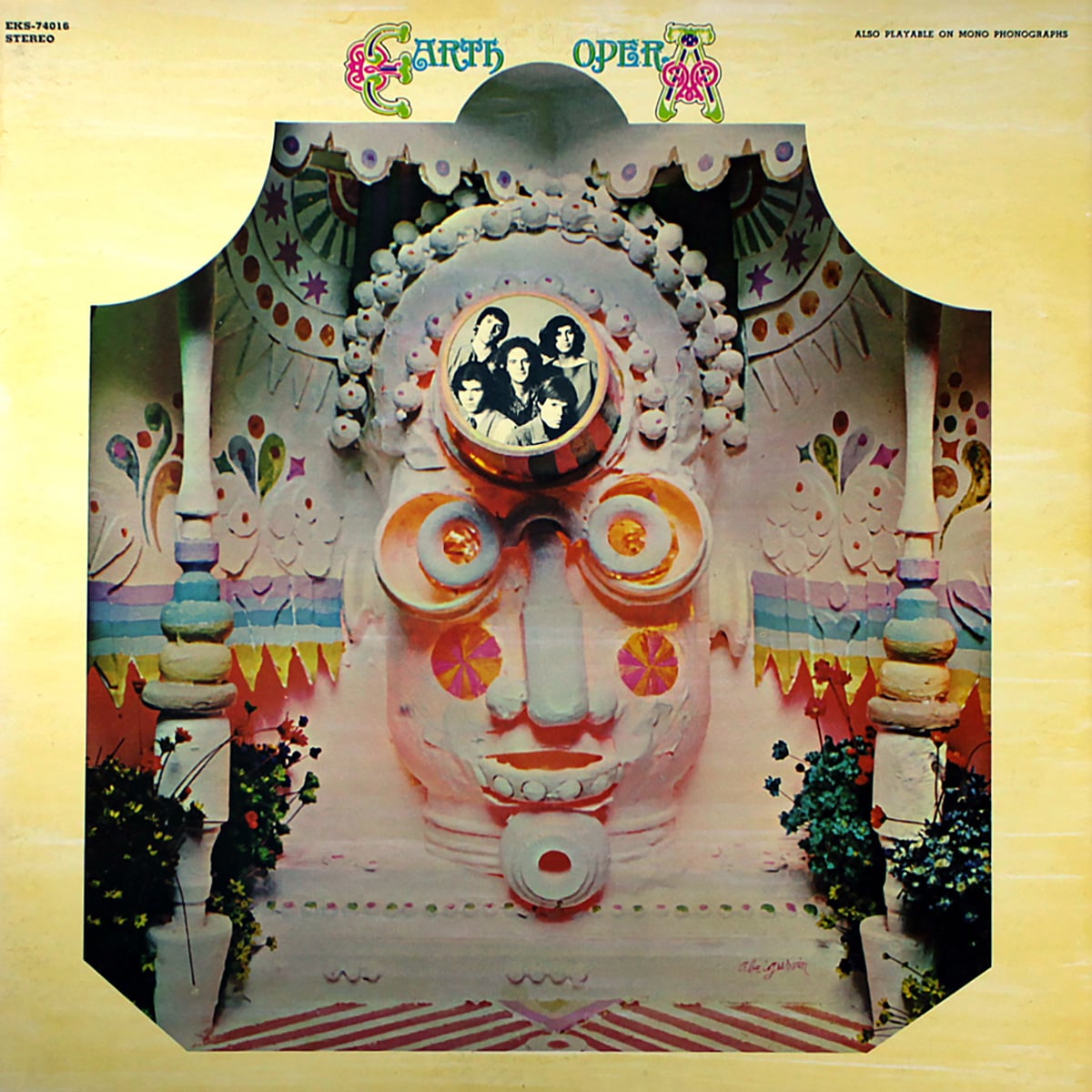
Babitz designed the inside cover for the Boston psychedelic rock band’s eponymous debut album. Active for just two years, Earth Opera emerged in 1968 with an eccentric mix of folk, bluegrass and psychedelia, featuring the original Mothers of Invention drummer Billy Mundi. Signed to Elektra Records, Earth Opera frequently opened for their labelmates, The Doors.
Babitz’s design shows a spherical collage, resembling a globe resting on a small figure of Jesus on the cross. The sphere is clouded by florals and a multicoloured painting, layered with a Biblical female figure looking on. At once beautiful and unsettling, Babitz’s depiction of Earth Opera’s eclectic sound is difficult to forget.
Linda Ronstadt – ‘Heart Like A Wheel’
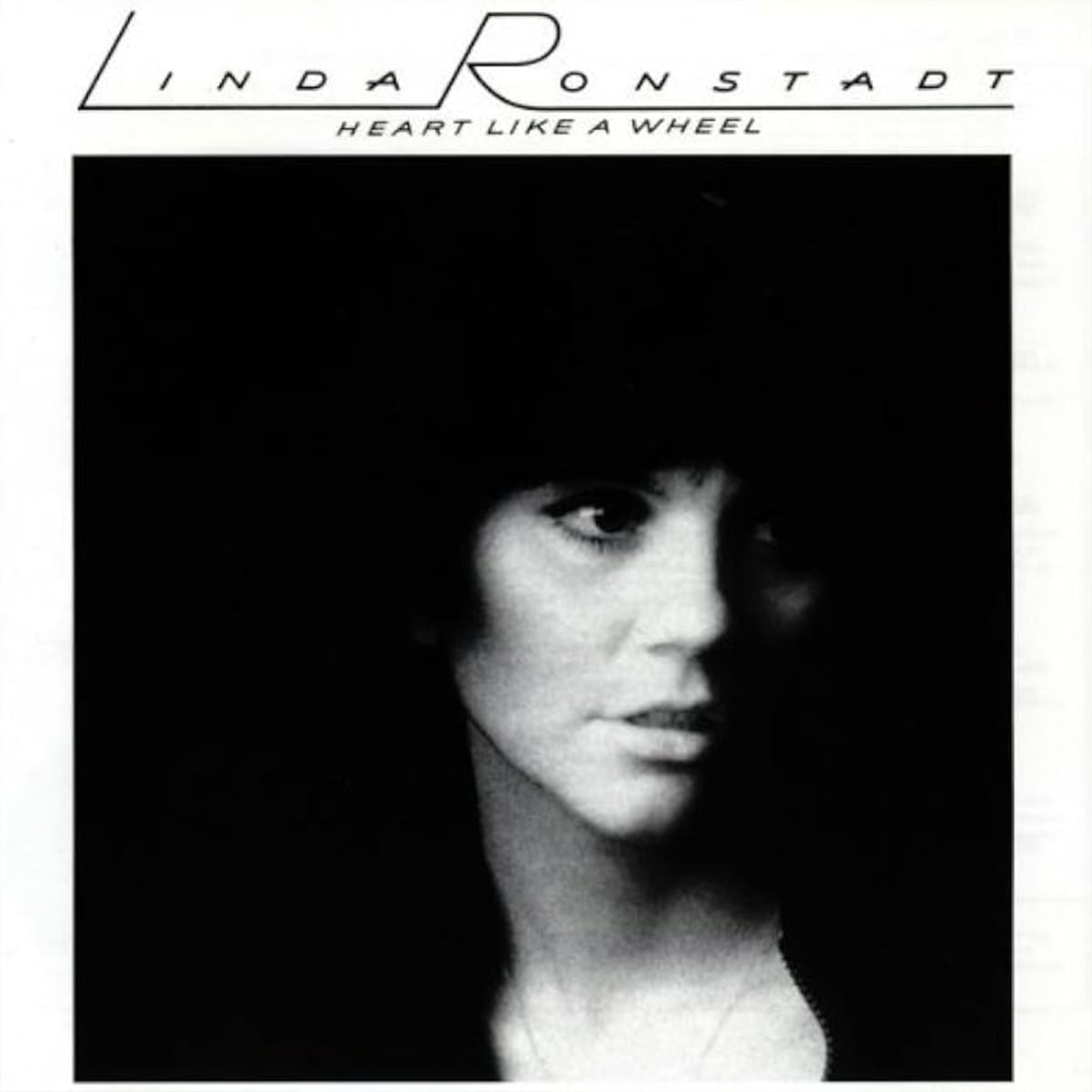
For Linda Ronstadt’s fifth solo album, released in November 1974, Babitz photographed the singer, with a gorgeous range of black and white shots shown on the cover and in the album’s inner sleeve.
On the cover, Ronstadt is glancing off to the side, as if staring at a passing thought. Then 28 years old, Ronstadt communicates a fragility through Babitz’s lens, with the photographs feeling like they came from a personal scrapbook.
Heart Like A Wheel would become Ronstadt’s commercial breakthrough, charting at number one on the Billboard 200 with over two million copies sold in the United States. Her sound perfectly melded country and rock, resonating with a spectrum of audiences. The cover became a defining image for the young singer, taking on an instantly recognisable life of its own.
Leon Russell – ‘Hank Wilson’s Back! Vol I’
Russell’s storied career boasts 33 albums and 430 songs, collaborating with a cast of characters including the Baech Boys, Barbra Streisand, Frank Sinatra, George Harrison, Ringo Starr and numerous others.
Beginning as a session musician, he bounced through genres, lending his talents across rock, blues, bluegrass and gospel. He developed as a multifaceted musician, composing for Gary Lweis and the Playboys, founding a production company with Snuff Garrett and establishing multiple record labels of his own.
In 1973, Russell created a fictional alter ego, Hank Wilson. “Hank Wilson came about on a road trip,” he said. “I was bringing a car back from LA, and I stopped at a truck stop that had about 500 country tapes for sale. I bought a bunch and listened to them on the way home… thought it would be fun to do a record like that.”
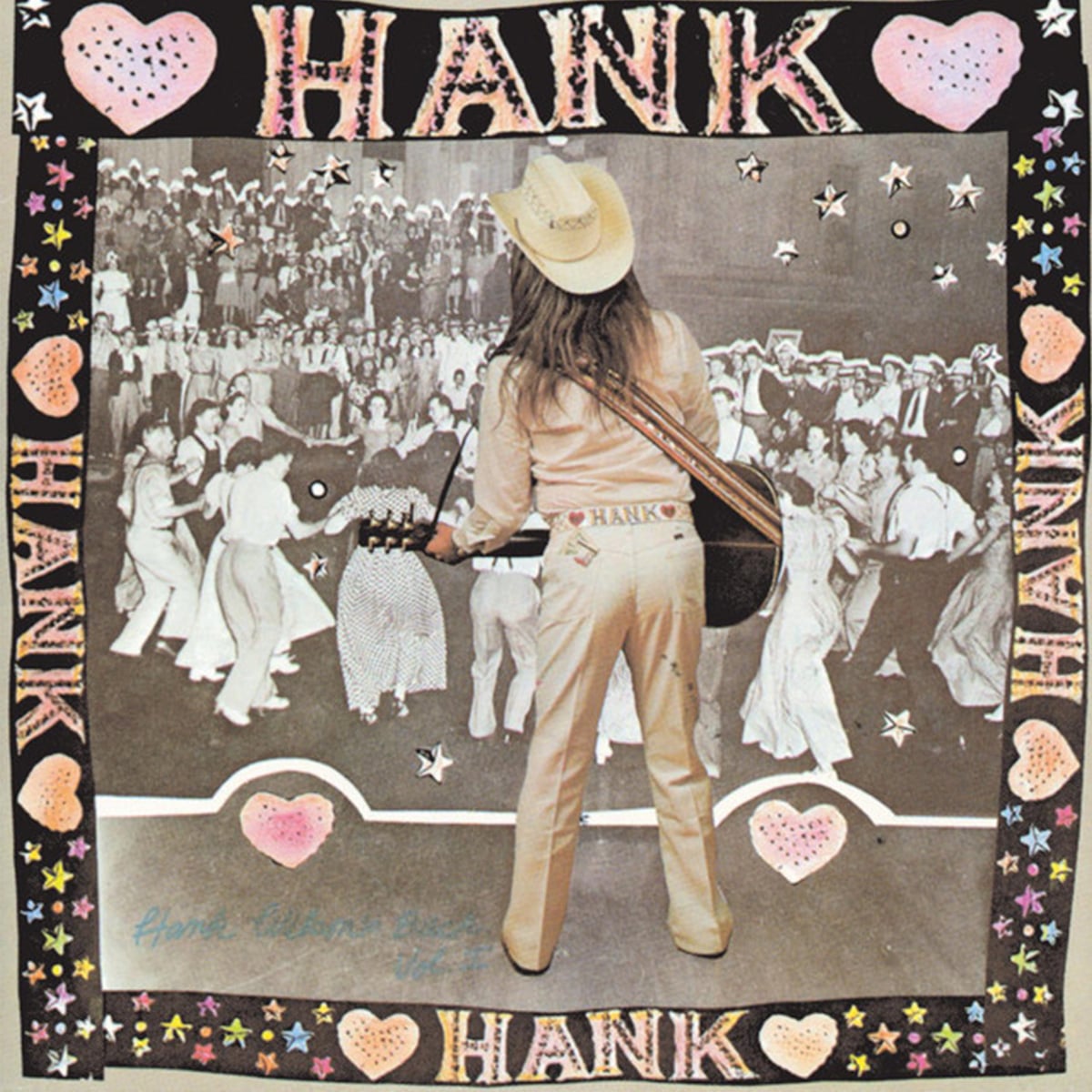
The result, Hank Wilson’s Back! Vol I, was adorned with a collage by Babitz that, in the most complimentary way, resembles something a teenage fan would make to hang on her wall. The name “HANK”, surrounded by pink glittering hearts and stars, borders an image of Russell photographed from behind, guitar in hand, layered over an image of what looks like some sort of school function, with children dancing in a circle.
The Byrds – ‘(Untitled)’
Fronted by Roger McGuinn, the Byrds’ influence cannot be understated. They are the primary pioneers of folk rock, leaning into the British Invasion’s electric rock ‘n’ roll with their folk sensibilities. They gained success with their covers of Pete Seeger’s ‘Turn! Turn! Turn!’ and Bob Dylan’s ‘Mr Tambourine Man’, harnessing an inescapable sound that helped to define their era.
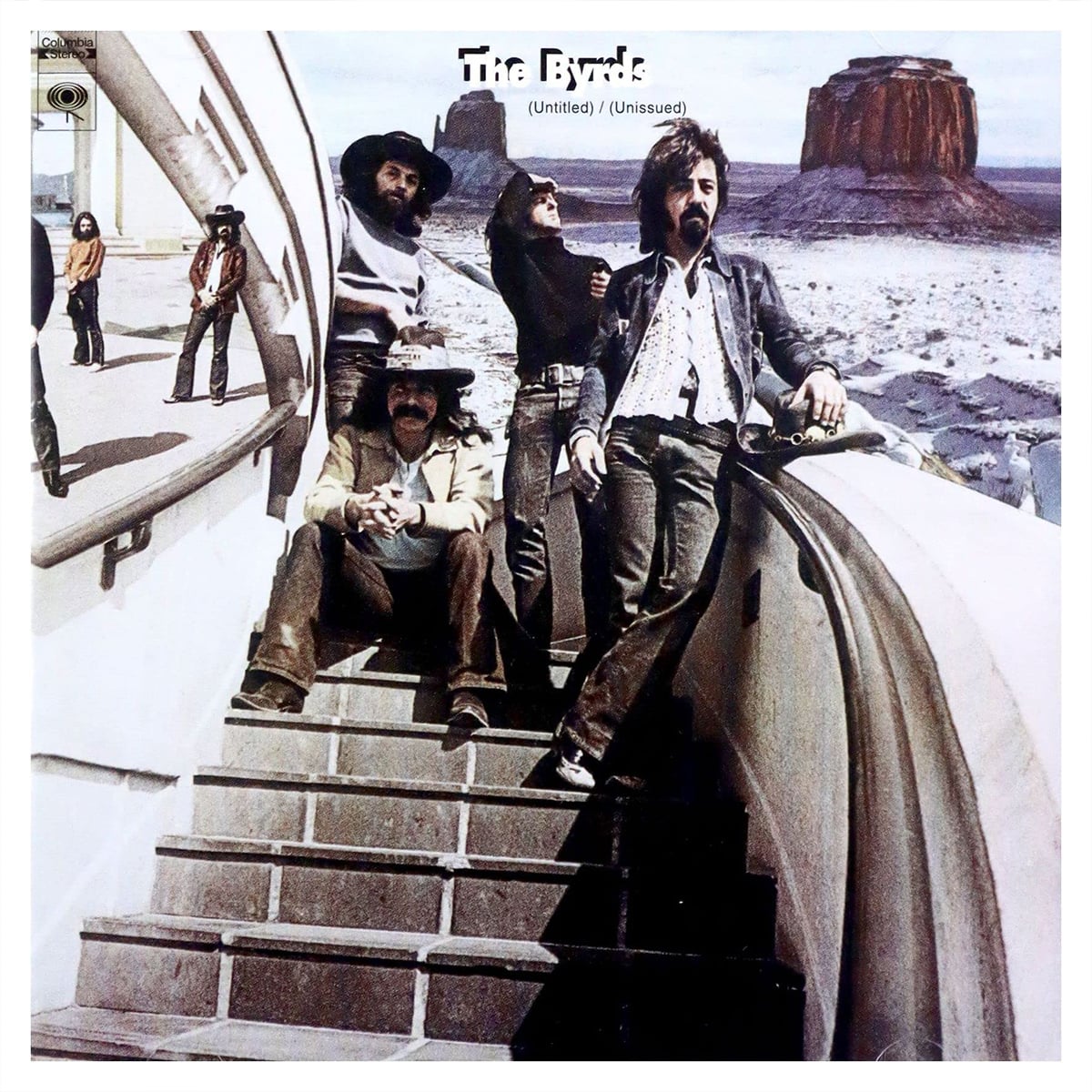
Their ninth album, 1970s (Untitled), mainly consisted of new, self-written material, stemming from McGuinn and Broadway theatre director Jacques Levy’s plans for a country rock musical. The collection became regarded as the best of the Byrds’ later years. Babitz’s design for the cover features photographs by Nancy Chester, showing the Byrds standing on the steps of Los Angeles’ Griffith Observatory.
The background’s natural birdseye view of the city was replaced by a desert scene, adding a literal depth to the image that feels unsettling. One can imagine the imposing heights that the Byrds stand in, looking both present and removed.
Buffalo Springfield – Buffalo Springfield Again
Buffalo Springfield Again is the second album from the Canadian-American rock band, released in 1967. Leading up to the recording sessions, guitarist Neil Young had repeatedly quit and rejoined the group, while bassist Bruce Palmer had been deported and re-entered the United States illegally to continue with the band.
In the midst of turmoil, the band – also featuring Stephen Stills, Dewey Martin and Richie Furay – recorded largely in independent sessions. Over nine months, Buffalo Springfield crafted some of their most recognisable songs, including Young’s extended piece ‘Broken Arrow’ and Stills’ ‘Rock & Roll Woman’.
As the story goes, Babitz was at a Paul Butterfield show in Huntington Beach when she was approached by Stills to hitch a ride home. She wagered, “I’ll give you a ride if you let me do the art for your new record”.
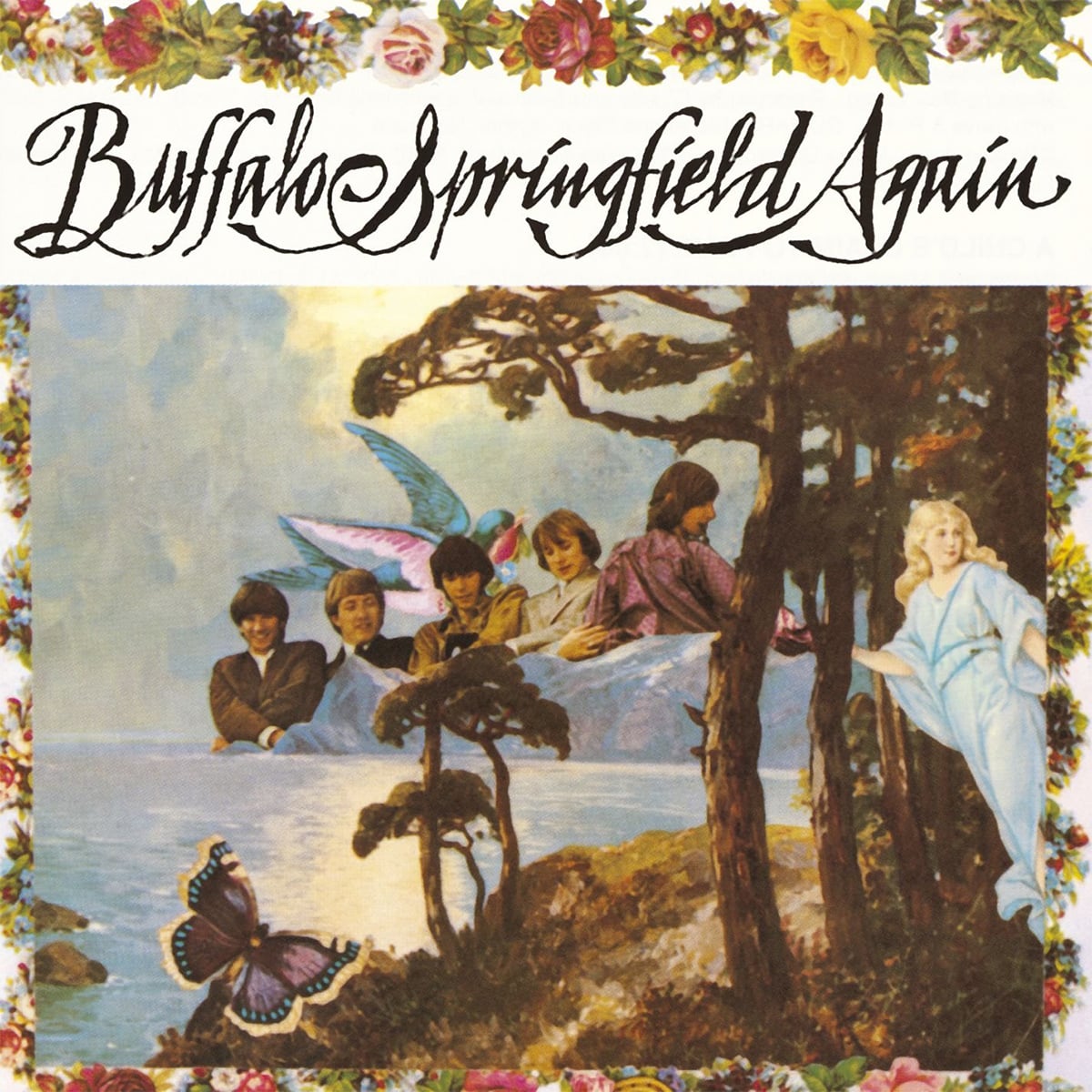
The result is a mosaic of watercolour images, and would become (rightfully so) Babitz’s most celebrated work as an artist. She collages the band members onto a mountain overlooking a body of water. Angels peek through surrounding trees, while butterflies and birds float across the picturesque scene. The cover is a gorgeous personification of the era, an idyllic natural world that communicates a wistful tone.
