


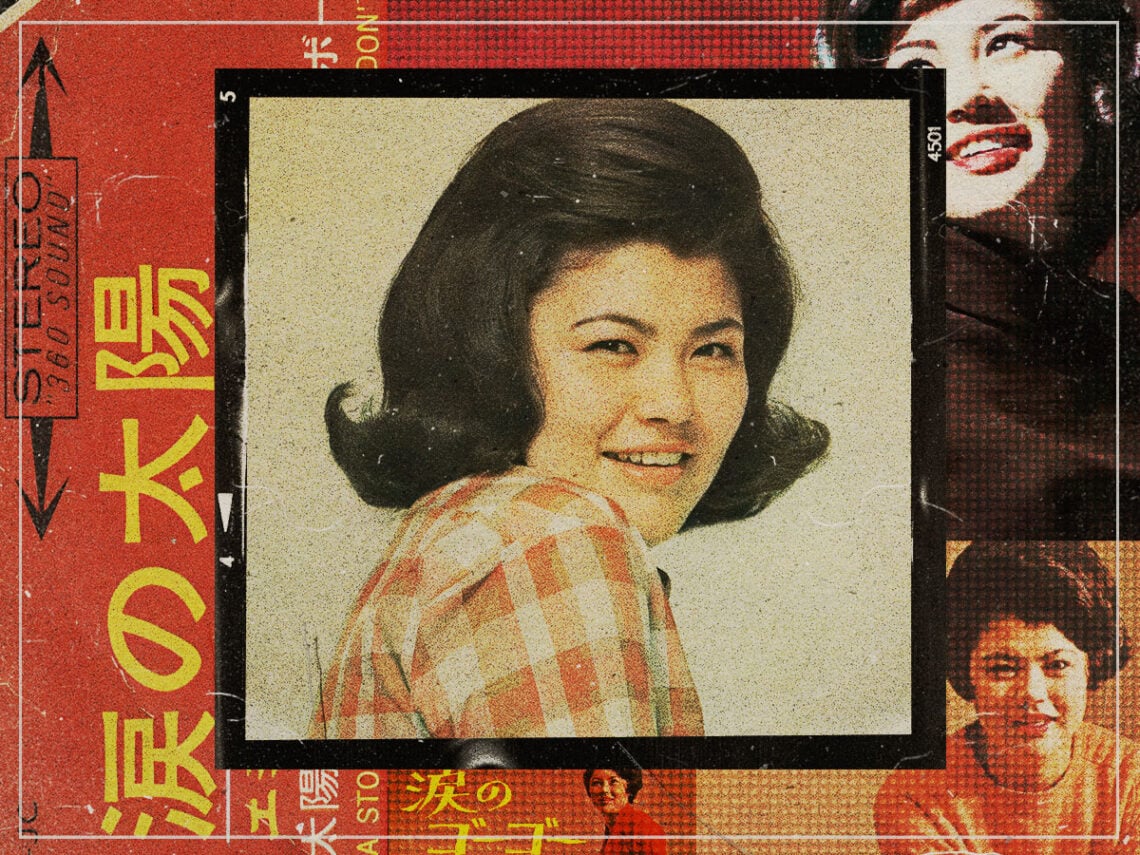
Emy Jackson: the singer who changed Japanese culture forever

“The director of a radio program asked me if I could sing. I picked up my guitar and sang – that’s it,” singer Emy Jackson once explained. “I had no intention of becoming a singer”. But sure enough, she became the first Japanese artist to have sold a million pop records that were sung in English. Born in Essex, Jackson’s ability to speak English and Japanese meant she worked as a DJ on Radio Kanto’s Good Hit Parade show.
While she’d made a promising start, Jackson’s DJ career ended abruptly. Her colleague, music critic Reiko Yukawa, had overheard someone singing ‘You Are My Sunshine’ to themselves while quietly strumming a guitar. It turned out to be Jackson, who Yukawa insisted Jackson start a music career of her own after informing Akria Izumi at Columbia Records of her talents.
Chatting to Garage Hangover in 2010, Jackson said singing in English was crucial to her success in Japan. “To get my start, English was a requirement to satisfy the foreign element of my contract. At the time there were no more openings for local contracts,” she explained. “Therefore, it was the idea of Columbia Records to introduce me as a foreign singer. In actuality, my records were made in Japan but marketed as foreign records.”
After being released as an import in Japan, her single, ‘Crying in a Storm’, became a hit in 1965. At the time, the Japanese recording industry worked under an “exclusive writers” system, meaning Columbia artists could only sing material written by Columbia’s own writers. Jackson sidestepped this by releasing the surf-style song as a foreign artist on the CBS imprint despite being fluent in Japanese. In doing so, her songs ushered in a new era of English pop in Japan.
Although imported music was more expensive than Japanese pop, her singing in English was a bold move that translated well in sales – ‘Crying in a Storm’ reached number four on the foreign release chart that year. But her career was brief, resulting in eight singles in one year, and after those were released, she retired from music for a spell.
“I got started again, singing at Lugano [the restaurant Jackson owned] after raising my children. There were many offers, because of my background – I am the first pop star in Japan that sang in English that sold a million records,” she said. “It had been very tough to make a comeback due to the changes in the entertainment industry. My priority to sing was country music, but could not make a living in Japan with only country. You need to sing a variety of music to make it in Japan. I am still enjoying my singing career.”
Not only did Jackson introduce Japanese audiences to a new sound, but she paved the way for other bands to do the same. CBS used the same method with Jackson when they released the Blue Comets single ‘Blue Eyes’, a track also written by outsider writers and released on the imprint for foreign artists, despite being an all-Japanese band. Other labels started to follow suit, and the exclusive writer’s system started to crumble. Jackson’s efforts on her debut single revolutionised the antiquated system and allowed freelance writers to work on tracks.
Although Jackson retired from music in the early ’70s, she had a lasting impact on Japanese music that can be felt today. Labels increasingly using the foreign artist formula gave rise to Group Sounds music. Often referred to as the GS sound, it was a genre of Japanese rock that fused Western rock and traditional Japanese kayōkyoku music, and it was Jackson who first dared to fuse the two.
