


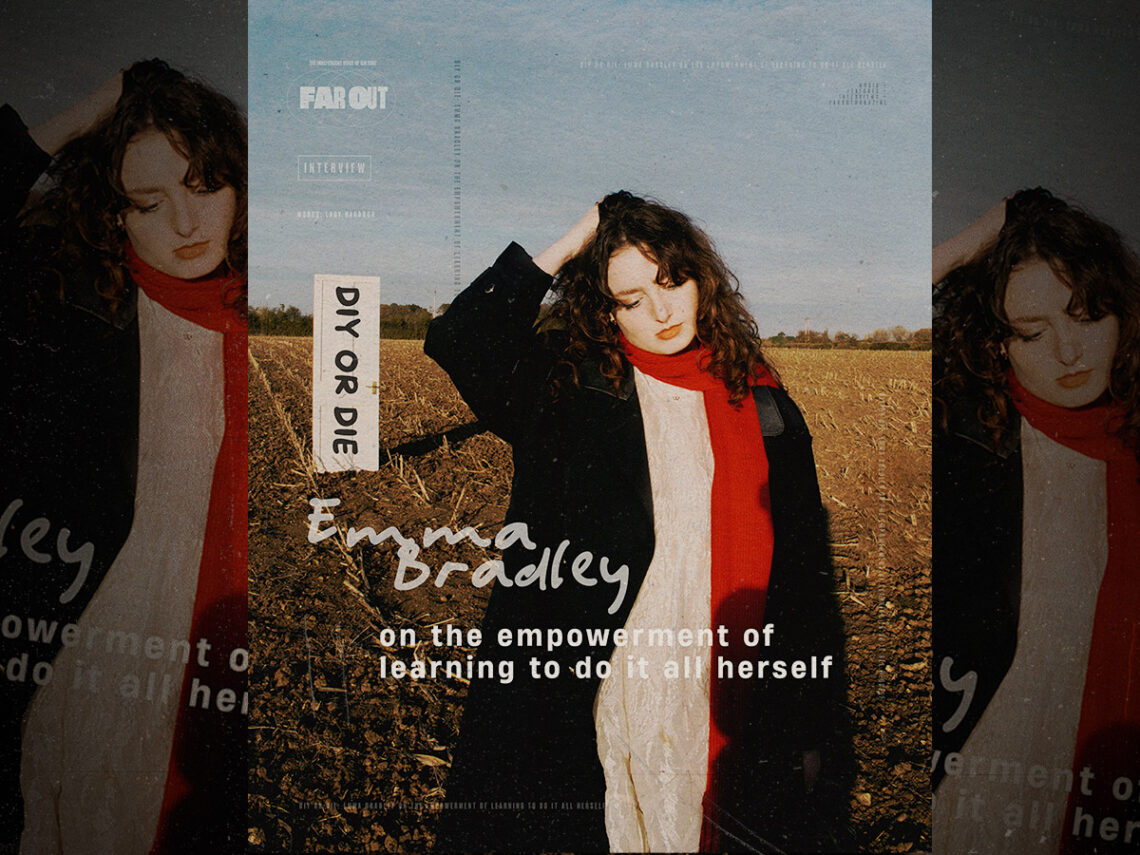
DIY or die: Emma Bradley on the empowerment of learning to do it all herself

Around the world, hundreds of thousands of people are dreaming of making it in music. They’re dreaming of success, fans and big gigs, and are likely thinking about signing on the dotted line, the suits around them popping bottles of champagne as they’re welcomed into the family of a major label. No matter how loud the conversation about the reality of the music industry as a business gets, that dream still endures because it’s the one artists have always been sold.
Some people will get to that point. They sign the record deal and they think, ‘Yes, I’ve done it!’ But then what happens when you’re young, still fresh in your career and suddenly that rug is pulled out from under you? First comes grief and then, for so many, comes the realisation—it’s DIY or die.
“Parted with the label, parted with my management,” Emma Bradley lays it out. In one year, in fact, within a couple of months, the two that so many consider to be pillars of a legitimate music career fell down. Bradley is only young, she’s in her mid-20s, she’s released two EPs and a scattering of singles, all of which have built her a solid following of fans who care about her work. So why did the termination of a business contract feel like the end of her career?
In any interview with an artist who has had this experience, you find that the story is the same. When they were young, they thought getting signed meant things were locked in for good. As Bradley said, “When I got signed, I didn’t know anything about the music industry, and to me, getting a record deal was making it.” Everyone in that moment thinks the door is now wide open for their career to flourish, that this contract will bring stability as they grow and develop as an artist with a label or managers who care to witness that happen and help get the best for them. And then, when they’re dropped, as the fast-fashion-like music industry that demands swift payback with results prevailing over patience, it feels like everything is over.
Not only is it a natural, personal feeling of rejection, but it’s a huge blow to one’s confidence. Artists have forever been led to believe that labels sign them because they’re talented, so when they’re dropped, it feels like a swipe at their worth, which is emotionally hard to come back from. Bradley felt that, too, despite knowing the split was necessary; it hurt, and she retreated to her family home to recover.
There are so many more intricacies here. It’s not just that signing a record deal feels like a landmark moment in a career; it’s the fact that labels do help by bringing in the money, but that also comes with its own complications. Labels pay for producers, studio sessions, and music videos; they have good contacts to help make all that happen. So when an artist is left out on their own again without that access, the question of ‘what now?’ can feel like an echo into emptiness.
For Bradley and many other artists who have had this same experience, that’s when the answer has to stage a return to ‘independence’, as scary as that may be.

“I had a bit of a moment where I was like, ‘This is really scary. I haven’t been in the music industry without a team before’,” she recalled of the moment when that independence was forced upon her. But with a bit of reflection, she understood it wasn’t as fearsome and unknown as she initially thought, realising, “But then I remembered that the reason I got signed was because I was doing everything by myself, and doing loads of stuff.” That’s the thing the industry would rather artists not realise, as Bradley said, “When you’re welcomed into an industry with a team, and they help you navigate it, and then suddenly you’re by yourself again, it can be kind of daunting. You’re a bit like, ‘oh my god, what am I doing?’”
The whole point seems to be to somewhat Stockholm syndrome the artists into thinking they need all this help doing what they were likely doing before, all on their own. Before she was signed, it was Bradley’s demos she was recording and uploading to SoundCloud that got her attention. We see self-releases on Spotify each week. Before they have label hands to help, artists don’t think of their independence as a bold or scary thing. They just treat it as doing the work. In a post-label life, when you’re used to all these people having jobs and opinions because of and around you, it’s easy to forget the simplicity and peace of doing it alone. Bradley’s own audience stepped in to remind her of that.
“I just had a hard year last year, and I always play piano to comfort myself,” she said, discussing her period of recovery. “And I posted this like 15-second snippet of improvised piano that I literally just randomly posted at like 23:00 before bed. I didn’t think anything of it, and it kind of blew up.” It was ‘Emma’s Theme’, and after racking up countless views on that video, and even having people post covers of her instrumental composition, playing it at their own classical recitals or gigs, Bradley, for the first time, recorded, produced and released something, totally solo.
“I never would have done that when I was on my label. Like, I literally never, ever, ever would have done that,” she emphasised. Signed as an indie-pop artist, she probably wouldn’t have been allowed to pivot so greatly to the kind of classical, scoring music that had always inspired her and been a part of her artistry. But that registered and it worked. “it showed me if I do things that are authentic to me, it works, and being independent, there are like, perks to it, because you can be you can kind of do what you want, and you also get to own it,” she clamied, with ‘Emma’s Theme’ being the first song she’s ever seen streaming money from because she owns every part of it.
But the key thing here is that Bradley, like so many other artists who reclaimed their career after being dropped, isn’t just making the music herself—she’s doing *everything* herself. It often has to be all the way or nothing. “I don’t have the money to pay producers in the same way that I have before, so I guess I’m just gonna do it myself, I’m just gonna DIY it,” she said of the moment she realised she was just going to have to learn how to produce.

While knowing the basics from before, the decision to teach herself became the thing that built her back up after the blow. It was a process that saw her confront many aspects of the way her career had been handled previously and finally address elements of the process that she didn’t like. “I have found myself in sessions where I felt like I doubted my choices and my own instincts for my own music because I felt uncomfortable and inferior. And you know, most of the time you’re in a room with a man, like 99% of the time. I’ve literally worked with, I think, two female producers in my whole career, and I’ve worked with probably over 100 people,” she said. That checks out. Women currently make up 18% of members at the Music Producers Guild. In 2022, only 4% of producers making the Billboard Top 100 songs were women. The studio remains a male-dominated space, and for young, female artists sent off to these sessions by their labels, it’s intimidating. And when they go through what Bradley now calls the “rite of passage” of being dropped, they’re made to feel like they need these men, or these higher-ups, to help.
They don’t—that was the lesson learnt as Bradley made Winona’s World, her first self-produced, self-released EP and her first true DIY outing. Now with the ability to make something unfalteringly hers, the result was a unique project compared to her older releases, such that she even considered releasing it under a different name before realising that this was her, it was all her. “It’s really liberating, because when you’re having to depend on anyone, whether it’s a label or a producer or whatever, there are so many roadblocks,” she said, before continuing, “It’s been so empowering to be like, Okay, I actually can run this ship myself and listen solely to what I want to do and what I think is right for me.”
That’s a sentiment echoed over and over. “I had to take time to find myself again. Who do I want to be? What do I want to say? What music do I want to share? I’m completely in control. It’s beautiful. I’ll never take creative freedom for granted again,” Raye told Vogue when she was dropped by Polydor, going on to make history at the Brits with her DIY My 21st Century Blues, learning to produce in the process.
Molly Payton told Far Out about her debut record, made by herself with the help of her friend, “I ended up making this really fun record just for me, and I think it showed me how I wanted to make music going forward.” With a similar story of feeling like her life collapsed when her label and management dropped her, Payton had the same experience. When she went for it alone and proved she could do it, it gave her a level of self-assurance that no contract ever could, as she said, “[It] makes me feel so confident that I can keep making music now for the rest of my life, even if I’m not signed.”
Bradley’s sentiments echoed Payton’s. From the devastation of being made to feel like a torn-up contract defines your work and career, the process of learning to stand on her own two feet, in every possible sense of the word, with her music, made her feel sturdier than ever.
