


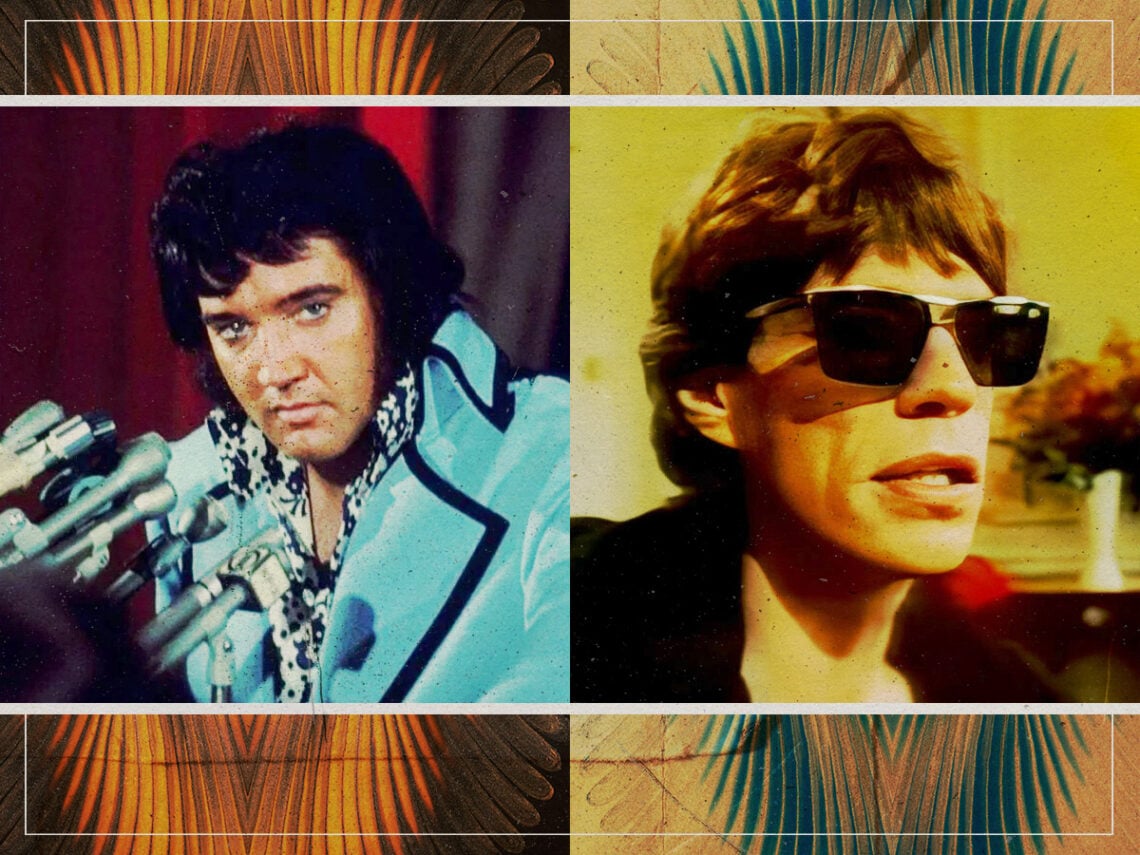
How Elvis Presley shamed himself, according to Mick Jagger

There are certain artists to whom all roads seem to lead. Musicians of all creeds are undeniably inspired by a select cast of absolute untouchable titans who shaped the world of music into what it is. Elvis Presley is one of them, and Mick Jagger was always loyally in his lineage, up to a certain point…
The impact of Presley on Jagger is impossible to understate. As a frontman, The Rolling Stones singer is considered the best of the best, often imitated but never beaten. With his swaggering style and signature dance moves, he’s become one of the most sought-after tickets around. Even decades into their career and as they hit OAP status, millions still clamber to get to see the band live, all to see Jagger in action.
But that wouldn’t be the case if it wasn’t for Presley, as Jagger admits that his initial inspiration came from The King. “I saw Elvis and Gene Vincent, and I thought, ‘Well, I can do this’,” he said of his earliest performances, borrowing from the two legends to build his own now-renowned style.
While Jagger started out as a huge Presley fan, there was a point where he thought the musician crossed the line, shaming himself and tarnishing his legacy. It was a move that The Stones singer vowed never to make, as he once used to claim he’d quit rock and roll by the time he was in his 30s.
“When I’m 33, I’ll quit; I don’t want to be a rock star all my life,” he claimed. “I couldn’t bear to be like Elvis Presley and sing in Las Vegas with all those housewives and old ladies coming in with their handbags. It’s really sick.”
For him, Presley’s Vegas era was an absolute horror show and a scene that he desperately wanted to avoid in his own career. That’s not really even a controversial take, as it’s a commonly said point that the performer’s later years were arguably his worst.
But that wasn’t really Presley’s fault. Instead, it was part of the long-running, dodgy nature of his manager, Colonel Tom Parker. Chronicled in Baz Luhrmann’s retrospective Elvis, the Colonel essentially had him trapped into a contract, refusing to let him tour internationally but keeping him at the International Hotel in Las Vegas. In the end, he played 636 shows in the hotel’s ballroom, tracking him at the lowest period of his life as his marriage dissolved, his health worsened, and his general well-being visibly deteriorated.
But even if that late-stage version of the King served as a warning sign for Jagger, his admiration for Presley still won out. “He was a unique artist – an original in an area of imitators,” Jagger said of the musician, and now still performing at 80 years old, the image of a burnt-out Elvis clearly wasn’t strong enough to make him stick to his word and quit.
