


Eddie Palmieri, Nuyorican resistance, and the unifying legacy of Latin jazz

“There will always be Latin jazz. My mission is to keep it alive.” – Eddie Palmieri
One of the most powerful aspects of music, as an art form, is its innate ability to bring people together. Go to any concert, festival, nightclub, or dancehall, and you will see hundreds of strangers, unified by a common love of musical expression. For the vibrant Puerto Rican community of New York City, it is the enduring sounds of Latin jazz and Afro-Cuban salsa which have so often brought people together, and it was Eddie Palmieri creating those captivating rhythms.
Born to Puerto Rican parents in New York City during the height of the jazz age, Palmieri was always destined for musical greatness. A childhood piano prodigy, playing Carnegie Hall at the age of 11, the young composer soon began to take his cues from the revolutionary tones of jazz stars like Thelonious Monk, setting him on a path to become a true musical innovator in that same spirit.
Where Palmieri differed from those early influences, however, was his deep roots in the musical traditions of Puerto Rico. The Caribbean island has an incredibly rich cultural heritage, particularly when it comes to the infectious rhythms of its musical history. Incorporating elements of Afro-Caribbean and South American music, in addition to the popular sounds of the United States, Puerto Rico boasts an expansive musical identity, and Eddie Palmieri sought to add another layer of experimentation to that identity.
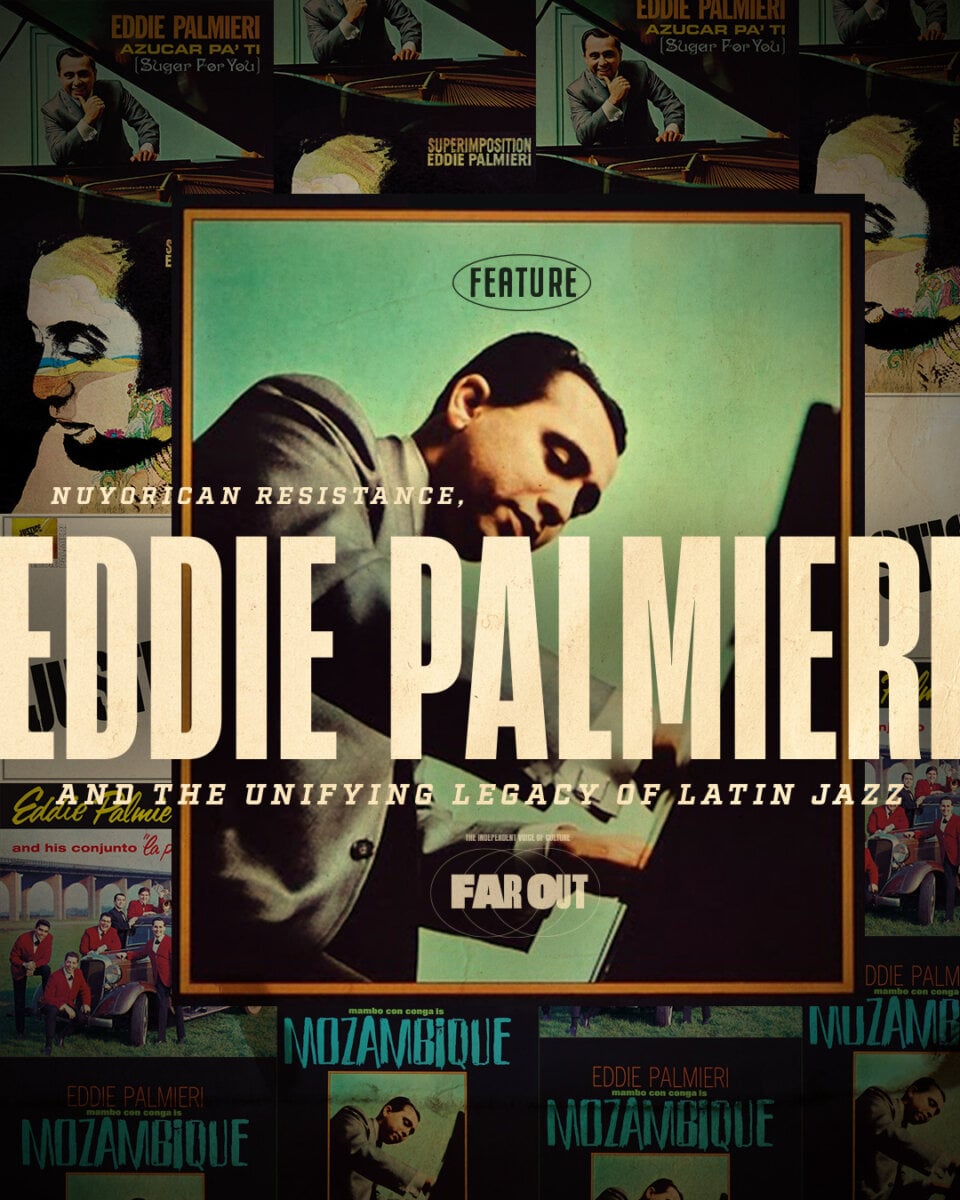
It was during the early 1960s that wider audiences began to take note of the pianist as a performer and bandleader, with the release of the revolutionary album Eddie Palmieri and his Conjunto La Perfecta in 1962. At that time, the Latin music landscape was dominated by the Pachanga dance craze, originating from Cuba, but Palmieri opted for his own take on that sound, swapping out violins for brass instruments and creating a rich, full, and utterly infectious interpretation of the craze.
That album came at a pivotal moment for the Nuyorican community (the name typically given to the extensive Puerto Rican population of New York). Despite the Caribbean nation being a US territory, those who moved to cities like New York post-World War II were subjected to abhorrent racism and oppression on the US mainland. Racist attitudes were rife in virtually every level of society, and the US government even engaged in campaigns to forcibly sterilise Puerto Rican women throughout the 1940s and 1950s.
Subjected to this horrific treatment, music was one of the prevailing methods by which the Nuyorican community sought solace for oppression. Being a New York-born musician of Puerto Rican heritage, Palmieri was a vital figure in reaffirming the identity of the Nuyorican community, too.
Not only did that 1962 album provide a sense of identity and unity to the Nuyorican community, it also provided a first look at Palmieri’s unparalleled sense of creativity and experimentation. He was never content with following trends, instead choosing to adapt, develop, or subvert the prevailing sounds of the era, creating something entirely new in the process.
“I want to explore all kinds of music, not get stuck in one groove. It’s just my nature,” the composer was once quoted as saying, and that certainly rings true when looking at his extensive discography. For over half a century, the composer was a consistent and vitally important voice, not just for Puerto Rican music, but for the entire landscape of Latin jazz, too.
His 1975 work Sun of Latin Music, alongside salsa vocalist Lalo Rodríguez, made the composer the first person to be awarded a Grammy for Best Latin Recording, but his crowning achievement was always in his ability to move with the times and connect with audiences across the world.
Even in death, Palmieri will continue to inspire new generations of artists, and his discography will remain an unparalleled example of the unifying power of music.
