


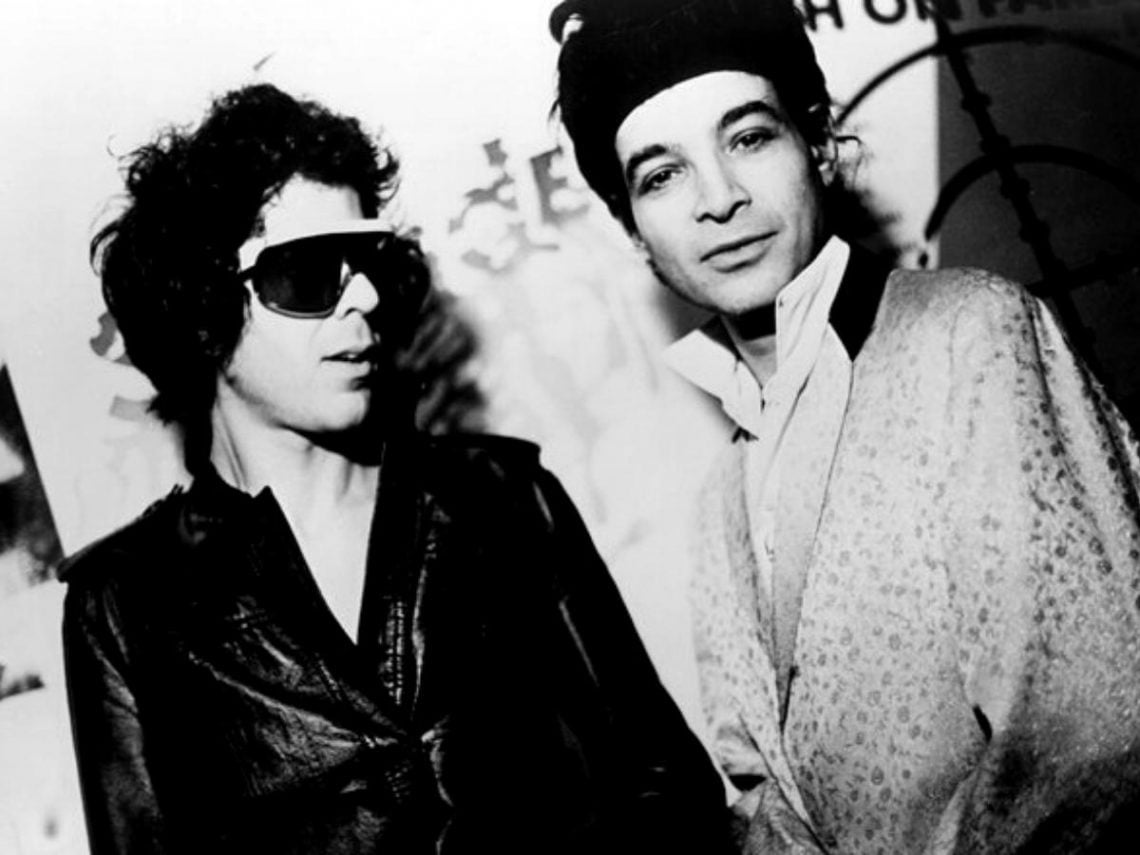
Exploring the early influences of Suicide musician Martin Rev

Suicide was formed in 1970 by New Yorkers Martin Rev, an experimental multi-instrumentalist from an avant-garde jazz background, and Alan Vega, an aspiring vocalist, guitarist and trumpeter. Initially, the pair had Paul Liebegott on board as the primary guitarist during early underground gigs in Manhattan as they channelled the gritty, experimental energy of mid-1960s Velvet Underground.
By the end of 1971, Liebegott had left Suicide, leaving Vega and Rev as a duo. The pair continued to haunt the gig circuit as one of the earliest forms of the now-ubiquitous electro duo thanks to primitive drum machines, Rev’s battered Farfisa organ, and an assortment of effects units. The fascinating sound of their early material won Suicide opening slots for the likes of the New York Dolls and The Fast as they inched toward the recording studio.
‘Rocket U.S.A.’ arrived as Suicide’s first single in 1976 and was to be followed by the landmark eponymous album the following year. As their name suggests, Suicide’s early sound was one of intense horror and looked to hold an artistic window to the pitfalls of US culture. Upon its release, the album was ignored commercially and critically, with the exception of some perspicacious critics in England. Within a decade, however, the record had garnered the attention it deserved as the holy grail of electro-punk music.
When pioneering artists shape out a genre of their own, it’s always interesting to dig to the root of their musical education. Thankfully, in a comprehensive interview with Dangerous Minds in 2019, Rev discussed his musical and cultural upbringing.
“I was very lucky to have the family I did,” Rev said. “We all played music, as it turned out, non-professionally. My brother played, was given lessons. My father played. My mother played; she had lessons as a young girl, so she played in the home. They wanted their kids to definitely learn music. My father was one of the most distinctively talented musicians I’ve ever heard in my whole life. He played song after song on a guitar or a mandolin. Never read or studied a note. He was incredible that way. So, it was a musical family. That added to the richness of my childhood.
Continuing, Rev explored the cultural positioning of his childhood in reference to major conflicts of the 20th century. While Rev wasn’t directly affected by war, his concern for political direction and rebellious attitude would ultimately fuel Suicide’s themes.
“Otherwise, it was all the usual growing pains and doubts and dreams,” he continued. “It was a fairly lucky period to grow up in between war kind of thing. After World War Two and before Vietnam. America had probably reached its pinnacle of affluence. That whole generation, for a while, well, a couple of generations, felt an incredible sense of future potential that anything could happen or be done, and the whole future was wide open with possibilities.
“A little different than it is now. There wasn’t the pessimism or the awareness of the dark clouds behind the covers as there is now. There was an optimism—even though I didn’t buy all that the country was selling even as a kid. I was a bit of a radical rebel already as a teenager. But there’s no complaints there, it was what it was. I was lucky to be given room and the opportunity to discover music which was something I could be thankful for, you know, every day of many lives because there’s nothing else I’d better do.
“I grew up hearing all the great songs coming off the radio as a kid. I was bitten, smitten by them as so many kids my age were. The golden era of rhythm and blues, American rock ‘n’ roll. There was all the rhythm and blues groups at the time, there was the Paragons, the Gestures, Little Richard, Mellow Kings, Danny and the Juniors, the Silhouettes. I mean you can go on and on but a lot of them had only one great song and a few of them had many—the Flamingos, the Students, these were the groups that were really happening. That was the music of the times. That’s what did it.”
Later in the interview, Rev explained that he first “got serious about music when [he] was about ten or 11.” Initially, he enjoyed the improvisational side of jazz and would spend much of his time jamming along to the radio.
“I had my own group called Reverend B when I met Alan,” Rev continued in the interview. “I was doing certain shows in the city. It was a very avant-garde, free improvisational group that used electronic keyboard ’cause that was the only thing available. You had to borrow it, there weren’t a lot of other keyboards in the venues we played.”
Vega’s influences appeared to be more centred in the rock and roll frontman image. “Alan had decided soon before I met him that he had to perform as a visual artist,” Rev said. “That was after seeing Iggy Pop and the Stooges play in New York for the first time.”
When asked how he came up with the novel sound for Suicide in the 1970s, Rev explained that his wide pool of influence met experimentalism as he got his hands on as much modern technology as he could afford.
“Putting devices together, combining them, I mean really cheap, small inexpensive stuff,” Rev remembered. “But I heard the potential. I heard what that was in terms of a total open frontier, and that was a direction, and everything I was going into that direction created a certain energy and then rediscovering my roots which was rock ‘n’ roll which was so innate because I was born into it before—it wasn’t something I could analyse it was just the music of my time as a child. Coming back to that essential force or energy that made it work for me then and still did when I listened to certain things that appealed to me.
“One can analyse as a certain basic energy and rhythm which is the driving force that made rock work for us. Little Richard, a perfect example of many. But able to do that in a way that was totally fresh to me. Exciting because to me, it wasn’t repeating what was done, it was finding a new way to express something, that universal energy and drive.”
Listen to Suicide’s first single, ‘Rocket U.S.A.’, below and see if you agree with our ranking of Suicide’s albums here.
