


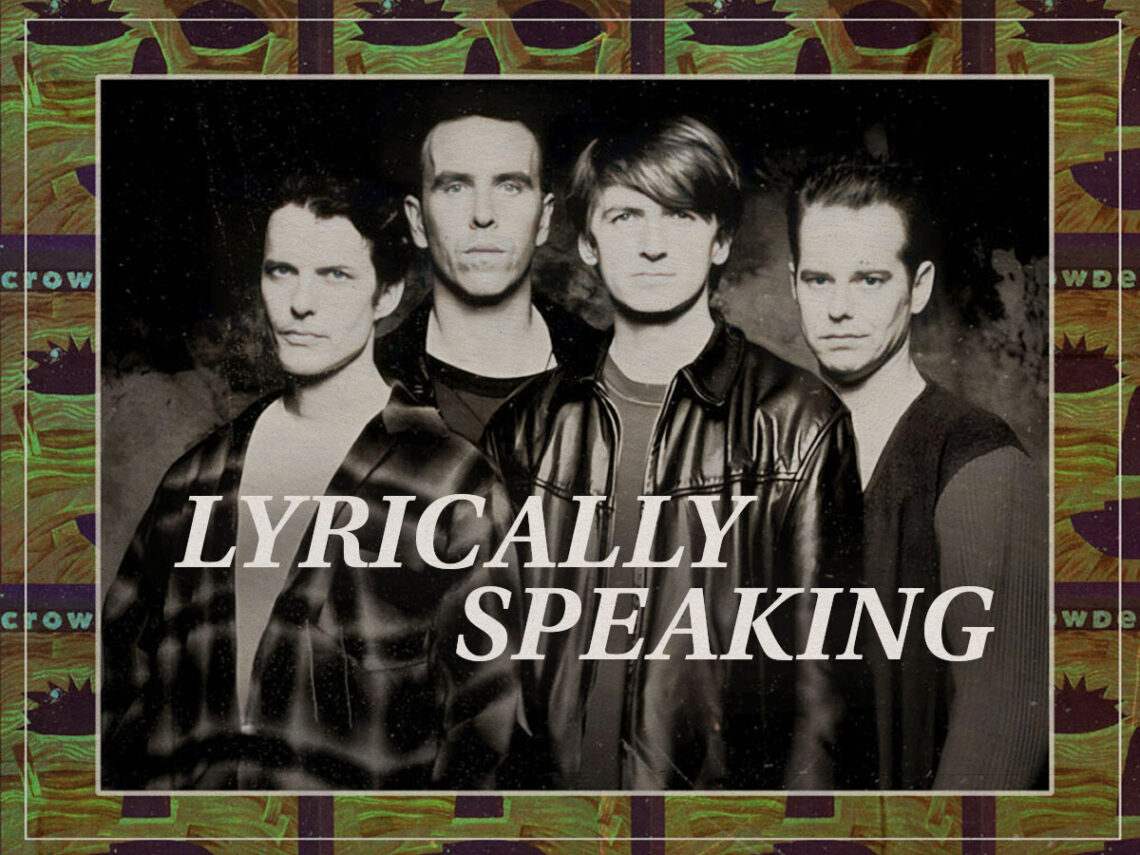
Lyrically Speaking: How ‘Don’t Dream It’s Over’ became the contemporary anthem of resilience

When Crowded House lead singer Neil Finn wrote ‘Don’t Dream It’s Over’, he didn’t really know what he was doing. Not in the technical sense; of course, Finn knew how to pen a hit. However, his inspiration for creating such a timeless track was a little hazy as he used the general feeling of being lost as a springboard: “That one actually fell out literally,” he said, “Without me thinking about it too much.”
Why, then, has this song become one of the most important in the contemporary music industry? Not only has it been covered by countless artists, but it has also been reinterpreted at two major benefit concerts—first by Miley Cyrus and Ariana Grande at One Love Manchester in 2017 and more recently by Tate McCrae for FireAid in Los Angeles.
Even when the song isn’t so heavily attached to industry-wide calls for unity, it takes on an undeniable ethereal edge, compounded by its lyrical exploration of resilience during times of struggle. When Finn performed the song with Fleetwood Mac in 2018, the nostalgia it always held came to the fore, rippling out onto the audience like a warm hug, one they didn’t know they needed until that very night.
Although much of its charm is in its melody, the real star is Finn’s words, which capture a sense of longing and hope—two of the most universal concepts that, in turn, ensure its timelessness. Even the repeated use of the word “freedom” in the opening verse screams a sense of yearning in the face of adversity when times seem dark, but the heart reaches out for respite.
“There is freedom within / There is freedom without / Try to catch the deluge in a paper cup,” he sings, noting the relentless nature of struggle by reminding that “there’s a battle ahead,” though feeling despair gets a lot easier after realising you are never alone: “You’ll never see the end of the road / While you’re travelling with me.”

Then Finn’s voice climaxes with unavoidable reassurance, centralising its overall theme of unity and solidarity. “Hey now, hey now / Don’t dream it’s over,” he sings, “Hey now, hey now / When the world comes in / They come, they come / To build a wall between us / We know they won’t win.” When this song was included as part of the benefit concert in Manchester, these words became particularly resonant as people from all over united against societal uncertainty.
Although external threats like these will always seek to “build a wall between us” and divide communities, knowing that togetherness can always be achieved through musical experiences, felt powerful, reinforcing the value of communal support during particularly difficult times. While the meaning became somewhat shaped differently for McCrae’s recent rendition, the overall fight for strength remained as people came together in support of those impacted by the wildfires.
Throughout the second and third verses, Finn uses different situations and hardships to convey varying degrees of struggle, like a broken down car or materialistic anxiety, before exploring the world’s tendency to ignore the difficulties among those that surround them. However, hope and resilience ultimately prevail as if they are fated, implying that, while turmoil is inevitable, unity is constant.
This is particularly evident in the lines: “Now I’m walking again / To the beat of a drum / And I’m counting the steps to the door of your heart / Only shadows ahead / Barely clearing the roof / Get to know the feeling of liberation and release.”
Interestingly, ‘Don’t Dream It’s Over’ isn’t all that unique when looking at its lyrics, and even seems a little vague in its exploration of themes. However, its inability to be boxed in or pushed into a corner is precisely what makes it the perfect vessel for distinctive cultural moments. After its release, it became a touchpoint for both personal struggle and political tension, taking on different meanings depending on the contexts in which it exists.
Whenever musicians need to band together to remind the world of the power of the art form in uniting and supporting others, ‘Don’t Dream It’s Over’ is unsurprisingly a go-to anthem, with different performers adapting its meaning to their liking. And, even when it’s not such an overt knee-jerk reaction to any political or societal development, its lyrics and melody hold enough nostalgia to captivate an entire sea of overwhelmed music lovers.
