


Do psychopaths like certain types of music?

The Knack’s ‘My Sharona’ and Blackstreet’s ‘No Diggity’ are two of the catchiest jams ever committed to tape, but according to science, they appeal to very different sorts of minds.
The results of a much-publicised 2017 study conducted at New York University’s Fox Lab found that ‘No Diggity’, along with Eminem’s Oscar-winning ‘Lose Yourself’ and Justin Bieber’s ‘What Do You Mean’, were among the preferred bangers of people with psychopathic tendencies. ‘My Sharona’, meanwhile, despite being a song about lusting after a 17-year-old girl, was ranked among the songs favoured by the “least psychopathic” participants in the study.
If this is already sounding like suspiciously oversimplified hogwash, bear in mind that a lot of psychological research is done with the hopes of finding some sort of pattern or connection that ultimately proves non-existent or unconfirmed at best. The general public never hears anything about 99 per cent of these studies, for good reason, but sometimes, when the subject matter has unusually juicy mass appeal, the lab coats just can’t help themselves, and a press release goes out.
This particular psychopathic music study was led by Dr Pascal Wallisch, a professor of Psychology and Data Science at NYU, who, when asked by the Washington Post about his personal music preferences, replied, “I’m really not interested in music at all”. I suppose it can be helpful for a scientist to be emotionally detached from the subject he’s studying, but declaring a total lack of any “interest” in that subject doesn’t exactly breed a lot of trust in how he’s going to go about dissecting its effects on people, either.
Wallisch’s study was specifically about trying to determine if someone’s musical preferences could potentially be used as an indicator of their psychopathy score. Part of the impetus was to challenge the cliché of psychopaths in fiction, who are often depicted as having high-minded musical taste. “In the movies, if you want to establish in one shot that a monster has a human side, filmmakers play a certain kind of music,” Wallisch said, bringing up the examples of Alex listening to Beethoven in A Clockwork Orange or Hannibal Lecter digging on Mozart in The Silence of the Lambs.

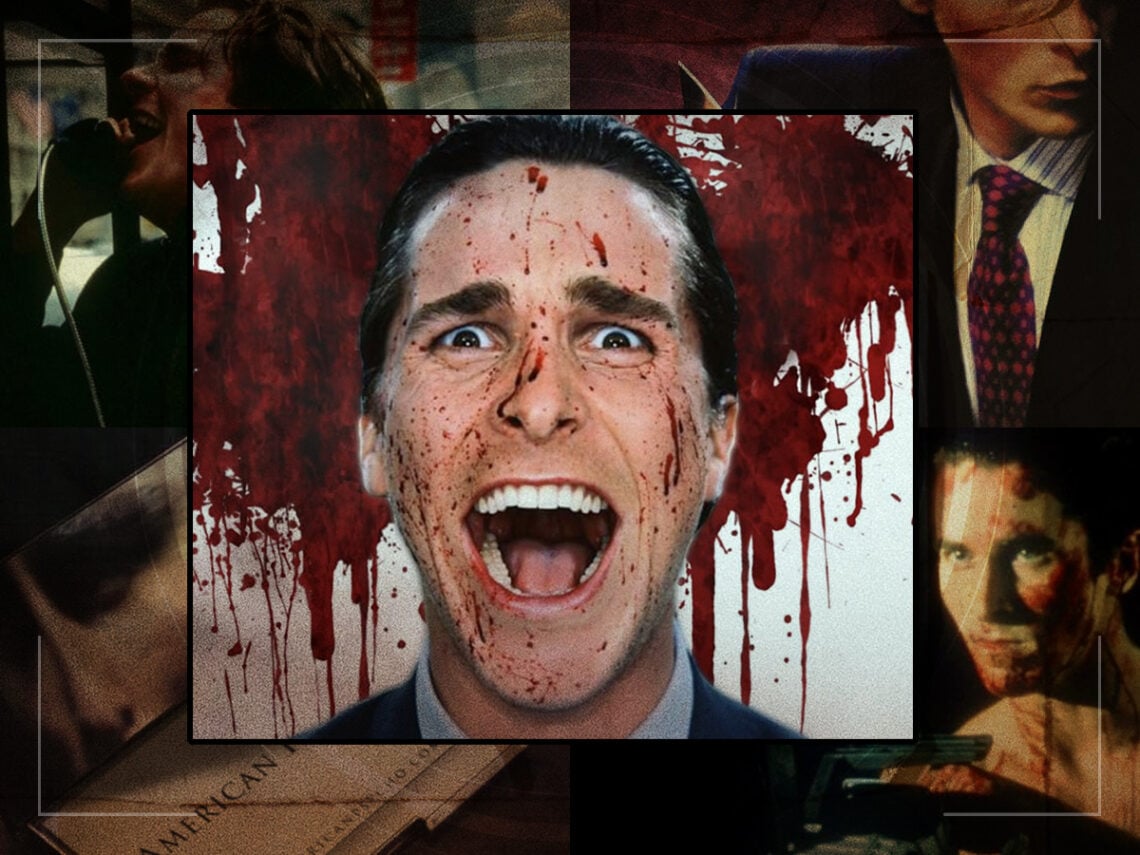
Wallisch must not have seen or read American Psycho, a film and book with probably the most famous depiction of a music-loving psychopath, in which the title character, Patrick Bateman, coldly pontificates on his favourite tunes by Phil Collins and Huey Lewis while preparing to murder his next victims. In the NYU study, in fact, ’80s corporate rock had decidedly less resonance on the psycho scale than it did for Bateman, as Dire Straits’ ‘Money For Nothing’ actually landed on the list of “least psychopathic” songs.
To be clear, Wallisch and his research partner Nicole Leal didn’t go into Clarice Starling mode for their work, visiting psychopaths in max security prisons to have them jot down a summertime playlist. Instead, the concept was far less about judging what music psychopaths like, and more about determining how music taste might change based on where listeners land on a psychopathy spectrum.
The participants in the study didn’t even represent a broad sampling of the general public, but a very specific group of 190 students enrolled in NYU’s psychology programme who listened to a variety of songs, from classical to pop to hip-hop, and rated them on a seven-point scale, based on their general enjoyment of the track. The participants were also separately scored on psychopathy tests, creating the comparison point for the whole study.
Is it possible that somebody getting a degree in psychology is also more likely to be a psychopath themselves? Probably. But a sample size of 190 people in the same city, all of a somewhat similar age and financial and educational background, makes it hard to glean a hell of a lot from the results, especially when you consider that only one per cent of the US population is believed to meet the scientific standard of a true psychopath. Wallisch explained that the research was more about finding possible hidden clues that could help identify psychopathic tendencies in the future, such as recognising someone’s Spotify playlist as a potential red flag.

“The beauty of this idea is you can use it as a screening test without consent, cooperation or maybe even the knowledge of the people involved,” the German-born Wallisch told The Guardian in 2017. “The ethics of this are very hairy, but so is having a psychopath as a boss, and so is having a psychopath in any position of power.”
Considering how many psychopaths are already in positions of power around the world, it’s hard to imagine that knowing about their love for ‘No Diggity’ in advance could have changed the course of history, but it’s certainly a terrifying idea that seems fitting for the times we live in.
Around the same time as the NYU study, Oxford psychologist Dr Kevin Dutton was conducting similar work for a Channel 4 special, collecting insights from a much larger study group of participants, albeit through the use of not-so-scientific online surveys. His results, similarly, suggested that people further toward the psychopath end of the spectrum seemed to prefer rap music over rock, classical, or jazz. This feels like a slightly uncomfortable line to draw when rap also happens to be a far more popular style of music with young people at this moment in history than those other genres.
Weirdly, despite happily throwing Eminem and Blackstreet under the bus as particular top faves of the un-empathetic, Wallisch acknowledged to The Guardian that there were actually quite a few other songs that had “greater predictive power” when it came to psychopathic listening preferences. He didn’t want to share those results, however, “out of concern that doing so might compromise any future screening test”.
There’s an extra wrinkle to this strange idea of someday identifying a psychopath by their music taste: what if the goal posts are moving on psychopathy itself? Dr Robert D Hare, one of the most influential researchers in psychopathy and the innovator of the ‘Psychopathy Checklist’, was asked at a 2011 conference if we’re all becoming collectively more psychopathic as a culture.
“I think, in general, yes, society is becoming more psychopathic,” he declared, “I mean, there’s stuff going on nowadays that we wouldn’t have seen 20, even ten years ago. Kids are becoming anaesthetised to normal sexual behaviour by early exposure to pornography on the internet. Rent-a-friend sites are getting more popular on the web, because folks are either too busy or too techy to make real ones… The recent hike in female criminality is particularly revealing. And don’t even get me started on Wall Street.”
That was Dr Hare speaking before Trump was elected, before Covid-19, and before the manosphere.
As Wallisch made clear during the time of his NYU study, the vast majority of psychopaths are not “axe murderers and serial killers… the reality is they are not obvious; they are not like the Joker in Batman. They might be working right next to you, and they blend in. They are like psychological dark matter.”
Because psychopaths can be anybody, from anywhere, with any type of demeanour, job, and hobbies, it does start to look incredibly unlikely that there’d be some universal chord progression or time signature that would align them, or that we should start looking at any Eminem super fan with more suspicion than has already been the norm.
Conducting a study like this certainly sounds fun, and it’s guaranteed to generate some attention and maybe a few extra bucks for your lab. It might not be the most responsible thing in the world to share the early, highly inconclusive results of such a study with the press, however, when you know that some media outlets will be more than happy to run with the simple premise that ‘psychopaths love hip hop’.
Tellingly, almost nine years later, there have been no further reports in the mainstream press about the NYU study or what larger conclusions it might have drawn, so for now, we’re still all free to listen to ‘No Diggity’ without asking any deeper questions about ourselves.
