


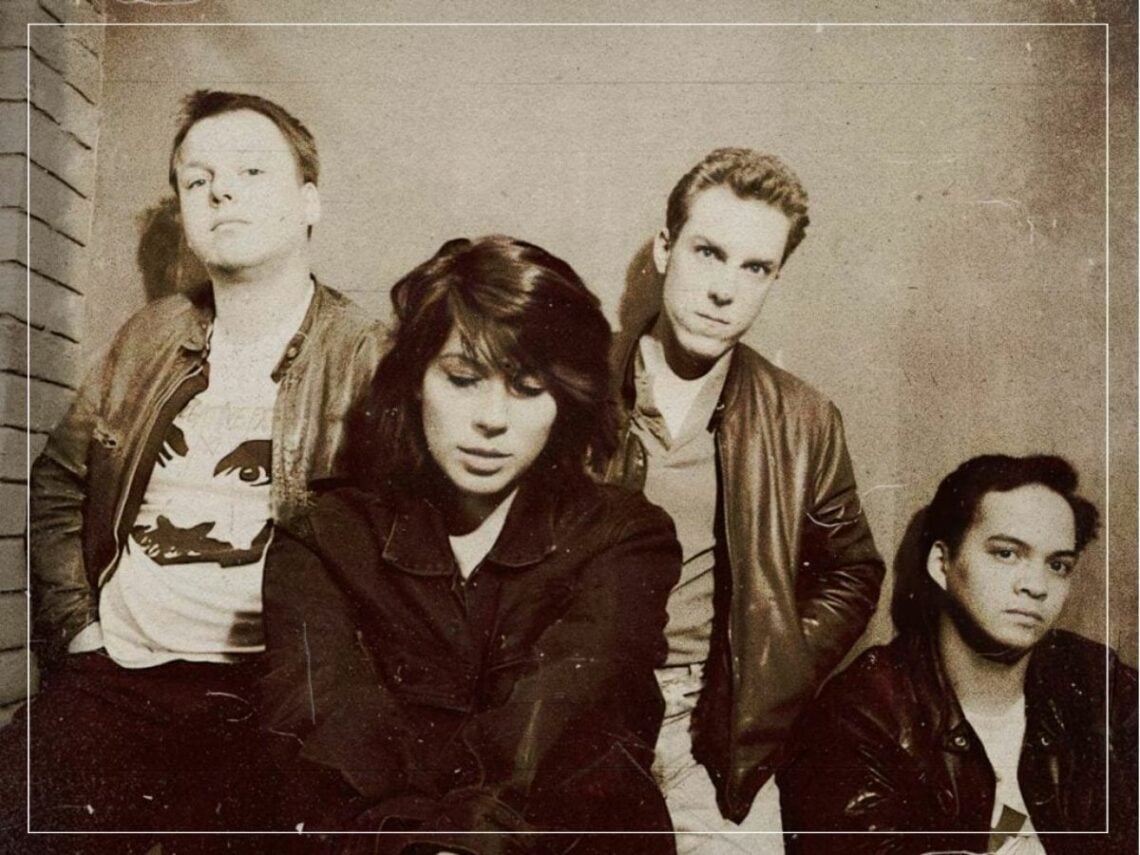
Detached, disillusioned, and into the depths of a new haze: do Pixies actually belong to grunge?

There’s a part during Nada Surf’s cover of Pixies‘ ‘Where Is My Mind?’ where, around two minutes in, the thumping rhythm slows, and it enters a grunge-like, almost Nirvana-esque trance, perfectly accentuated by the words: “With your feet on the air and your head on the ground / Try this trick and spin it, yeah / Your head will collapse, if there’s nothing in it.” It’s sluggish, burdened by the perils of the mind, and the perfect playground for everything grunge represents.
The Pixies were, of course, never branded as such, despite influencing the many grunge pioneers who followed in their footsteps. They also predated the explosion, which makes any such labels feel slightly off-centre when placing them in the broader analysis of rock’s offshoots. However, given how heavily they influenced the latter style, it proved their position as unknowing sculptures of a movement that would veer the world of rock off course.
At the same time, just because Pixies weren’t kicking around the same spaces as bands like Nirvana and Alice in Chains, that doesn’t mean they didn’t set the tone for what would inevitably arrive in the years that followed. For instance, in Pixies’ world, it was almost always about writing and performing authentically no matter how abstract the inspiration, like how the long scratch of chalk alongside a whiteboard creates an unsettling mark, one that’s harsh and jarring at times, but impossible to ignore.
It was the place where chaos and beauty could thrive, unrestricted by the weight of rock convention, where singing about sex, drugs, and rock ‘n’ roll no longer felt as captivating or even endearing when a new, more honest player emerged to take its place. It mirrored the forthcoming disillusioned mindset Kurt Cobain carried from the moment he attended school, the frightened soul of someone who had already asked, “Is this all there is?” and the heart of an outsider who never quite knew how to articulate such a perspective in a world that refused to listen.
Pixies understandably had an immense impact on Cobain, who, upon hearing their music for the first time, felt like his long-awaited prayers had finally been answered. “I have to admit, when I heard the Pixies for the first time, I connected with that band so heavily that I should have been in that band — or at least a Pixies cover band,” he told Rolling Stone in 1994.
He also admitted using many of their dynamics, “being soft and quiet and then loud and hard,” to be precise.

But their sonic cadences weren’t the only thing that placed them among the grunge heroes. Though not as quintessential grunge as it may seem at first, their alignment also stems from their role as a guiding force during a time when music was searching for something more confident in its authenticity—something that defied convention and paved the way for a sound that was bolder, more impactful, and inherently challenging in its resonance.
It was the underlying stream of ambiguity and unspecified context that suggested something deeper and more intellectually stimulating than basic rock and alternative, and the way this bridged the gap between two worlds, where the socially aware and subtly political spirit of the underground met something more calculated yet ultimately resigned in its resistance to commercialism. It was the quiet yet purposeful withdrawal from being a part of anything mainstream and the accompanying necessity for something as raw, open, and imperfect as grunge before the term had even shown up to claim the day.
Pixies leaned into their own flaws, with distortion presented as something that could breed a new kind of sonic intensity, like the glorious messiness that categorised ‘Debaser’ or the unmistakeably detached aura that defined ‘Velvety’. They championed the darkness that lurks between the lines and the inexplicable beauty that makes grunge feel like both a push into the future and a specific moment in time. Similar to the soaring riff that rips into the beginning of ‘Where Is My Mind?’, this signalled the place that felt simultaneously like a haunt into the abyss and a journey to somewhere endearing yet untraceable.
Ultimately, it primed the floor for that characteristically grunge-like aura you can’t really put your finger on, like the unpredictability of someone completely unreadable, though enticing nonetheless. The person whose gaze is filled with endless ambiguities, though belied beautifully by a strangely charming grin that pulls you into the haze. It’s slightly broken, lopsided even, yet somehow captivating in the way the light catches its glare, unmasked by any pretence that would otherwise dampen its realness.
Pixies might not belong to grunge by any other means, but the music is shaded with the same hue, helping to pave the way for the colours that would later flourish among discographies by Nirvana, Soundgarden, Alice in Chains, Pearl Jam, and countless others. Though occupying parallel streams, Pixies placed the surreal and the abstract centre stage, bookended by softer, considered licks and more anthemic melodies and rhythms, establishing the core of what would later wholly define the entire movement.
