


Dissecting Devo and Billy Corgan’s strange argument about Ok Go: “Sounds like a diss”

Ever come across a band or singer with a ridiculous amount of streams or engagement and wondered why they’ve never crossed your radar before? Billy Corgan once got heat for accusing Ok Go of raking in the numbers without much to show for it.
In all fairness, Corgan has a good streak of so-called hot takes. The kicker, though, is that he almost always has a point. In 2012, when piracy was becoming a major issue for artists, Corgan talked about how regurgitating well-known tropes was turning art into a service.
“People like me used to be auteurs, saying, ‘I’m going to do whatever the fuck I want to do, you like it or you don’t like it,’ and if you’re really good, they’ll come,” he told SXSW. “Now I’m supposed to beg for attention. It’s completely counterintuitive to why I became a musician in the first place and the personality of someone like me.”
He also said that people like him were effectively more susceptible to issues like piracy because they didn’t play the game. Which, in turn, was the beginning of the end for authentic voices, especially in an age where all music becomes more of the same. Fast-forward to more recently, and you can only imagine how cynical Corgan might be about AI.
Only, weirdly – he’s a bit more diplomatic, calling AI a tool for people to “game the system” and comparing it to the sorts of technologies he’s used in the past. He’s also directly used AI to promote Smashing Pumpkins’ music, sharing a video of him speaking in different languages and using the tech “before [it] destroys everything”. It’s satirical and tongue-in-cheek, but is it any different from using it seriously if the basis is that you’re still using it?
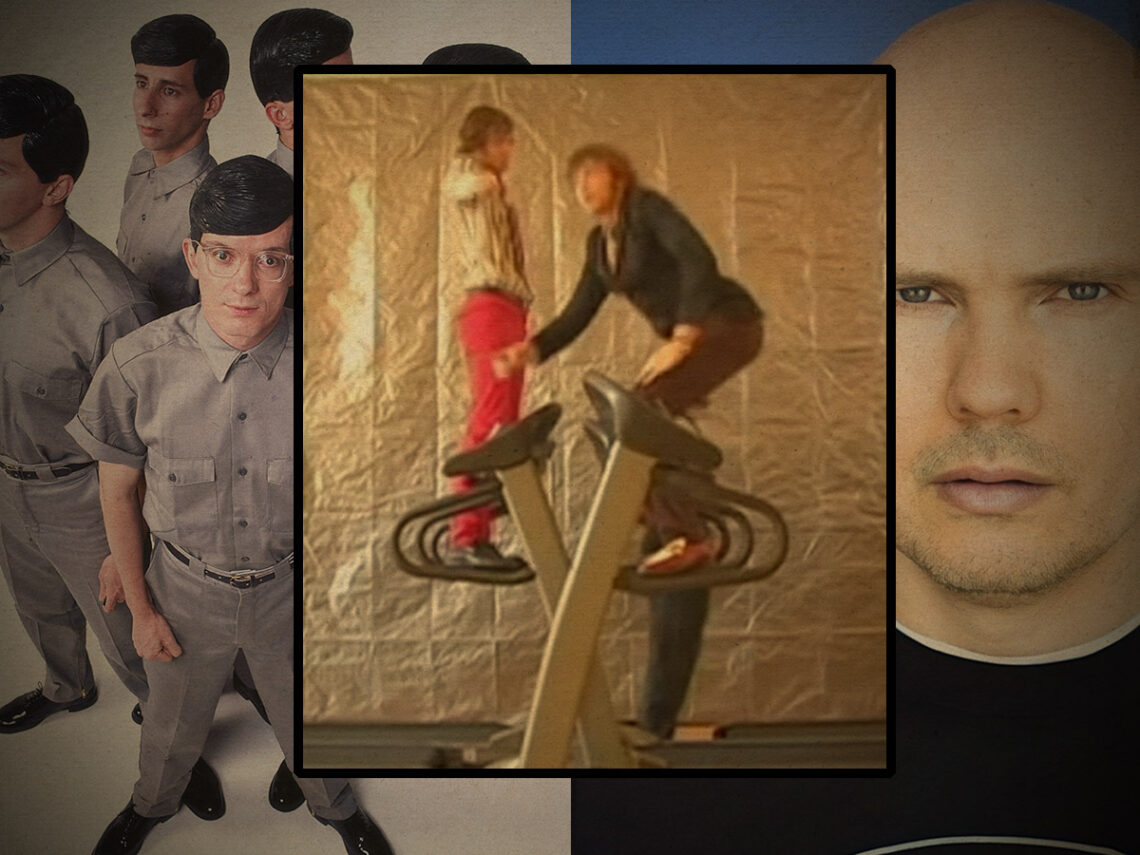
That’s a debate for another time. Another of Corgan’s observations is when Ok Go used YouTube to promote their music. He made a quip about how their numbers didn’t match up to their record sales, something many artists struggle with today. “That band got mad at me because they were one of the first bands to figure out that they could use YouTube as a marketing thing,” he said on a talk show, in front of Devo’s Bob Mothersbaugh.
“They had that video that was one of the first videos that went viral,” he went on. “And they got mad at me because I said, ‘Isn’t it a shame that they can get 24 million views, but they’re not selling any records?’ And they took that as a diss, but I didn’t mean it as a diss.” He then launched into a more elaborate explanation about how watching videos doesn’t always “convert” to record sales, which is a fair statement.
But what Mothersbaugh and some others might have taken issue with was his phrasing and how it came across as him punching down, when he could have called attention to it without disregarding Ok Go in the process. “That sounds like a diss,” Mothersbaugh countered in the interview, which – it probably was at first. But it was also undercut by a very real, very valid sentiment about the state of our current industry.
So, as a result, it’s fair to see both sides. Corgan experienced something most of us have when coming across a success metric that doesn’t match up elsewhere. Loads of musicians rake in the engagement figures on social media without that transforming into actual sales; it’s a mainstay of the modern digital age. But taking down Ok Go to make the point clearly didn’t sit right with Mothersbaugh, or strengthen Corgan’s point all that much more either.
