


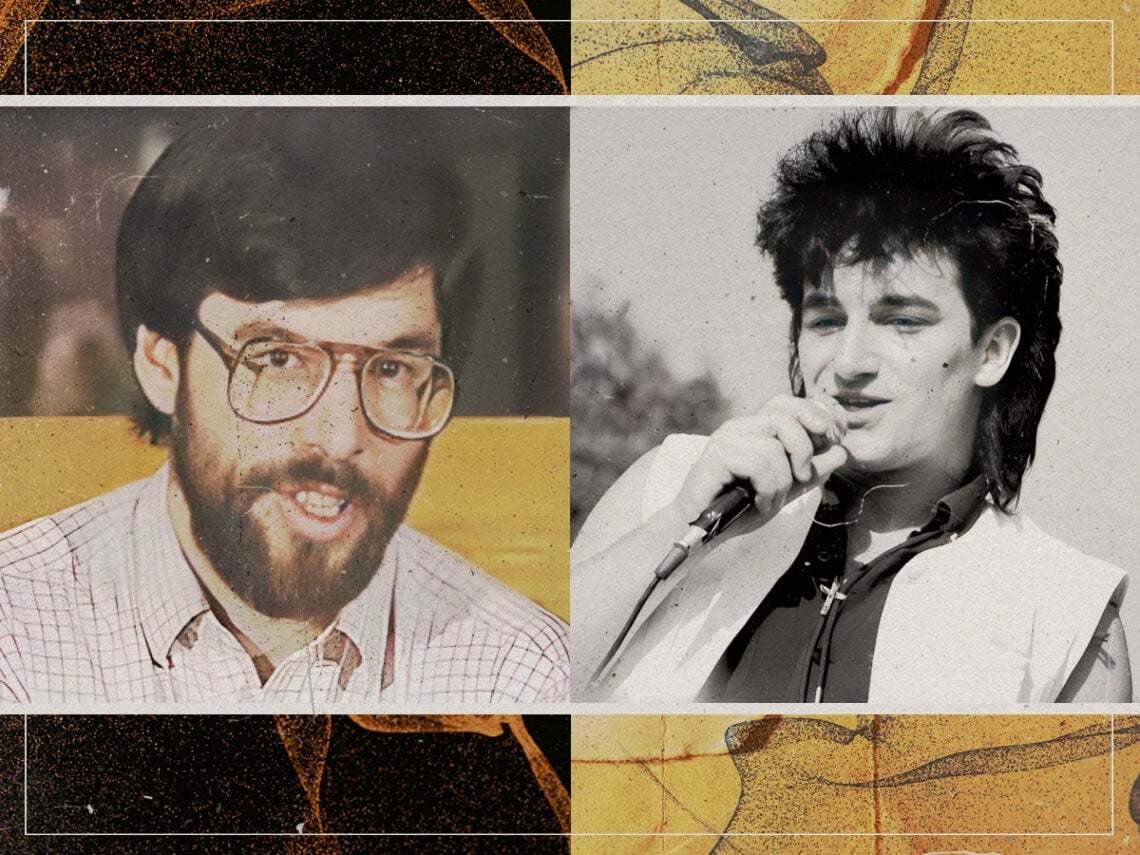
Gerry Adams vs U2: did the IRA really want to kill Bono?

As a fairly eccentric character, Bono has said and done some truly bizarre things over the years – from claiming The Beatles were Irish to forcing U2 albums into the iTunes library of everybody with an iPhone. Claiming that he was a target for the Irish Republican Army, however, probably takes the cake as far as outlandish Bono occurrences go. The IRA tended to target notable unionist politicians. The frontman of a notable Dublin pop rock outfit surely wouldn’t attract the attention of the paramilitary organisation, would he?
During his recent autobiography, Surrender: 40 Songs, One Story, Bono claimed that, during the 1980s, he and his wife, Ali Hewson, received a plethora of threats. These threats came from the criminal underground of Ireland, the American far-right, and the Irish Republican Army. This claim does pose the immediate question: why on Earth would the IRA be concerned with a pop singer? The answer apparently lies with Gerry Adams.
Gerry Adams is among the most prominent republican politicians in modern Irish history. As a member of the Sinn Féin political party for many years, he tirelessly campaigned for the reunification of Ireland. Of course, he has repeatedly denied claims that he has ever been a member of the IRA, despite numerous journalists claiming that he had been in a leading role since the late 1970s (although it is worth remembering that those claims were usually purported by British journalists, who might have a bone to pick with Adams’ republican politics).
According to Bono, Adams had expressed his dislike of U2 during the 1980s. Of course, this wasn’t unheard of – lots of people dislike U2 and their fairly middle-of-the-road take on rock and roll. However, Bono hypothesised that his avocation for a peaceful resolution to the troubles in Ireland made him a target for Adams and other republican leaders. Bono wrote in his memoir that Adams sent out “a vexed signal” to the IRA “to kick U2 off their national perch”.
If Bono was correct in this wild hypothesis, then the IRA certainly didn’t achieve their apparent aims of silencing the U2 frontman or his pesky peace-loving ways. Whether or not the Provisional Irish Republican Army took a break from trying to assassinate Margaret Thatcher or seeking the reunification of Ireland to focus their sights on U2 remains a mystery. However, Gerry Adams responded to Bono’s claims in 2022, saying, “I understand from press reports that he says his wife Ali and he were targets for the IRA. That’s news to me, and I’m sure to anyone else close to republican thinking back in the day,”
Adams did note that, although the IRA probably did not try to target Bono, the Sinn Féin leader remains, at best, ambivalent towards the stylings of U2. In a column for Andersonstown News, he derisively said, “Some of your commentary on the conflict here was shrill, ill-informed and unhelpful,” continuing, “You echoed the Irish establishment line. […] Thankfully, that changed. But it took a long time.”
There are many unanswered questions and mysteries still surrounding the conflict of the troubles, many of huge political significance that somewhat dwarf Bono’s unsubstantiated claims that the IRA wanted him dead. However, the possibility that, of all people, Bono could have become a victim of harassment or kidnapping by the Republican Army remains an interesting ‘what-if’ of both political and musical history.
Has Bono written any songs about Irish Republicanism?
For the most part, U2 adopted a pacifistic stance towards the sectarian conflict in Ireland, advocating for a peaceful resolution on both ends and an end to decades of violence and hatred. Nevertheless, the topic of the troubles did enter into the songwriting of U2 multiple times – though they rarely picked sides.
The most notable example of a U2 track about the conflict is ‘Sunday Bloody Sunday’ – written about the horrific incident in which the British Army ruthlessly massacred 26 unarmed civilians in Derry. Elsewhere in their catalogue, the Irish band wrote various songs about the troubles, most obviously on ‘The Troubles’ from Songs of Innocence, which Bono described as being about “domestic violence”.
