


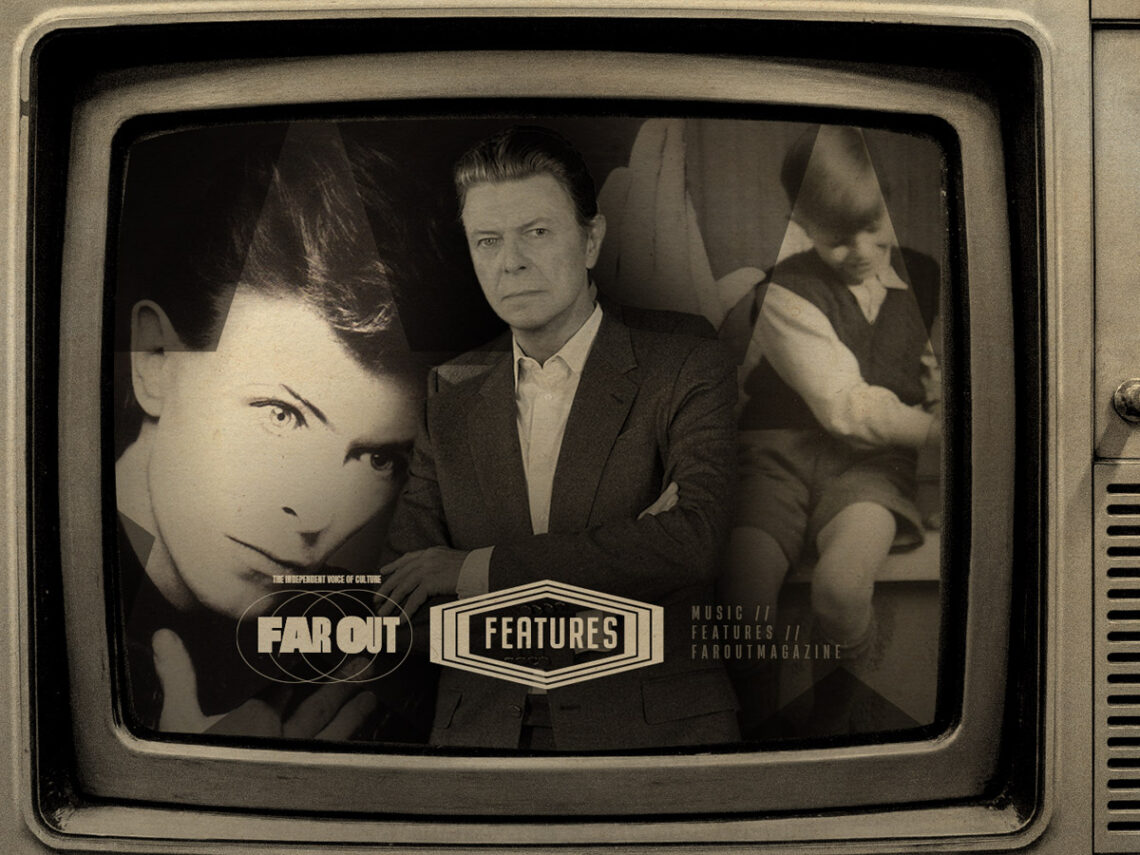
Did David Bowie’s death mark society’s downfall?

The most recent Weetabix advert seems like a very weird place to start, but there is no piece of media more indicative of our current decline than this depressing bid to sell breakfast cereal.
“Ladies and gentlemen,” it begins, “Britain hasn’t been so great of late…” It’s this simple, banal acceptance of our downward trajectory, casually uttered without contest, in a commercial that simply aims to push customers towards the sustenance of wheat, that really rams home just how far we’ve been from ‘great’ for quite some time.
When adverts can impassively mutter that and not shift an eyebrow by the merest millimetre among the viewing public, you get a decent measure of how deeply ingrained the sense of a spiralling malaise is among the masses. Things are bad. And the only certainty seems to be that they’ll get worse.
In truth, things have always been bad. We indulge ourselves too much in the whole ‘unprecedented’ narrative. Covid-19 was once HIV or Spanish Flu. AI obselence was once the nuclear era or the industrial revolution. Brains might be warped by endless conspiracy, but we once burned witches. Every generation has seen the Doomsday clock tick perilously close to midnight.
It is not a growing division that has marked the present as different, once again, that has been ever-present, but the shrugging despair of the majority is a marked change. And as George Eliot once wrote, “What we call our despair is often only the painful eagerness of unfed hope.” We’re fucking starving for hope. Did that hope die with David Bowie in 2016?
His friend Gary Oldman certainly seems to think so. “Don’t you feel that since he died, the world’s gone to shit? It was like he was cosmic glue or something,” the actor famously said. “When he died, everything fell apart.”
Since that quote first emerged, it has become a bit of a cliché. A bit boring, in fact. Maybe even problematic: ‘forget the death of bloody Bowie, there are far more literal things ruining the world that we could stop tomorrow if we could be arsed to try’, if you will.
But there is no doubting that Oldman’s sentiment has resonated with millions of people. And it is easy to see why. Simply put, in slightly cheesy terms, Bowie gave people hope. Culture gives us the courage to be arsed, and he gave it to the masses at its most inspiring. How can you see a man in a dress who looks like a heavenly alien sing ‘Heroes’ and not feel like the good fight is still firmly kicking against the pricks?
So, let’s bloody get out there and celebrate the next beacon of hope undoubtedly lingering somewhere in our midst. Despair is an enemy of hope, and engaging with art is as good a weapon as any to brandish against it. Bowie wouldn’t want us to dwell; he’d want us to rub shoulders with strange folks at Independent Venue Week, watching a new band, just maybe tap into something inspiring once more.
