


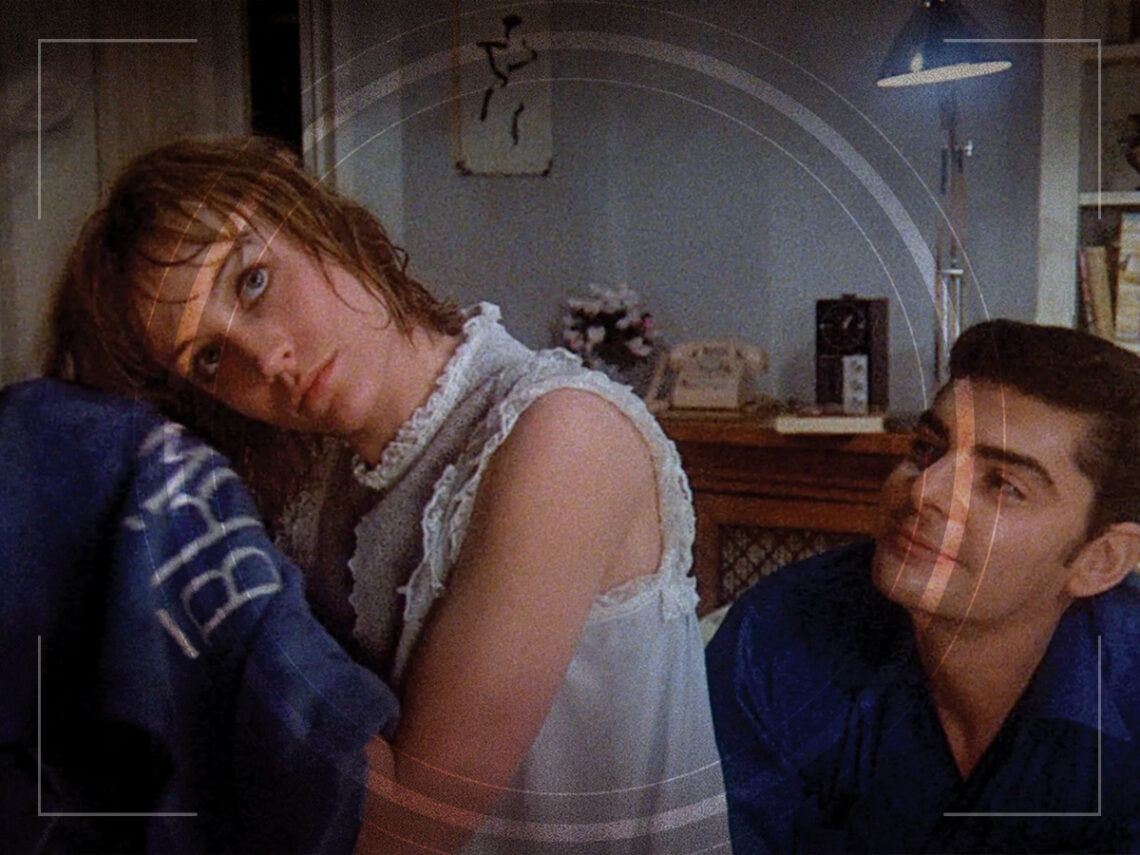
‘Diary of a Mad Housewife’: the worst love triangle of all time

Throughout the history of cinema, we have been inundated with love triangles, throuples and will-they-won’t-they scenarios. The stories of the silver screen thrive on romantic uncertainty and emotional chaos, although they usually result in lovers being united and realising their wildest dreams, settling for their soulmate, and eventually finding happiness after months of pining, yearning and torment.
But in most cases, we witness dilemmas in which people must pick between two equally great suitors—it could be the choice between Pedro Pascal and Chris Evans in Materialists, or Martin and Agathe in Passages, but usually, the quandary is worsened by the fact that both people are quite perfect, and you can’t decide who slightly trumps the other.
However, there is one film that adds a scathing twist to this genre by creating a love triangle that no sane person would ever want to be a part of, with equally awful suitors who make relationships (with men) seem like a fate worse than death.
Diary of a Mad Housewife was directed by Frank Perry, a filmmaker who developed a reputation for satire after the release of his hit movie, The Swimmer. The story follows a man called Ned Merril who constructs his own version of reality as a way of coping with his personal failures, with Perry using this to critique masculinity and the post-war male ego as Merril is slowly obliterated by each person he meets while swimming home.
However, while this might have been his most popular film, this tendency to critique jaded realities was realised in a unique way through the story of Tina Balser, a woman who is mistreated and abused by everyone around her, completely isolated from the world due to the lack of kindness that is shown to her and finds herself involved in affairs with men who treat her horribly.
Trapped between cruelty and control: A love triangle with no escape
From the very first frame of the film, we see that Tina is viewed as nothing more than a slave by her husband—he barks orders at her and behaves childishly in his incessant commands and whiny behaviour. He seems to hate everything about her: her hair, her appearance, being too skinny, not energetic enough, and her not being happy enough about being at his beck and call. Her eyes are glazed over in an almost lifeless way, slowly getting up and preparing for another mindlessly boring yet frantic day of cleaning and cleaning.
It’s a marriage with no spark, respect, kindness or warmth; everything about their relationship is on Jonathan’s terms, with Richard Benjamin ingeniously capturing the pathetic mood swings of a man-child who cannot do anything himself, screaming at his wife while patting himself on the back for completing one simple task. It is obvious that Tina isn’t happy, but as a woman in the 1970s who has been forced to quit her job, care for their children and has no money of her own, she is left with very little agency, leaving her trapped in this tragicomically awful marriage.
However, the one way she can get back at her husband is through infidelity, with Tina being repeatedly thrown into the same room as an eccentric writer named George. She is somewhat repulsed by him, whether it be his gargantuan ego, sleazy jokes or cruel comments, but he shows interest in her, leading her to break free of her everyday routine by venturing to his apartment for a sexual rendezvous.
George assures her that their relationship is purely physical, and from this point onwards, Tina finds herself thrust into another unsatisfactory relationship that ticks absolutely none of her boxes. The man becomes increasingly insufferable and cruel, even becoming physically abusive as he verbally berates her and insults every aspect of her personhood, much like what’s going on at home for her.
Additionally, Jonathan descends into manic territory while demanding that Tina organise every aspect of a Hollywood party he is planning, desperately trying to climb the social ladder and delusionally believing that he can transition from being a lawyer to a film producer, convinced of his astounding creative abilities and under-utilised talents in the arts. He throws a tantrum every five minutes, even encouraging their daughters to join in on his tirades as they all hurl abuse at her, accusing her of every mistake under the sun, while she tirelessly adheres to his every silly demand.
It’s an unrelenting and difficult film to watch, inciting rage by how she is treated and the fact that she is unable to stand up for herself. She is surrounded by complete and utter assholes, with what’s left of her agency being consumed by their constant demands as she tries to fulfil both their wishes. It’s a watch made even more devastating by the fact that she is always calm and patient when responding to them, no matter how awfully they treat her. She is being completely reasonable in everything she says and does, while they rise to maddening new heights with their abuse and extreme narcissism, while trying to gaslight her into thinking that she is the problem.
Carrie Snodgress’ performance of being restrained and calm in her frustrations only adds to the irony at the heart of the film—the ‘mad’ housewife is the only person with a modicum of sanity, kindness and rational thinking, with Perry painting the snotty men around her as ridiculous and selfish people who only highlight the fact that she is better than both of them, even if she sadly can’t see it herself after months of enduring their outbursts.
It leaves us with one question of who will she stay with? Will she stay in a loveless marriage with a pathetic social climber? Or will she continue her affair with the abusive writer? The film ends with Tina sitting in the middle of a circle, slowly opening to reveal itself as a support group of some kind, as we hear the people around her shaming her for pursuing a divorce.
As the camera slowly pans out, with the impassioned objections of the group slowly fading out, we realise that she’s doomed either way. Women of this time were not given the luxury of choice, and Perry’s final shot reveals the unfairness of this lose-lose situation, only being met with more cruelty as she tries to find her way out of this toxic love triangle and save a fragment of her freedom and selfhood.
