


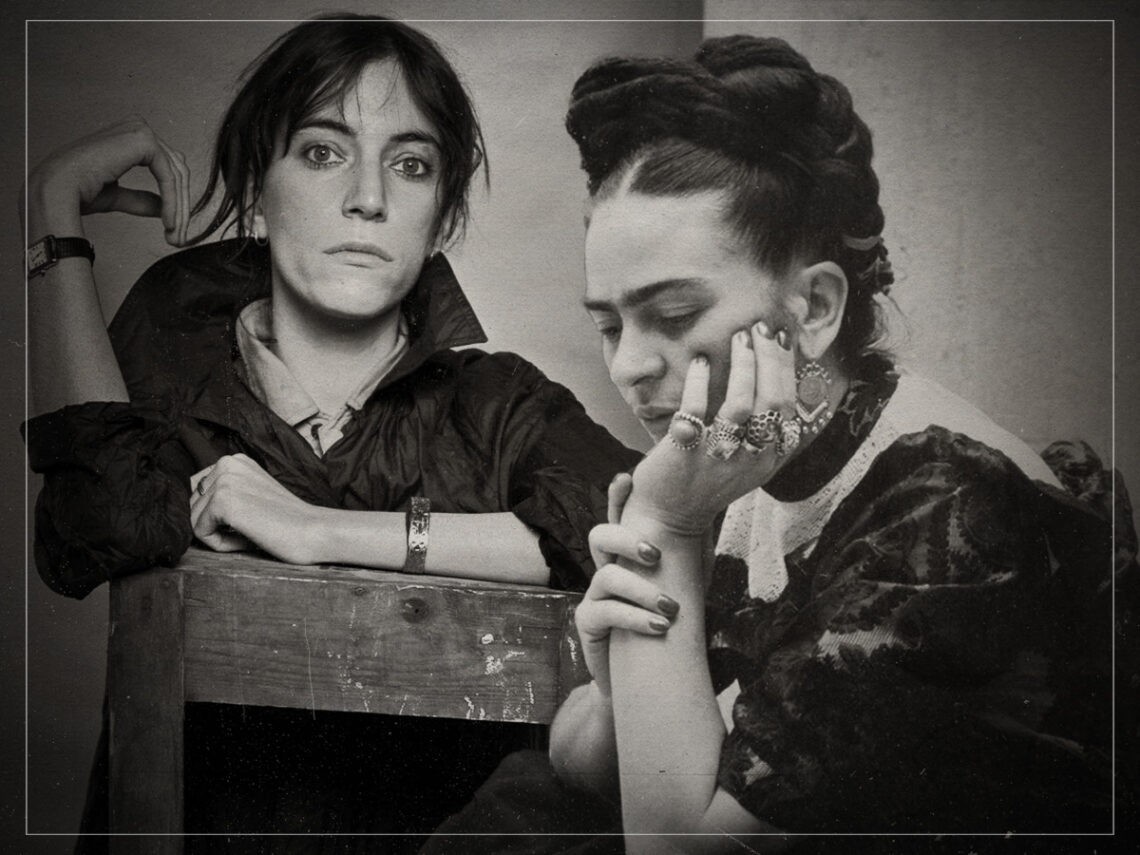
Detroit, Michigan: The town that defines and connects Patti Smith and Frida Kahlo

One of the most frustratingly common misconceptions about Patti Smith’s career is the idea that she ‘retired’ in the 1980s. It feels exhaustingly tied into the idea that women in art are ushered out of the back door at a certain age, or are expected to give it up the second they have kids.
Smith’s decision to step back from touring so she could be home with her children was not a retirement, but a change in priorities. She and Fred Smith could easily have stayed in New York City, hired a nanny, and carried on with their careers as before. But they chose not to.
Instead, the two rockers wanted to slow things down and be a family altogether, rather than a family splintered by life on the road. So they packed up and moved to Michigan, to St Clair Shores specifically, a quiet suburb of Detroit.
For some reason, people talk about this period of Smith’s life as a completely empty and silent one, when it actually couldn’t have been more the opposite.
“My mission is to stay healthy and productive, and serve as a good example,” Smith told Alan Light in 2007, and that rings true of her life in the 1980s. She was healthy, happy, raising good kids, but overwhelmingly, that made her arguably the most productive she’d perhaps ever been. While she didn’t tour, Smith wrote her poetry collection Woolgathering during this time, and in 1988, she came out with Dream Of Life, the record that she and Fred had been writing and recording all the time while people were claiming she was done with it all.
She was never done with it all and has made it clear throughout her entire career that she never will be. “Truthfully, I think of myself as a worker,” she told Interview magazine, and that attitude defines her completely as someone who will never retire as long as she has hands to write and a mouth to speak.
However, Detroit was a realignment for Smith, just as it had been for Frida Kahlo.
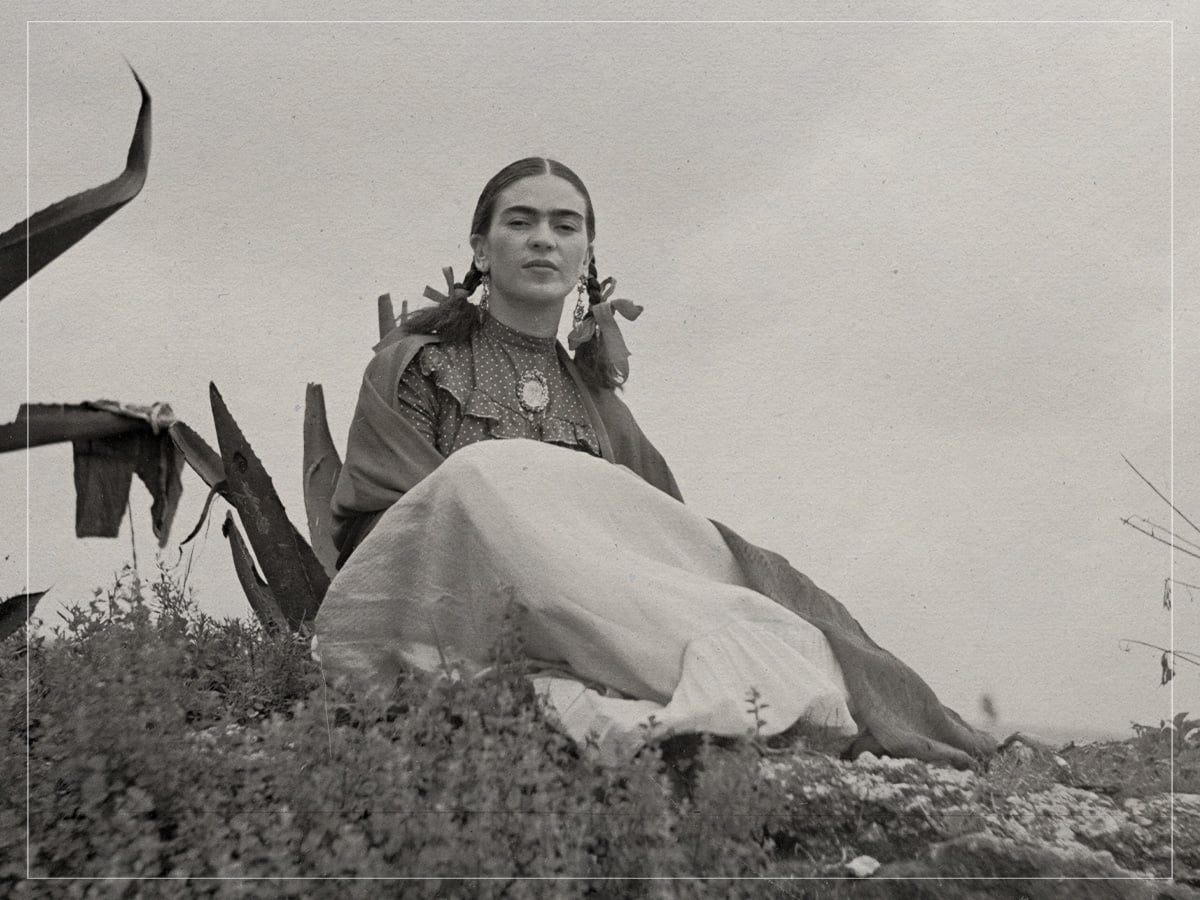
In 1932, Frida Kahlo moved to Detroit along with her husband, Diego Rivera. He was there to do a show, and to the press, she was simply there as his partner. Much as the press portrayed Smith’s life in the city as a solely domestic one, they limited Kahlo in the same way. Both artists refuted that.
“Are you a painter, too?” a reporter asked Kahlo on the day of her husband’s opening. She replied, “Yes. The greatest in the world.”
But when that same reporter met with Kahlo in their Detroit home, they limited her with the insulting headline “Wife of the master mural painter gleefully dabbles in works of art”.
Make no mistake, Frida Kahlo did not dabble in art. Kahlo is defined as one of the most important painters to ever live and one who, by now, far eclipses her husband in history’s remembrance.
Though separated by decades, Kahlo and Smith’s Detroit homes sit only a 20-minute drive away from each other. For Smith, a lifelong devotee of Kahlo’s work, she a 100% will have known that.
For her 16th birthday, Smith was given a biography about the couple and admitted to the Smithsonian that it shaped everything. Kahlo influenced her wearing her braids in two plaits; the relationship between her and Rivera influenced her connection with Robert Maplethorpe as her own artistic twin flame. Kahlo’s interest in dreams moved her to pay more attention to her own and write about them. “I loved her. I was taken by her beauty, her suffering, her work,” she said, and in 2012, she pilgrimaged to Kahlo’s house in Mexico.
By then, though, it must have taken on new meaning. The two weren’t just connected by geography and by the experience of living in the same city as two artists being minimised into merely women or wives. But they were also connected by grief, both experiencing seismic devastations in the same place.
In her painting Henry Ford Hospital, Kahlo brutally depicts her miscarriage, lying in a pool of blood as her lost baby floats above her, tethered by a cord. Her work so often dealt with the matter of her illness and complex medical history, but this piece is the most outright as it memorialises the traumatic loss she faced in the summer of 1932, in Michigan.
Just down the road, decades later, Patti Smith lost her husband, Fred. And so when she once said that she was drawn to Kahlo’s “suffering” and her work, it must have taken on new meaning as both of their most visceral experiences of grief, and the art they made about it, were tethered to the same place.
