


Der Mussolini: DAF, fascist dictators, and the birth of electro-punk

‘Here’s three chords, now form a band’: that is the basic manifesto which birthed the age of punk rock. A grassroots rebellion against the perceived complacency and banality of the mainstream music industry, punk changed the landscape of DIY music forever, but artists soon got bored of its primitive three-chord approach to rock music. So, when scenes like new wave started to introduce elements of electronic music into the punk sound, countless innovative artists sprang up in its wake: bands like DAF.
An abbreviation of the satirically named Deutsch Amerikanische Freundschaft, DAF was formed in Düsseldorf, West Germany, in 1978. During their early years, the group adopted something of an industrial, art punk style, spurred on by the blossoming punk scene in Germany at the time, on both sides of the Iron Curtain. However, the band’s sound became much more diverse and interesting when it started to take on electronic influences, largely resulting from the German new wave scene—Neue Deutsche Welle.
After landing upon this trailblazing sound, blending punk rock with newly emerging new wave and German nightclub culture, DAF promptly relocated to London and signed with the pioneering independent label Mute. Although this period would not provide a great deal of commercial success for the band, which eventually shrunk to being composed of just Gabi Delgado-López and Robert Görl, it was essential in forming their sonic manifesto for the future.
It was only when the group signed to Virgin Records in 1981 that the world at large started to take note of the group. Crafting a truly original sound, somewhere in between the industrialism of Throbbing Gristle, the punk energy of The Slits, and the electronic dance music of a Berlin nightclub, DAF paved the way for a vibrant new sound known as electro-punk. Of course, earlier groups like Suicide, The Screamers, and even Devo had made similar moves years prior, but DAF seemed to set out the electro-punk sound in its clearest and most infectious form.
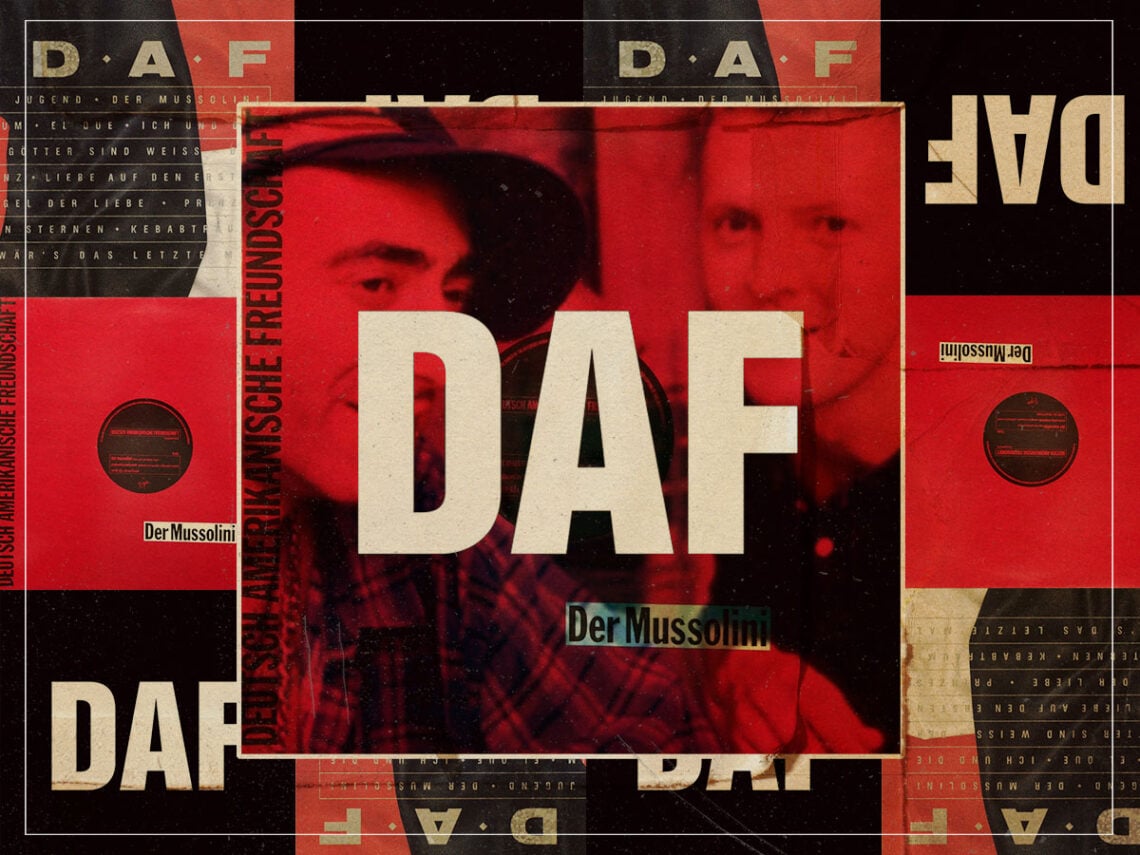
‘Der Mussolini’ was the song that launched this pioneering electro-punk sound for DAF. Arriving in 1981 via Virgin Records, the infectiously danceable track features a driving synth beat accompanied by Delgado’s distinctive, monotone vocals. The lyrics themself named notorious fascist dictators Benito Mussolini and Adolf Hitler, who together led the Axis during World War II. Inevitably, lyrics like “Dance the Adolf Hitler, and dance the Mussolini, and now the Jеsus Christ” caused outrage upon their release.
While you could argue that DAF’s ‘Der Mussolini’ saw the band drawing parallels between the oppressive nature of fascist dictatorships, organised religion, and the manufactured trends put out by the music industry, the band themselves seemed to disagree with that viewpoint. At the time, the songwriters claimed that the song arose from a parody of words and phrases that sounded interesting to the duo.
Of course, their other material, such as the Iraq War era ‘The Sheriff (An Anti-American Song)’, highlight the electro-punk pioneers as keen political songwriters who do not shy away from including stark social and political commentary within their work. Through that lens, it is much easier to suggest that ‘Der Mussolini’ was meant as a comment on society and the music industry during the early 1980s.
Either way, the groundbreaking single helped to establish the exciting, industrial sounds of electro-punk on a widespread scale. Driven by synthesisers, sequencers, and provocative lyricism, the German duo completely redefined expectations of electronic music and laid a path forward for the artists of the punk age to embrace new technologies and adapt their sounds to the rapidly changing musical landscape of the 1980s.

Never Miss A Beat
The Far Out Punk Newsletter
All the latest Punk content from the independent voice of culture.
Straight to your inbox.