


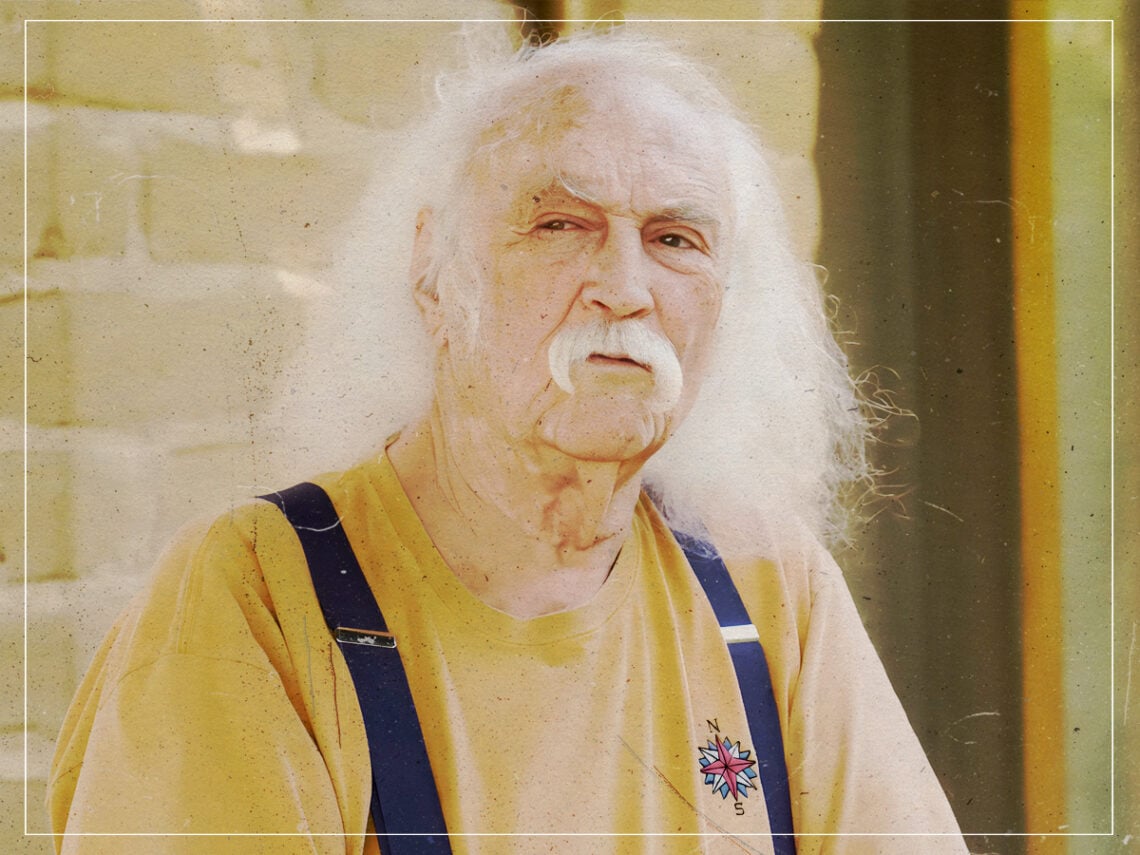
Drug busts, pistols, and a decaying romantic rebel: David Crosby’s very own lost weekend

The relationship that we have with musicians has changed dramatically in the age of the internet. People post pictures of what they’re having for dinner, and we get a glimpse into their family life, meaning we feel more closely connected to them. Previously, this was never the case; the only time we saw musicians was when they were on stage in front of thousands of people, meaning they disconnected from being human; they were superhuman and completely untouchable. And that resonated with how they acted.
“I think he’s done more coke than anyone in this country,” said Joel Bernstein, talking about his long-term friend David Crosby. “He’d deny that and say music was more important. But the drug was definitely affecting his music… He was abusing his nostrils so much, damaging them so much… The real tragedy of David is the fact that his musical potential has been so impeded.”
Crosby was a massive musical force. His work in The Byrds and Crosby, Stills and Nash resonated with people across America and worldwide. However, the superhuman aspect applied to a musician rubbed off, so Crosby began to think he was somewhat untouchable. It led to controversial run-ins with the law, problems with drug use and a general deterioration in health.
The ’80s were particularly rough for him. In 1982, he had a run-in with the law for possession of a quarter gram of cocaine and a loaded gun. In 1983, that same conviction was overturned because of a legal technicality. That original conviction was then reinstated, so a five-year jail sentence was hanging over his head.
During that period, he also found himself neck-deep in debt. He was using drugs extensively, had to pay his expensive legal fees and was $3 million in debt to the IRS. When he was on tour, his PR team were adamant that he was drug-free, and we were seeing a different version of the musician but looks deceived him.
Those close to him at the time remember the hotel rooms he set on fire when freebasing cocaine and describe him as “decaying” as teeth are missing, clothes hang loose off his body and his hair frays wildly. His life was consumed by drugs and living a rock ‘n’ roll lifestyle, embodying the romantic rebel look of the ‘60s but in the most unhealthy way possible.
Crosby always tried to keep the positives at the forefront of his mind during these darker periods, but it was hard to do so with so many negatives surrounding him. “The French have a phrase, ‘raison d’etre’, a reason for being, and I have several strong reasons for living,” he said, “There’s my music… My daughter, sailing, all the adventures I haven’t been on yet, all the music I haven’t written or sung yet.”
Crosby was also very aware of the impact his music could have on others and so took solace in that, “Almost nothing makes people happy, man, there’s very little in this that really makes people happy, and I can,” he said, “I love doing that. I love it when we sing ‘Teach Your Children’ and get 20,000 people singing it. People are touched and moved by that. It changes them; it changes how they feel. They’re less alone.”
Crosby was prone to controversy thanks to the lifestyle he lived, and that drove him down roads filled with drugs, lawlessness, and abusing his body. He managed to move people with his music, though and was able to latch onto that through the darker periods, however challenging it may have been.
