


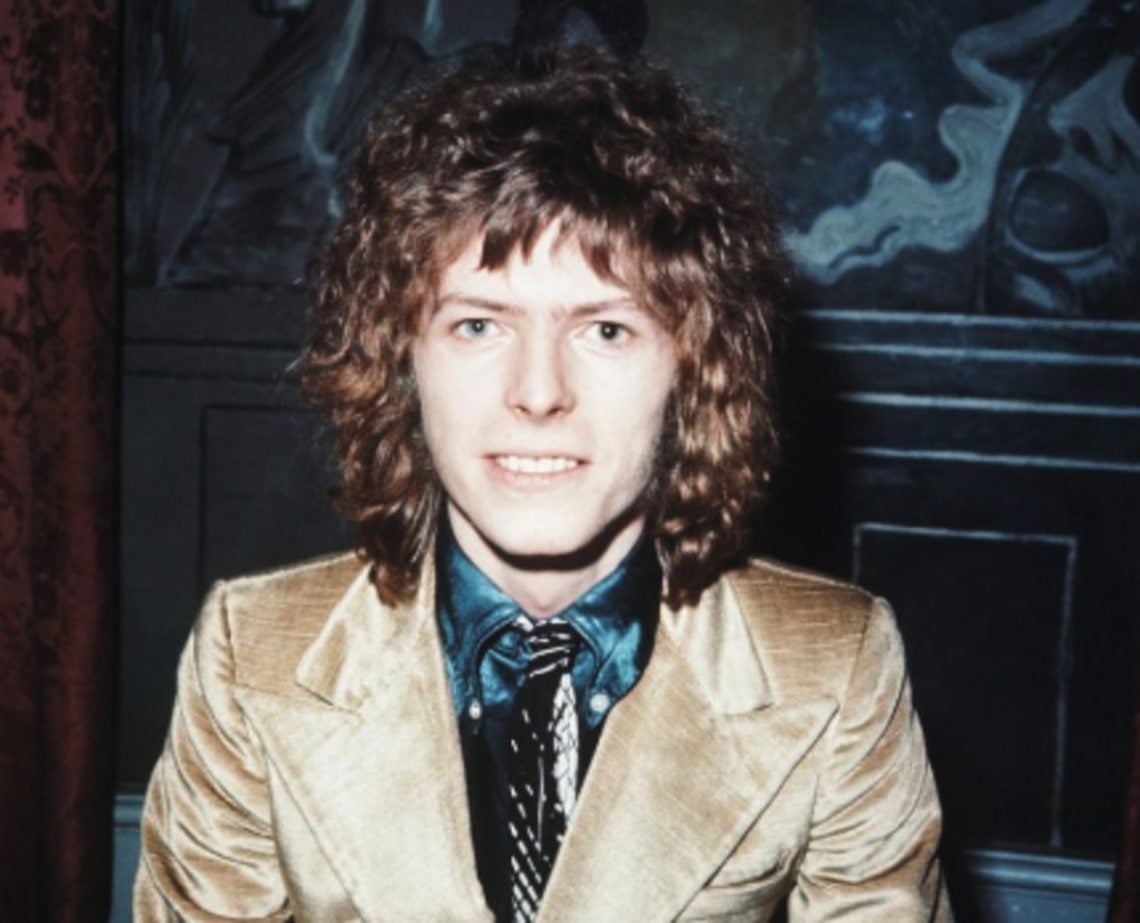
David Bowie on his favourite song by The Smiths

As well as being one of rock music’s most innovative creatives, David Bowie always liked to keep on trend and was often first to sing the praises for a blossoming act. Bowie’s most notable and prolific era was undoubtedly the 1970s. He stood out from his early glam rock peers in his brave willingness to drop everything and explore a new realm, whether that was electronic experimentation with Brian Eno or strapping on the boxing gloves to take on Let’s Dance.
As the 1970s melted away into the ‘80s, synth-pop was the name of the game. While Bowie’s music at the time didn’t fully submit to the guitar-shedding craze, he was one of the key influences on the movement and one of its biggest advocates.
In an interview earlier this year, Glenn Gregory, the lead singer of Heaven 17, told Far Out about his first encounter with Bowie at a Human League concert he was supporting at The Nashville in London.
During the performance, there had been a “weird buzz going around the crowd,” and people started whispering, “David Bowie’s here!” to which Gregory reasoned internally, “Don’t be daft, what would Bowie be doing here?”
Just as The Human League were finishing their encore, Gregory headed backstage to the dressing room, where he waited alone for a moment. Suddenly, “Just before the set finished, the door flung open and in came David Bowie with this big guy behind him, and he just grabbed me by the shoulders, and he started shaking my shoulders, beaming all over his face. He was saying, ‘They’re fucking brilliant, they are the future of fucking music’.”
Indeed, Bowie was right. The synth-heavy sound would prevail through the 1980s as the New Romantics drove a flagpole into the centre of pop music, but, like fashion, the world of music changes rapidly.
In 1982, a sound like no other before entered the stage. Guitars were back. The Smiths had arrived. Countering the synth craze, Johnny Marr and Andy Rourke brought “jangly,” melodic bass and guitar lines to frame Morrissey’s angst-ridden poetry. Little did they know at the time, the band’s 1983 eponymous debut album would serve as a blueprint for indie music as we know it today and retained the Manchester flame lit by Buzzcocks and Joy Division in the ‘70s.
The Smiths only stuck around for five years, but in that time, they released four near-faultless albums and a scattering of highly influential non-album singles like ‘How Soon Is Now?’ and ‘This Charming Man’.
As the band bowed out in the spring of 1987, they left us with Strangeways, Here We Come, the band’s most refined and textured work. As drummer Mike Joyce revealed in a recent interview with Far Out, all members of the Smiths were in agreement that this final album was the band’s finest.
Joining them in this sentiment was David Bowie, who became one of the band’s devoted apostles throughout the mid-1980s. In a 1992 interview with Q Magazine, Bowie praised the album and picked out ‘Last Night I Dreamt That Somebody Loved Me’ as a personal favourite. “I still rate Morrissey as one of the best lyricists in Britain,” he added.
Morrissey and Bowie first meeting in 1990 backstage at the Sound and Vision tour stop in Manchester. After getting along well, the pair famously performed a live duet of Marc Bolan’s ‘Cosmic Dancer’ in 1991 during Morrissey’s performance in Los Angeles.
Sadly, the friendship between the pair soured in 1993 after Bowie chose to cover Morrissey’s ‘I Know It’s Gonna Happen Someday’ as a copyright warning.
Watch the live rendition of ‘Cosmic Dancer’ and listen to David Bowie’s favourite Smiths song below.
