


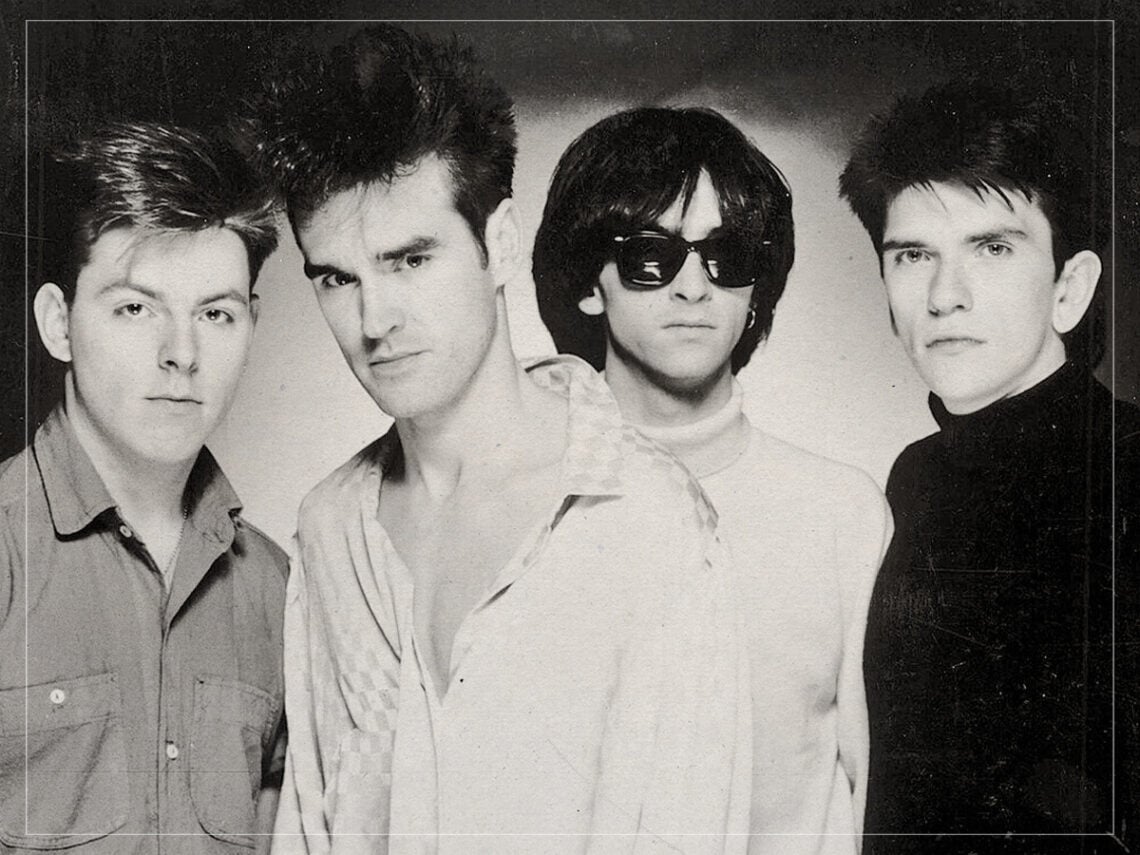
‘Handsome Devil’: The dark, provocative song The Smiths opened their career with

As The Smiths looked over the landscape of early 1980s Britain, having just formed a brand new rock band that largely rebelled against the trends of this bizarre new era, they would have likely wondered if stardom truly awaited them.
They were a band born out of the late ‘70s punk era, with their two leaders, Morrissey and Johnny Marr, rubbing shoulders at the sweaty, debaucherous gigs of the beloved subgenre – there was an honesty and integrity to the style of music that immediately captured these otherwise disillusioned youngsters, and suddenly, they had a spark of inspiration that would fuel their own creativity.
In 1982, they would form The Smiths and get to work on crystallising their own musical ideas of societal confusion. But in that brief period between watching gigs and forming their own band, the cultural landscape had shifted, and suddenly music had waved goodbye to the caustic edge of punk. Now, a relatively unprecedented era of indie awaited, where melodies were awash with the newly adopted synthesiser.
The Smiths were a band that were somewhat in limbo, not following a blueprint set out by any of their peers, combining angular indie and atmospheric pop. But in that was an opportunity for a band like The Smiths to seize the musical throne and spark a new era of British indie, which could galvanise a new generation of confused youngsters left in the dust of Margaret Thatcher’s rampant austerity.
A year after forming, they released their first single, ‘Hand In Glove’, which, while failing to chart on the UK singles list, reached number three on the UK indie chart and thrust the band into cult fame. They were immediately offered a slot on John Peel’s coveted radio show and accepted it, armed with a song that would truly plunge their listeners into the darkness of Morrissey’s storytelling.
The band played ‘Handsome Devil’, which later featured on the ‘84 compilation Hateful Of Hollow, had some of the most controversial lyrics of the band’s entire discography. Morrissey adopts the haunted narrator, and teacher of sorts, who addresses his audience as ‘handsome devils’ and offers them tutelage with the promise, “I can help you pass your exams.”
It sparked fury amongst the general public, who believed that Morrissey’s lyrics sought to glamorise the twisted intent of paedophiles, and while it may have seemed a somewhat random take from Morrissey, it was part of a wider political context, led by the Conservative MP Geoffrey Dickens, whose crusade against child pornography in the early ‘80s went as far as him making allegations about Satanic ritual abuse.
Within Dickens’ anti-pornography rhetoric was a deep-seated homophobia that saw his campaigning regularly crossover into bigotry, and failing to understand the tongue-in-cheek approach of Morrissey on this song, which was in fact not glamorising paedophilia, Dickens sparked an outraged movement that resulted in a tabloid smear campaign against the vocalist, forcing him to publicly respond.
With their careers threatened right before taking, Morrissey took to the press to defend himself, telling the NME in ‘83, concluding, “This piece makes me out to be a proud child-molester, and I don’t even like children. ‘Handsome Devil’ is entirely directed towards adults.”
