


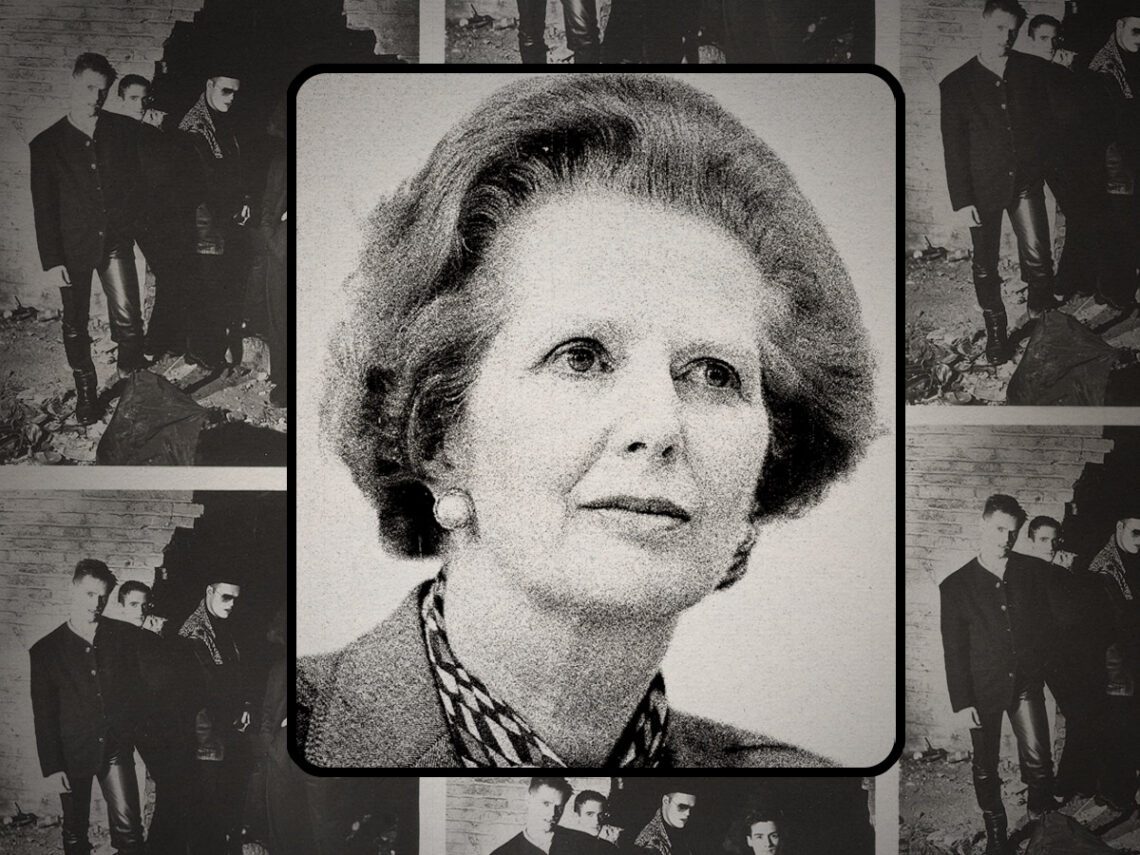
Did Margaret Thatcher “curse” a rock band?

If there’s one thing any hip, upcoming band of the 1980s wanted to avoid like the plague, it was a glowing endorsement from the country’s then Conservative prime minister, Margaret Thatcher.
Pop music and politics have rarely been friends. Labour have a better history of courting the charts’ stars to pull in the youth vote, from Jeremy Corbyn’s Stormzy hangouts in the 2010s and bespoke ‘Seven Nation Army’ anthem to Red Wedge’s admirable if naive efforts to rally around Neil Kinnock’s mission to enter ‘No 10’ 30 years previously. Echoing Harold Wilson’s orbiting of The Beatles to present his party’s modern image, New Labour’s electoral triumph saw Noel Gallagher quaffing champagne with Tony Blair and arguably spelling the exact moment Oasis’s classic era died.
There’s next to no wiggle room in the Tory Party, however. Deathly uncool and an enemy of working-class ambitions, musical or otherwise, Europe’s oldest party has barely attempted much pretence of any remote interest beyond ruthless class war and wholesale giveaways of our public realm. The Smiths’ indie stature took a slight knock when David Cameron confessed to being a fan, and the only other significant pop-cultural footnote in Conservative history was West Oxfordshire party chairman Christopher Shale dying in a Glastonbury portaloo. Reportedly, efforts at a Tory conference to start an “Oh, David Davis” during his Brexit negotiations fell flat on its face.
Aside from Corbyn’s authentic embrace of pop, an outlier who was loathed by the establishment, including much of his own Labour Party, it’s just not sexy when ‘The Man’ gives a thumbs up to our poster bands of rebelliousness or dissident excitement. It’s a cruel fact that slapped one Thrashing Doves hard just as their careers were taking off.
For a moment, Thrashing Doves’ pop takeover seemed all but certain. Marrying rock swagger with a glossy electronic flourish, the London outfit was showered with glowing coverage of the day’s music press, Melody Maker even hailing the band’s “assured youthful cockiness of a band that knows every major [label] in town is sniffing round its Cuban heels.” What could go wrong?

Well, like much of the country across the 1980s, Thatcher. In the run-up to the 1987 general election, the Iron Lady made a surprise appearance on Saturday morning Children’s BBC show Saturday Superstore that January, the successor to Multi-Coloured Swap Shop. The episode is most remembered for Thatcher’s flummoxed response to caller Alison Standfast’s question, “In the event of a nuclear war, where will you be?”, promoting a flustered explanation of the era’s Cold War defence strategy around sharply stating “in London.”
Yet, the Grocer’s Daughter’s kiss of death was meted out on the rising Thrashing Doves just on the cusp of their glittering indie momentum. Flexing her pop cultural antenna by praising Cats’ ‘Memory’ as one of her favourite songs, an exposure to a selection of pop hopefuls resulted in Thrashing Doves’ ‘Beautiful Imbalance’ presented for Thatcher’s very own musical ‘hit, miss or maybe?’. Pepsi & Shirlie’s ‘Heartache’ was swiftly slapped with a ‘miss’, but Thrashing Doves’ third single was given a massive thumbs up.
“I loved it!” Thatcher exalted. “The music was much, much better. I liked the electric guitars. I like the movement, the constant movement. I like the colour, there’s always something going on, and I just thought it was much better than the other two. I’d give it a four!”
Game over. While it wasn’t a complete bludgeon to their career, going on to support Duran Duran the next year and eking out a second album in 1989, such an appraisal from Thatcher killed any further interest from the indie press and whatever credibility Thrashing Doves had enjoyed, triggering many in the industry to dub the moment the “curse” from then on. The band would adopt the revised moniker The Doves for 1991’s Affinity before their final dissolution, and guitarist Ian Button would join Death in Vegas for their founding til 2011.
It wasn’t the last time the neoliberal queen found herself in pop’s company. Dying to half the UK’s delight in 2013, social media efforts to push The Wizard of Oz’s ‘Ding-Dong! The Witch Is Dead’ as Thatcher’s fitting send-off shot to number two on the UK Singles Chart, peaking at the top spot in the ever-reliable Scottish charts, however.
