


‘The Kitchen’ movie review: a slow-burning dystopian elegy

Kibwe Tavares and Daniel Kaluuya’s The Kitchen is a dystopian elegy that manages to be an evocative exploration of the human condition in a future that has already arrived for many communities living in the current global south, from Palestine and Congo to Syria and Sudan. In doing so, it becomes an exposé on our collective betrayal of humanity because the society portrayed on screen is not an imagined future but a chilling reflection of our present.
With The Kitchen, Tavares and Kaluuya—in a stunningly impressive co-directorial debut for the Get Out star—do not want us to sit comfortably for a second, not even when the curtains fall on the uncomfortable not-so-distant future. It is a witheringly scornful, slow-burn tragedy in three parts.
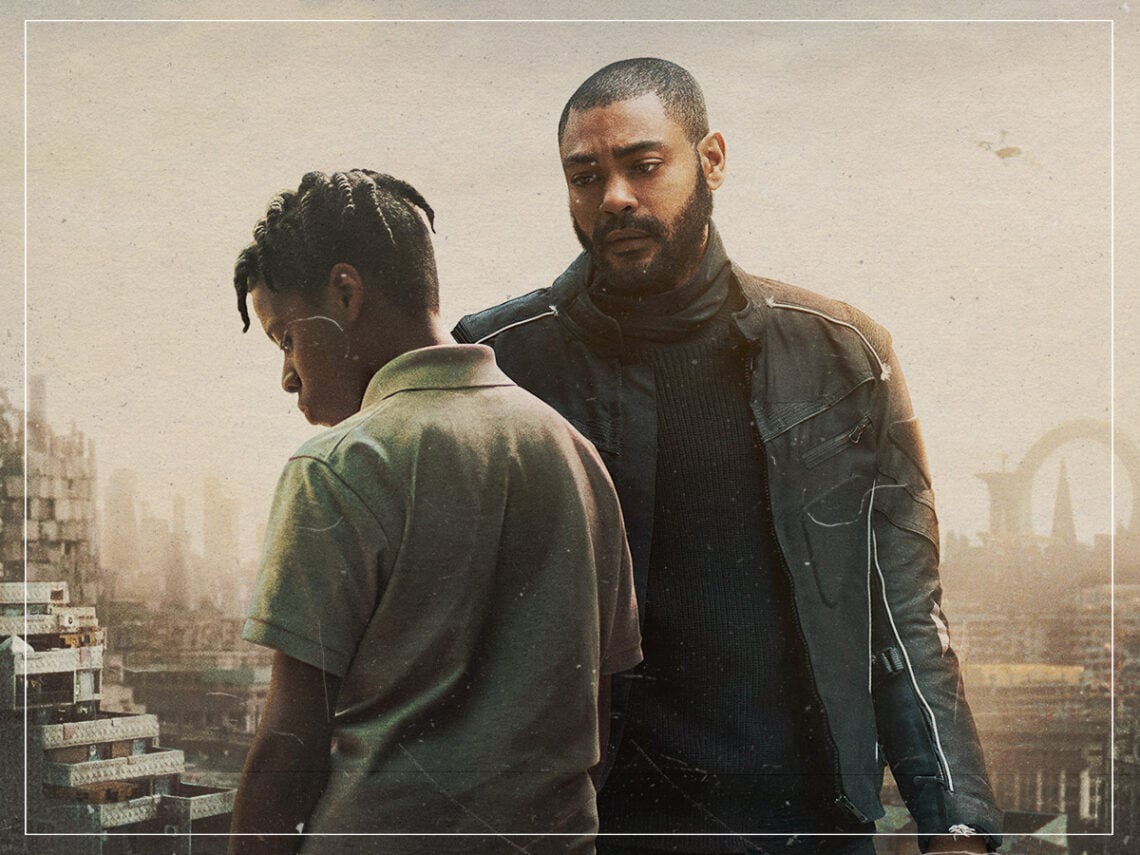
The film’s premise is stark: in a future where social housing is obliterated, Izi (Kane Robinson of Top Boy fame) and 12-year-old Benji (Jedaiah Bannerman) grapple with survival as residents of The Kitchen—a resilient community determined to cling to their vanishing homes. At its core, the movie is about the strained relationship between an estranged father and son. But that is just the Trojan horse in a tale that is ultimately about people who are refugees in their own country. They are downtrodden and constantly brutalised by an authoritarian state.
Izi works for a funeral home and dreams of owning his own place. Things become a bit more complicated for him when he meets Benji, who is possibly his son. Will he be able to step up and be the family Benji has been seeking, or succumb to the dreams sold by a post-capitalist, neo-feudal society? It seems like he won’t be able to do it, but in a display of strength that is emphatically laudable, Izi is able to turn his eyes away from the black mirror. But does that make The Kitchen a tale of hope? Not exactly. It is a cautionary story that should be taken as a reminder that a lack of working-class solidarity and increased apathy will end civilisation as we know it.
There are films that speak loudly but say little; The Kitchen is not one of them. It masterfully employs the dystopian backdrop to mirror our present reality. It embraces the cultural richness of the African diaspora and its descendants, using it as a potent palette to paint a scathing commentary on brazen commercial greed. Amid the despair, the youth of The Kitchen still grow up. They find solace in song, dance, and rebellion. The radio symbolises this resistance in a work written with much-measured nuance.
Jedaiah Bannerman delivers a heartwrenching performance as Benji, a young boy who has just lost his mother. Robinson continues to be a force to be reckoned with, expressing so much anguish, cowardice, and moral goodness while being so tremendously reticent. While the story primarily revolves around Izi and Benji, The Kitchen actually lashes out with its razor-sharp commentary on the corrosive nature of the ever-widening wealth inequality and the romanticisation of abject individualism.
The film is an unapologetic exploration of societal decay, where oppression echoes the familiar tune of historical colonisers. From land theft to the control of basic resources and extreme police surveillance, The Kitchen arrives with a searing reminder that the tragic future we once read in science-fiction books is already here for the exploited and oppressed. There might be condescending AI and digital mirrors in dimly-lit, rickety communal bathrooms in the world crafted by Rob Hayes, Joe Murtagh, and Kaluuya, but the reality that The Kitchen is rooted in is all too familiar. One pivotal scene that comes towards the end is even more revelatory.
The brutal extinguishing of the voice of resistance becomes the catalyst for the young residents of The Kitchen. In this scene, we glimpse the more affluent neighbourhoods, which are as grand and polished as the Gilded Age of Victoriana. Their retaliatory act of vandalism is ultimately inconsequential, but it triggers an offensive onslaught that is vastly disproportionate in nature. This is how the explosion of pent-up rage against a system that seeks to crush any glimmer of defiance is met by oppressors everywhere. This raw depiction of the disproportionate force wielded by those in power against those seeking justice may sound too similar, but that is simply because imperialists follow a similar textbook of oppression everywhere they go.
Move over, Saltburn. With shades of Black Mirror and Blade Runner, The Kitchen is the film you need to watch if you want to be a part of the class politics discourse in cinema in 2024. After all, in an age where the revolution is broadcast on our smartphones, scrolling away from uncomfortable truths risks forfeiting the future forever.
