


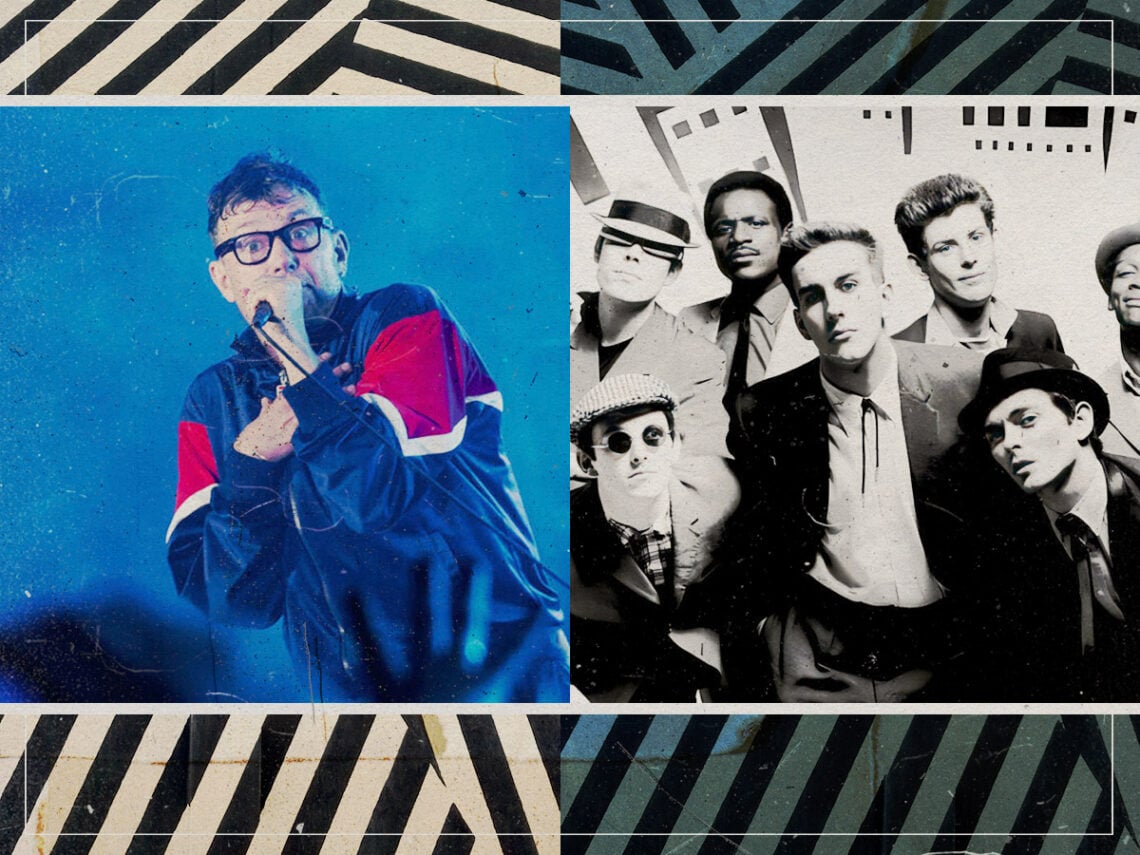
Damon Albarn on the brilliance of The Specials: “Passion for existence”

Many bands have attempted it, but nobody has captured the cultural fabric of the United Kingdom quite like The Specials. From a semi-detached house in Coventry, the group orchestrated a ska-punk revolution, culminating in some of the finest musical material ever produced in the UK. Although their tenure was short-lived, producing only two studio albums, the impact of the band and the 2 Tone movement as a whole was huge and long-lasting. Without The Specials, it is possible that the Britpop boom of outfits like Blur would never have happened.
Damon Albarn, the mastermind behind Blur and Gorillaz, is nothing short of a disciple of The Specials. Like many kids who entered their teenage years as The Specials came around, the band opened up Albarn’s psyche to the vibrant world of old-school ska tunes and politically charged anthems. From their inception in the late 1970s, The Specials built an audience for their renaissance of 1960s ska and rocksteady, covering works like ‘Rudy, A Message To You’ by Dandy Livingstone and ‘Al Capone’ by Prince Buster. Still, the band were never at risk of being classed merely as a covers act.
The Specials tracks were so much more than cover versions. They imbued each piece with their own unique identity and made it their own. Plus, their best-remembered songs were original compositions, usually written by keyboard player Jerry Dammers. These tracks covered topics such as the National Front, the welfare state, and regressive political policies. As the band progressed and Margaret Thatcher rose to power in the UK, they became more politically charged and more important – something which was not lost on a young Damon Albarn.
Speaking on a Sky Arts documentary celebrating the life of the frontman, Terry Hall, Albarn described the band as having a “Passion for existence and a sensitivity to the dirtiness and unfairness of life but, at the same time, elevating all of that into this visceral, spiritual thing.” This summation of the group could correctly be attached to any part of their career. However, it is probably most relevant regarding the case of The Specials’ biggest hit, ‘Ghost Town’.
Their final release before they disbanded, ‘Ghost Town’, was a stunning indictment of Thatcherite Britain, lamenting the run-down city centres caused by de-industrialisation and privatisation. In many ways, the song eclipsed the group as a whole, taking on a life of its own as people used it to voice their anger over the state of the country. “It was like perfection”, Albarn shared, and it is hard to disagree with him. Even today, over 40 years since its initial release, ‘Ghost Town’ still sounds as impactful as ever.
Albarn’s adoration for The Specials did not cease once they had split up, but he maintained a deep appreciation for the work of lead singer Terry Hall. After leaving the band, Hall formed the Fun Boy Three, who achieved some modest success in the 1980s pop charts, but it was not until the 1990s that he unleashed his definitive solo work. His debut solo effort, Home, was released in 1994, at the same time that Blur were topping the charts with their Britpop rebellion.
Given that Albarn had always been influenced by The Specials frontman, it was only a matter of time before the pair crossed paths. In fact, Blur got the opportunity to perform ‘Nite Klub’ with Terry in 1996, and Albarn would later recruit the singer for his post-Blur project, Gorillaz – most notably on the track ‘911’. In a final ringing endorsement for the frontman, Albarn attested, “I can’t overstate how much of an influence he was.”
