


“He thought it would be a disaster”: the conversations that almost killed James Cameron’s ‘Aliens’

It’s now celebrated as one of the greatest sequels of all time, but James Cameron’s Aliens was nearly “adiós, muchachos” during its troubled pre-production.
Whatever studio hand-wringing had was swiftly swept aside by the sci-fi thriller’s box office success. Running three weekends in a row at number one domestically and raking in around $150million globally, Aliens proved to be a world smash and cemented Cameron’s arrival in Hollywood as a new and vital blockbuster giant.
It all seems so obvious now. Shifting away from the original 1979 Alien’s claustrophobic horror to a space-marine action spectacle, Aliens’ genre U-turn avoided the sequel rehash that sapped the life of other franchise floggings and smartly expanded the Alien universe, offering audiences a wholly different experience from the series’ first entry.
Much of the Xenomorph lore was established in the sequel, if at the expense of the Lovecraftian mystery shrouding the first movie’s ‘seventh passenger’, from the creature’s fictional taxonomy, hive-like eusociality and warrior castes, and the unveiling of just who’s laying those facehugger eggs.
Yet, a good three months of development hell plagued Aliens before the project was finally greenlit. Discussions on a potential follow-up to Alien were had almost immediately within the company responsible, Brandywine Productions, but 20th Century Fox was unsure that such a project could replicate the surprise success of the original. After delays due to an unpaid profits dispute between Brandywine and Fox, development was ready to kick off in earnest in Spring 1983, although not without anxieties.
The Los Angeles Times reported that, while Studio President Joe Wizan claimed to have largely supported the Aliens project, several insiders let slip that Vice Chairman Norman Levy was against the idea from day one. “[Levy] wouldn’t even hear about it,” Brandywine co-founder David Giler stated. “He thought it would be a disaster.”
Levy rejected any such idea, however, responding: “I don’t recall ever saying that. It was a movie I wanted to make. I was concerned about the cost and whether or not we were in a posture to take on a big-budget film like that. It was a question of economics.”
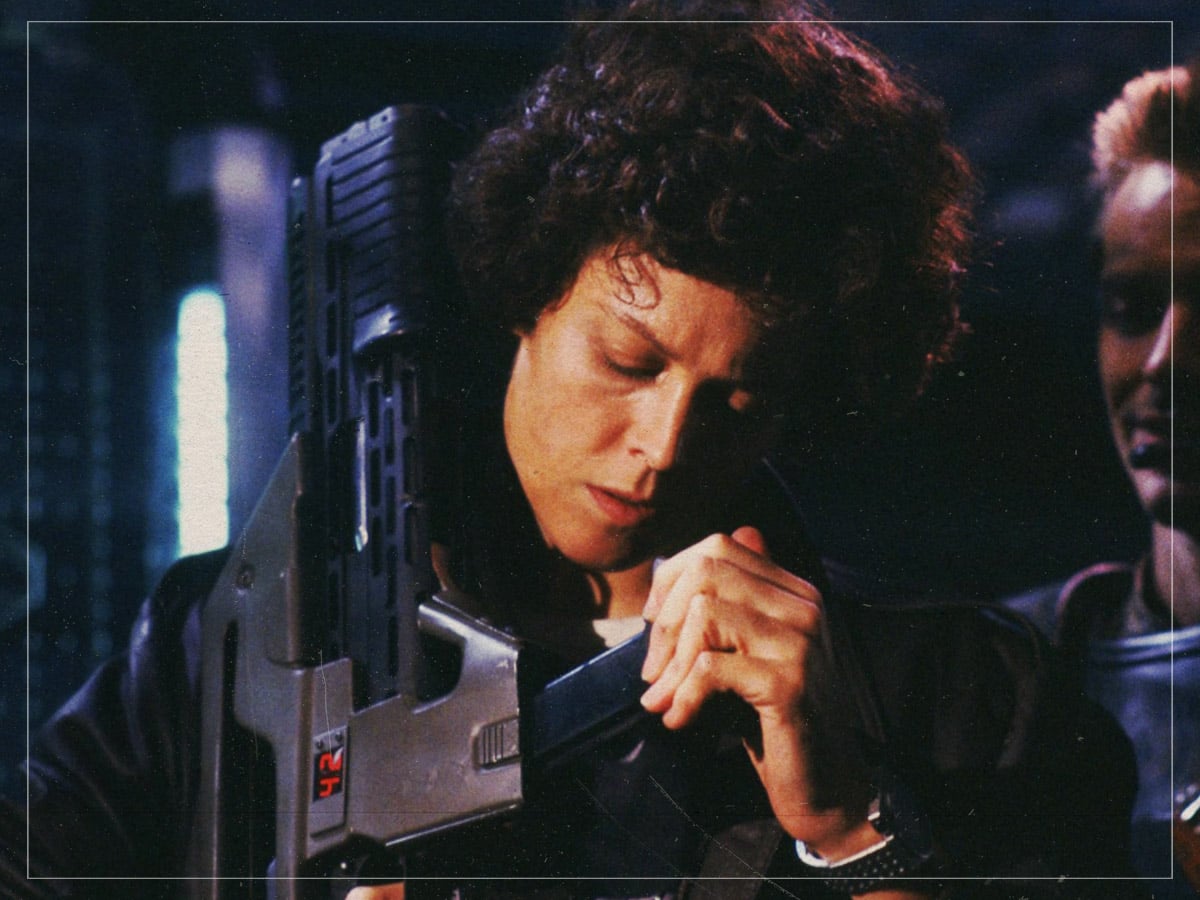
Whatever the case, the Aliens can was kicked down the road til summer, when Giler’s Phoenix Co subdivision chanced upon an unproduced script that immediately struck development executive Larry Wilson as “electrifying”, the rest of the Brandwyine team agreeing they’d found their much-needed writer for Aliens. The screenplay was titled The Terminator by one James Cameron.
At this point, Cameron didn’t have a great deal of clout in Hollywood. Counting Piranha II: The Spawning under his directorial belt and a smattering of unit assistant and arts department roles, including matte paintings on Escape From New York, the upcomer nonetheless was OK’d to come up with an Aliens treatment, firing off a 42-page submission in three days, before being shelved by 20th Century Fox over story differences. Across the next 18 months or so, the rights to Aliens were nearly sold to the team behind Rambo, before Larry Gordon was hired to replace Wizan while The Terminator was released to success, boosting Cameron’s credibility and eventual Aliens upgrade to both writer and director.
Then the loggerheads seriously began. Aliens was a big concept that demanded a likewise big budget, something Fox Chairman Barry Diller tried his best to resist. Supposedly, an offer of $12 million was presented to Cameron and his then-producer wife, Gale Anne Hurd, prompting the two to decline under no uncertain terms. “We walked out and said, ‘Thanks, we’ll do something else,’” Cameron later revealed.
It was Gordon who managed to loosen Fox’s purse strings. He’d always believed in Cameron and the Aliens project, Diller eventually relenting and agreeing on a budget of $18.5 million. Yet, in April 1985, another stumbling block was encountered with casting. Headaches were had among the Fox honchos over Cameron and Hurd’s deal-breaker for Sigourney Weaver’s return as main protagonist Ellen Ripley, arguing that if the actor’s New York agent knew the entire project rested on her playing the lead, more cash could be demanded. A threat was allegedly made that Aliens would be made with or without Weaver, prompting another walkout from Cameron and Hurd straight to Hawaii for their honeymoon.
“We assumed it was a dead issue,” Hurd would state. Fox soon caved in, though, negotiating with Weaver’s people a cool $1 million plus a percentage of the profits and finally commencing principal photography in September 1985 in London, Cameron soldiering through unionised British crews within schedule and under budget. Released in July the following year, Aliens would be showered with critical praise and stand as one of 1986’s most popular pictures, taking $13.4 million in the first five days alone.
Six years later, David Fincher would bring Alien 3 to double-jawed life on cinema screens, a picture that waded through similar trials of development hell and creative turmoil across its equally fraught gestation.
