


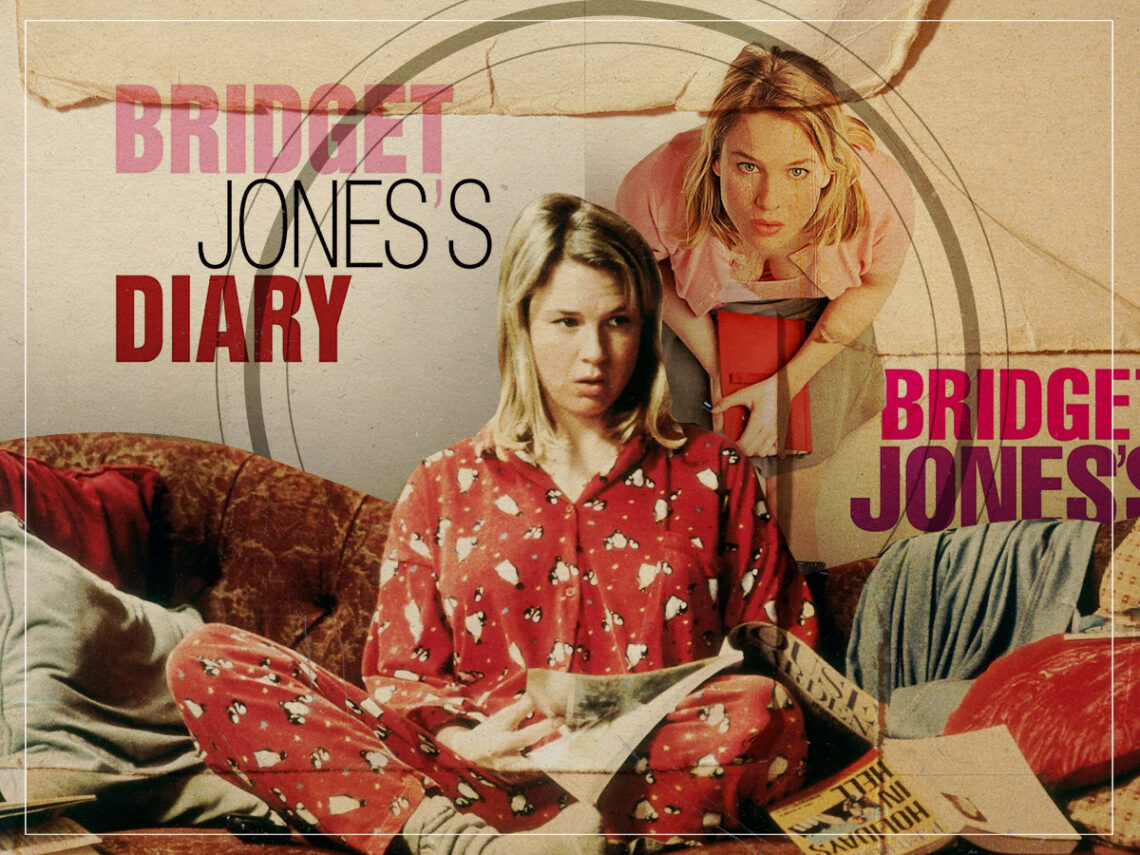
The complex yet enduring legacy of ‘Bridget Jones’s Diary’

Earlier this year, it was announced that a fourth instalment in the Bridget Jones cinematic franchise was in the works, taking inspiration from Helen Fielding’s 2013 book Bridget Jones: Mad About The Boy. The book, released 17 years after the first novel—a worldwide sensation—sees the titular character navigate parenthood as a single mother with a toy boy to boot. While some fans are excited, others are questioning whether we need another film about the beloved yet messy character.
When Bridget Jones’s Diary was published in 1996, plenty of readers were enamoured by the hilarious ramblings of the 30-something protagonist, who shamelessly declares her unloveable-ness, slags off her friend’s boyfriends, complains about her mother’s affair and new career ventures, and pines over several men. With almost every diary entry, she tallies up her calorie intake, alcohol units consumed, cigarettes smoked, weight, and sometimes, the number of 1471 calls she’s made in the hopes of it being a certain romantic interest.
It perfectly encapsulates the era of post-feminism that seemed particularly prominent in the mid-1990s, when many women felt that feminist aims had been achieved. Many women saw themselves as go-getters—career-driven, single, ambitious, and financially independent. Bridget fits the mould, working in a publishing job with a flat in central London, where she lives alone. She regularly goes out for drinks with her friends, can drive herself about, and doesn’t have anyone to worry about apart from herself.
Yet, post-feminism has always taken a very one-dimensional view of women’s rights, ignoring the countless women who can’t ‘have it all’. It ignores the staggering rates of sexual harassment, rape, femicide and career-related inequalities, which are very pertinent issues which have never disappeared, even when second-wave feminism helped to liberate many women from the trappings of traditional domesticity.
Thus, Bridget Jones (and its 2001 film adaptation) takes on an interesting legacy. Fielding’s character upholds some questionable values and beliefs that are clearly a product of their time, but the novel and the film do little to counteract these issues. The character is driven by her desire for a husband (it’s all she talks about), and while this is a natural impulse for many women – we want to be loved and admired – Bridget can’t get potential male suitors out of her mind, seemingly ever.
It becomes her main goal in life: to have a comfortable relationship where mini-breaks and spontaneous shagging are the defining characteristics of the agreement. At the same time, Bridget is so witty and effortlessly hilarious that it’s hard not to love her and relate to her neuroses. Whether she’s belting out ‘All By Myself’, failing to cook a good meal and accidentally turning soup blue, drowning her singleness in wine, or freaking out over her lack of experience when applying for a new job, Bridget is certainly a relatable modern woman.

She is completely flawed; she calls herself fat despite being nine stone and even drinks enough units to be considered a borderline alcoholic. In the film adaptation, Renee Zellweger is charming as the protagonist, and it’s easy to see why so many women have come to identify with the character as she navigates the harsh realities of a world where women are more independent than ever, yet certain issues (such as beauty standards, the looming pressures of marriage and a ‘dwindling body clock’) constantly muddle day-to-day life.
It’s her complete surrender to chaos and the ups and downs of womanhood that makes reading or watching Bridget Jones so enjoyable. We can’t help but laugh when her pervy boss, Daniel Cleaver, discovers her granny pants during sex or when she finds herself trapped among yuppie couples who try and set her up with their single male friends.
Despite the humour and charm of Bridget Jones, the postfeminist elements, which, granted, feel like an accurate encapsulation of the time, aren’t challenged. Bridget’s obsession with weight is harmful, especially when she is presented as a very slim woman, and her quest for a man (which she succeeds at) sees her fall back into the traditional stereotypes that her parents and family friends want her to adhere to.
Bridget Jones suggests that women needn’t worry – you can be happy if you obsess over finding the right man, even if that means sacrificing other joy-inducing hobbies and interests and clinging to the ideal nuclear family set-up instead. While there is nothing wrong with getting into a relationship, of course, the book/film seems to suggest that it is the ultimate goal, the ultimate level of fulfilment we should all strive for. Bridget also jokes about being sexually harassed by her boss, and while we’re meant to find Daniel Cleaver a slimy pervert, his misogyny and abuses of power are typically played for comic relief.
Despite its many flaws, Bridget Jones’s Diary and its sequel, The Edge of Reason, remain fan favourites, and it’s easy to see why. The quotable lines, loveable characters who are far from perfect, and the general cosiness that the books and films emit have garnered a dedicated following. The 2016 film Bridget Jones’ Baby, on the other hand, saw Bridget bump into Ed Sheeran (awful) and attempt to figure out who her baby daddy is, suggesting that the franchise should be left in the past.
The first two books and films were products of their time, yes, but they’ve endured for their relatability, which Bridget Jones’ Baby just doesn’t have. It feels like an impersonation of Bridget Jones, attempting to cater to both old fans and a new audience. A fourth Bridget Jones movie seems like the wrong choice for the franchise, but only time will tell whether Bridget’s dated beliefs, dieting obsessions, and flimsy feminism will be ditched or adapted for modern audiences.
For now, Bridget Jones is best enjoyed in its earlier forms, as long as we go into the books and films with an awareness of their datedness and the mental reminder not to hold oneself to the same standards as our complex and hilariously chaotic protagonist.
