


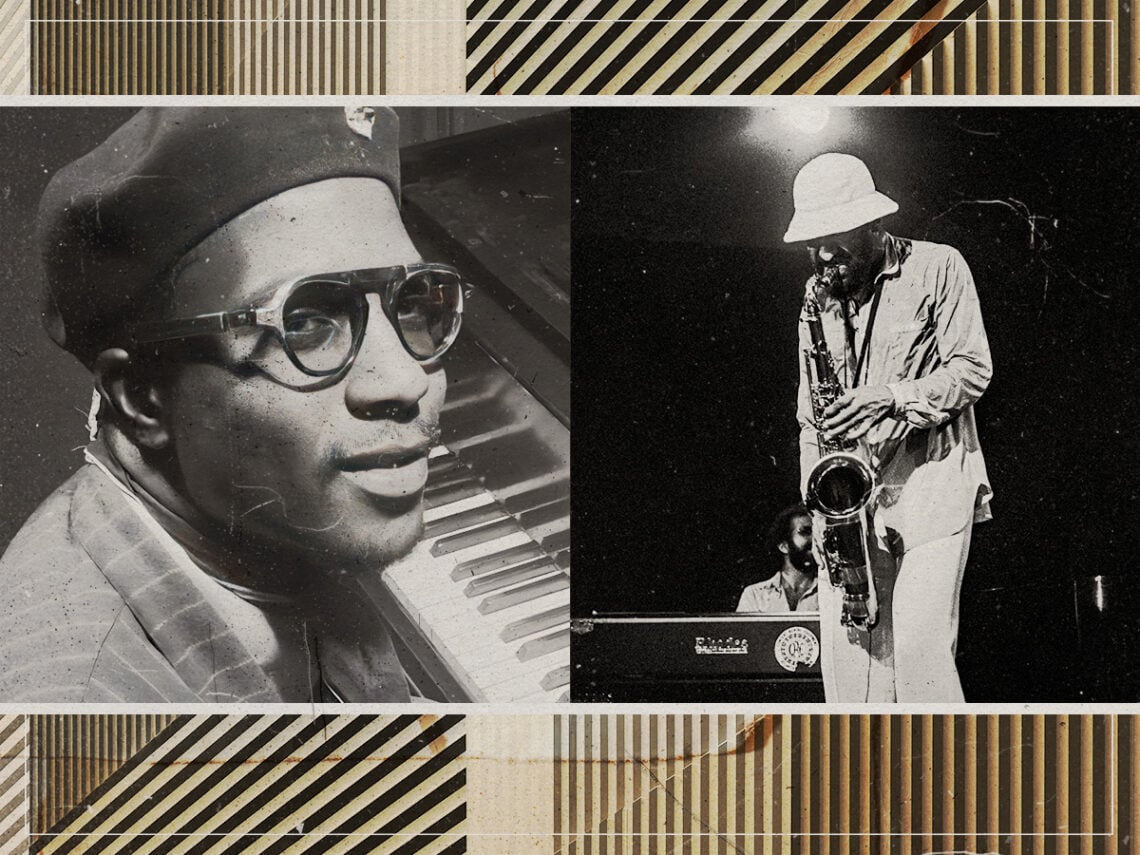
The unforgettable collaboration between Sonny Rollins and Thelonious Monk

When two musical giants collide, the results are often disappointing. Collaborative efforts have produced some incredible results over the years, but they have also given us the fever dream that is Mick Jagger and David Bowie performing ‘Dancing in the Street’ – which seems to cancel out any positives of collaboration. When it comes to the world of jazz, collaboration is a key part of the genre, but few have managed to eclipse the intense genius that occurred when Thelonious Monk met Sonny Rollins.
Respectively, the two musicians were icons of jazz in their own right. Known for his improvisational style and endlessly cool performance, Monk was instrumental in establishing bebop and remains perhaps the greatest jazz pianist the world has ever seen. Meanwhile, Sonny Rollins earned his stripes playing under the leadership of pianist Bud Powell, quickly establishing himself as a master of the tenor saxophone and recording with such legends as John Coltrane and Miles Davis. During the 1950s, both musicians were at their peak, and so it only made sense to combine the two.
Perhaps the greatest combination since some genius decided to put chocolate and peanut butter together, Sonny Rollins and Thelonious Monk proved themselves to have incredible chemistry. Probably as a result of the fact that Rollins already had experience playing under a talented pianist in the form of Bud Powell, his distinctive sax style affirmed itself as a perfect compliment to Monk’s intense and recognisable piano.
The pair’s collaborations were first unleashed on the 1956 compilation entitled – somewhat selfishly – Monk. The record was one of two to be released in 1956, composed of recordings the pair had made together in 1953 and 1954. Upon listening to Monk, you can see why the sessions perhaps did not lead to a full-length album, but alas, Rome was not built in a day. The second instalment of Monk and Rollins came with the more appropriately titled album Thelonious Monk and Sonny Rollins, which should go down among the greatest jazz records of all time.
Sure, it might not be as innovative as Bitches Brew, and it may not have the narrative structure of Journey in Satchidananda, but Thelonious Monk and Sonny Rollins contains such an intense feeling of spontaneity and improvisation that you cannot help but get drawn into its genius. At points, it’s almost as though you can hear the sparks flying between Rollins’ tenor sax and Monk’s keys. As an album, it encapsulates everything that is so beautiful and exciting about the world of jazz; it’s organic, it’s rough around the edges, but at the heart of it all is undeniable brilliance and a deep love for music.
As their respective careers progressed, Monk became more renowned for records like It’s Monk’s Time or Solo Monk, while Rollins was revered for the genius of his 1962 solo record The Bridge. However, the importance of their collaborative efforts within the wider context of their respective careers certainly cannot be overstated.
Within the world of musical collaboration, Thelonious Monk and Sonny Rollins is the antithesis of Jagger and Bowie’s ‘Dancing In the Street’, it is proof that two geniuses can work together in harmony rather than getting wrapped up in the world of excess and ego. It is a ridiculously underrated artefact of 1950s jazz, and is well worth a resurgence.
