


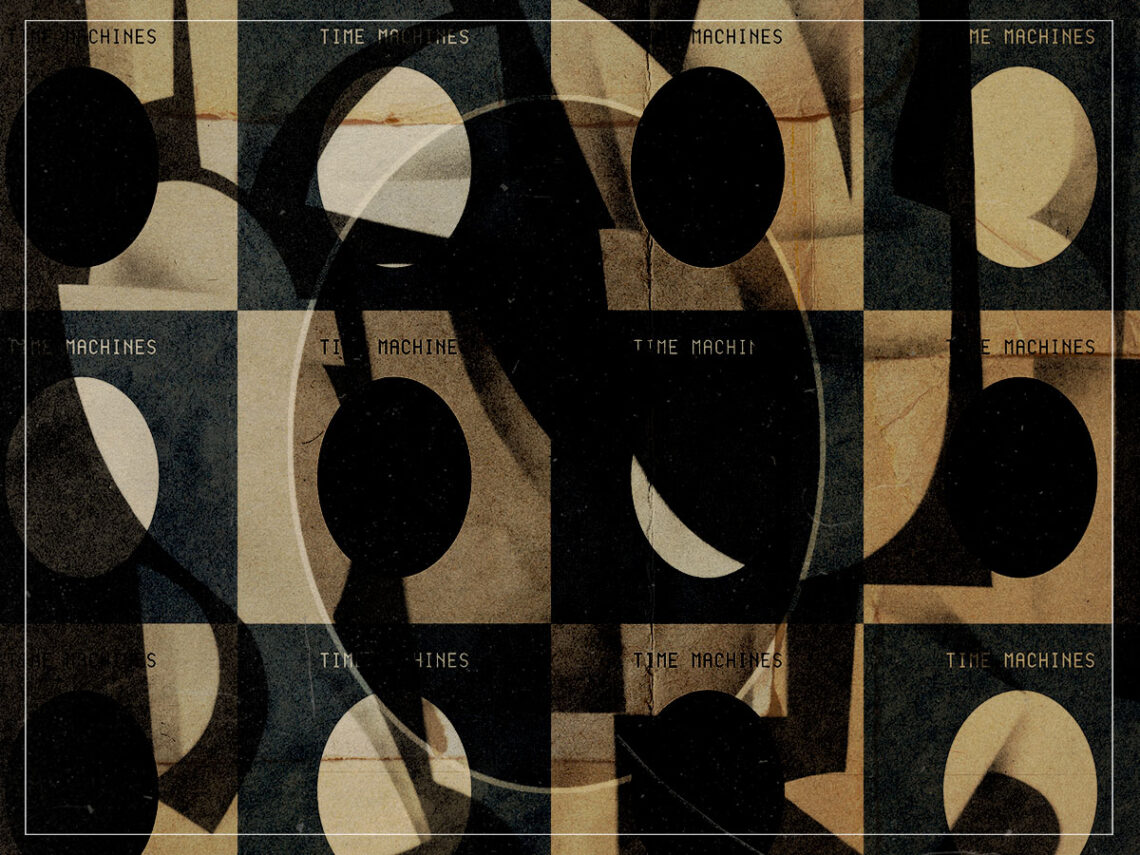
‘Time Machines’: Coil’s attempt to compose music for drugs on drugs

Concept albums have been a thing for almost as long as albums themselves. Frank Sinatra kicked off 1954 by releasing Songs For Young Lovers, not just a collection of hit recordings but a new collection of songs based around a similar theme. Throughout the next seven decades, artists from across the genre spectrum have become increasingly ambitious with their concept albums, as evidenced by releases as diverse as The Beatles’ Sgt. Pepper’s Lonely Hearts Club Band, Kate Bush’s The Hounds of Love or My Chemical Romance’s Welcome to the Black Parade.
One of the crazier concept albums of all arrived in 1998 thanks to British avant-garde experimental group Coil. Each of the four long, electronic droning tracks on Time Machines was created using modular synthesisers to recreate the mental effects of taking a hallucinogenic drug, giving each track its name.
Each track on the album is rooted in the generator hum of a bass synth and has an array of percolating, pulsing, and sprawling synth toplines and patterns. It’s a minimalistic release that wouldn’t sound out of place as the score for a sci-fi feature set on some far-off planet.
Speaking to The Wire about the album in 1998, Coil co-founder John Balance stated that while the group hadn’t sampled every psychedelic drug available in creating the album, they had tried each of the four—telepathine, DOET/Hecate, 5-MeO-DMT, and Psilocybin—which lend their names to the track titles.
In the same interview, Coil’s Peter Christopherson added: “Once we recorded the music, different tones had a different character, and that character seemed related to us to how we’d felt” [on the corresponding narcotics]. They continued to combine their experiments with synths and psychedelics, calling it a “rough science” and explaining that they were trying to feel their way through the process, to “feel it going off on one, as you do if you’re connected to the molecules”.
“We matched the drug to the tone”, Balance said before later expanding that “the drugs thing is actually a hook we hung it on”. Coil matched the tone of each psychedelic experience to their music so well that they managed to transmit the effects of their trips to their listeners. “One of the interesting things with Time Machines is that there’s a handful of responses which we’ve had where what happened to the listeners was exactly what we intended to happen,” Balance explained. “There would be some kind of temporal disruption caused by just listening to the music, just interacting with the music”.
While it’s not possible to know if these listeners had sampled the corresponding drugs to heighten the experience of listening to the album, critics at the time were at pains to point out that they had not done so in the course of writing their reviews. Mark Weddle finished his write-up for Brainwashed with the disclaimer: “Note: I have not, nor do I intend to use the above disc in conjunction with hallucinogens. I’ll leave that to you…”.
If drugs aren’t your thing, they aren’t your only gateway into the temporal disruption of Time Machines. The group also drew on inspirations from sacred Tibetan ceremonial music, which could “last for a day or three days or something. There are periods of time in that where you will come out of time. That’s the intention of it – to go into a trance and achieve an otherness”.
Whilst they might well have been also been inspired by the music of these Tibetan ceremonies, it is noteworthy that it was only the psychedelic drugs which lent their names to the track titles on the album.
