


The classic 1967 song The Beatles cut from ‘Sgt Pepper’: “We were robbing the public”

For many Beatles fans, it’ll be hard to envisage how their Sgt Pepper’s Lonely Hearts Club Band opus could have been any better.
Everything about their 1967 psychedelic gem stands with totemic stature in the rock and pop canon. Peter Blake’s pop-art collage cover, its Summer of Love release, the kaleidoscopic mosaic of its eclectic genre-hopping, and the embrace of the studio as an instrument to realise The Beatles’ pop ambitions all helped earn their eighth LP the “greatest album of all time” byword.
However, one massive omission from the album prompted producer George Martin to lambast the decision as the “biggest mistake of my professional life.”
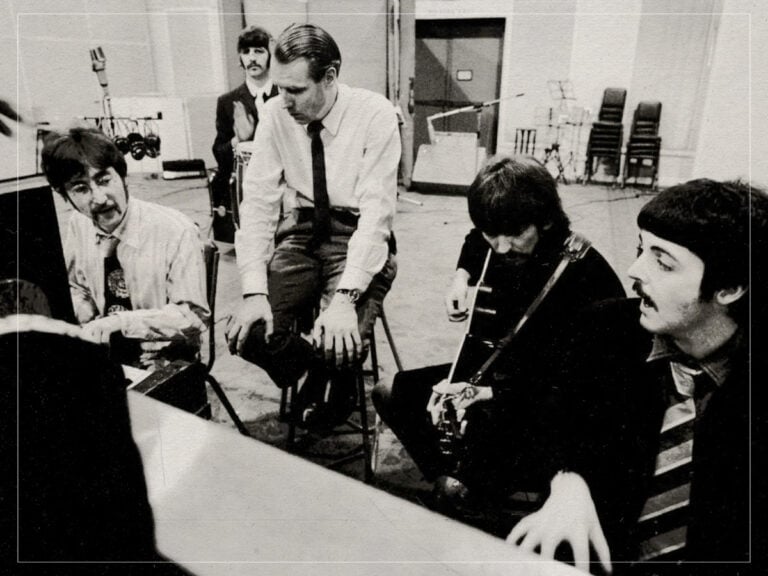
The Beatles were eager to hit the studio hard when the Sgt Pepper sessions kicked off in November 1966. Only three months earlier, Beatlemania was still pushing the band to a gruelling world tour, obliging live sets far removed from the sophistication heard on Revolver, and plagued by the headaches of the disastrous Philippines show and the ‘Bigger than Jesus’ controversy. Having abandoned touring altogether, a revitalised Beatles entered EMI Studio ready to quash the press speculation that the Fab Four were starting to dry up.
Big ideas like ‘A Day in the Life’ or ‘Lucy in the Sky with Diamonds’ demanded the hours to commit such an aural extravaganza to record. Case in point was the session’s very first song. Sketched out while John Lennon was in Almería on the set of How I Won the War, a dreamy and impressionistic vignette of a Salvation Army children’s home from his youth would set the Sgt Pepper’s tone straight away, serving as a surrealist wander through the band’s Liverpool hometown coloured with the era’s lysergic tinctures.
‘Strawberry Fields Forever’ marked a pivotal step in The Beatles’ creative evolution, but Parlophone were worried. Clocking up around 45 hours across eight dates and as many as 26 takes, Lennon’s wistful ode to childhood sanctuary would take its amorphous shape by heavy overdubbing and meticulous speed changes to make the disparate recordings work in a collaged whole. Yet, as time was passing without a single to whet fans’ appetites, EMI put the pressure on to release something while Sgt Pepper was in genesis.
“In those days, we had a crazy idea,” Martin confessed in the Anthology project. “We thought that if we issued a single, we were robbing the public if we put it on an album as well… It was a cheap way of thinking, really, and complete nonsense.”
Only counting ‘Strawberry Fields Forever’ and ‘Penny Lane’ in the can, Parlophone rush-released the two as a double A-side in February 1967, three months ahead of Sgt Pepper’s. It was a commercial decision that haunted Martin, as well as breaking The Beatles’ four-year unbroken trend of repeated number ones, their single twofer beaten to the top spot by Engelbert Humperdinck’s ‘Release Me’.
Was its shift from Sgt Pepper a terrible mistake? It’s easy to envisage ‘Strawberry Fields Forever’ sitting as a conceptual centrepiece somewhere in the middle, perhaps nudging ‘When I’m Sixty-Four’ to a B-side or supplanting the title track’s reprise before the LP’s celestial finale.
But Sgt Pepper’s glories are the sum of its gloriously eccentric parts, twirling with pop perfection in its colourful race around music hall cheer, orchestral stir, and rock and roll theatre. It’s just as likely that ‘Strawberry Fields Forever’ could have upset the album’s carefully considered balance, but who cares? Lennon’s psychedelic marvel exists in The Beatles’ story as the perfect doorway, a marker of new horizons and a band dropping hints of the musical hinterland they were set to explore before anyone else.

Never Miss A Beat
The Far Out Beatles Newsletter
All the latest stories about The Beatles from the independent voice of culture.
Straight to your inbox.