


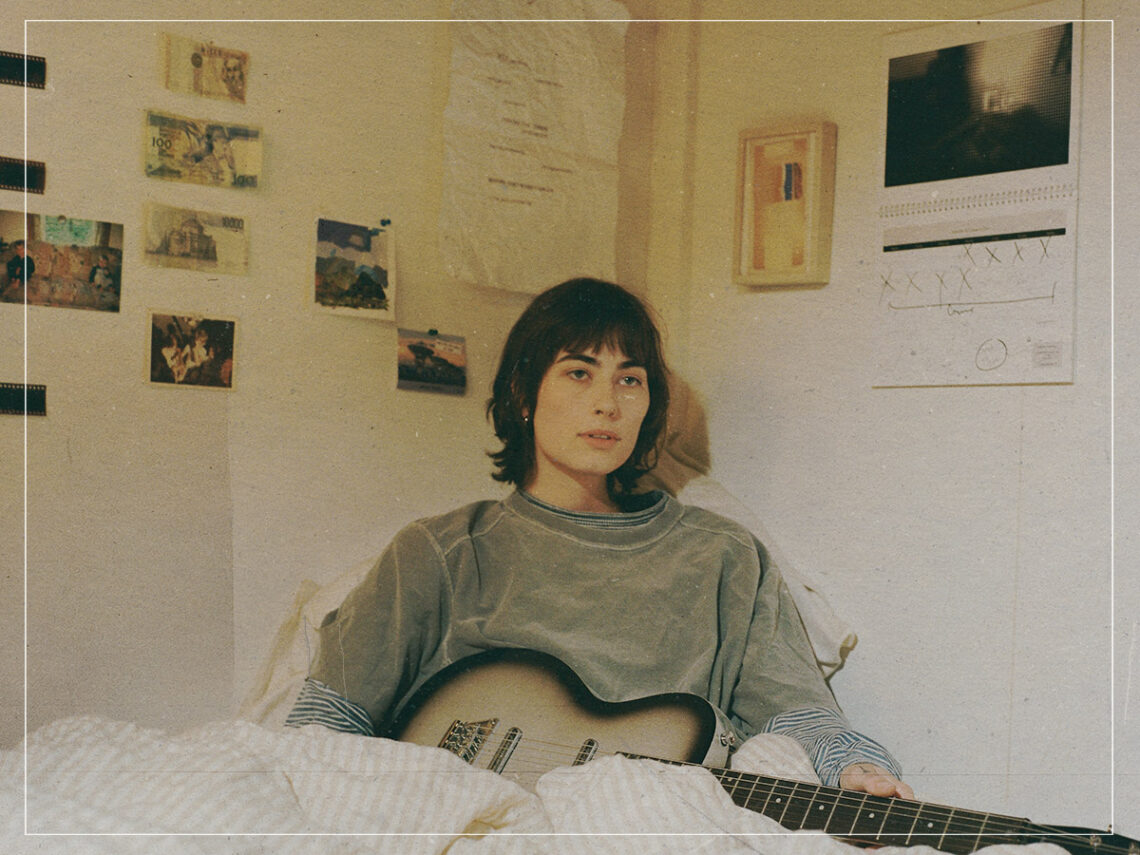
A collection of Claire Rousay’s favourite records

Claire Rousay’s music is intense in a way that few other musicians exhibit. She takes an almost neo-classical, musique concrete approach to a cross between ambient and emo music, which contrasts with her treating the music like a diary. Almost uncomfortably frank lyrics about her personal life take centre stage rather than the wall of noise most ambient musicians hide behind.
While calling to mind acts like Grouper and Ethel Cain’s recent work, Rousay’s influences run a lot deeper than that, as she detailed in an interview with Pressing Plant’s ‘Records That Made Me’ segment. First up to the bat was Karren, the 2013 album by Chicago-based composer Olivia Block. The record, a two-movement electro-acoustic composition, fundamentally changed what Rousay felt she could accomplish with her music.
She said to Pressing Plant, “Karren was my introduction to Olivia Block’s work but also to contemporary electro-acoustic composition. I was a teenager when this came out–it rocked my world. I started making field recordings for the very first time shortly after hearing this album.”
Next up was Cecil Taylor’s record Solo. Taylor, one of the defining voices in the free jazz movement, was a frequent collaborator of John Coltrane but also played many concerts solo. One of which, performed at Tokyo’s Lino Hall, was recorded and turned into this album. One may wonder where a 2024 ambient musician gets inspiration from a free jazz luminary, but for Rousay, it’s a simple connection.
She says, “The controlled chaos popular in his playing is perfectly showcased on this LP. Taylor is a fabulous group improviser, but his solo playing resonates with me even deeper when others are absent.” Sometimes, it’s not that deep, though, as she also says, “I just think he is so cool. The amount of photos and videos of him over the years wearing sunglasses indoors confirms this.”
From an album where the connection with Rousay seems tenuous on the surface to an artist whose moniker could just as easily apply to Rousay herself, Casiotone For the Painfully Alone (Owen Ashworth to his mum) is a project that basically built the prototype for bedroom pop two decades in advance.
Brief, emotionally open songs entirely written on the titular Casiotone, their record Twinkle Echo takes a top spot on Rousay’s list for being the album that made her want to write songs. “I cannot remember how I found this one or how it found me… Regardless, it changed me. I bought a Casio keyboard (lol) and started writing songs. Prior to this, I had only played drums in bands, writing my own parts. This all changed after hearing the song ‘Roberta C’. I still write songs today.”
Following that, rousay picks one of the defining psychedelic folk albums, Kath Bloom and Loren Connors’ Moonlight, from 1984. A mix of progressive visions of blues standards and Bloom’s originals, only 300 copies of this record were ever pressed. One of which Rousay was lucky enough to get a hold of during the 2020 Covid lockdown. “I had been listening to the work of Loren Connors for years but never had come across this collaboration,” she says. “This record comforted and inspired me during a time I felt alone and purposeless. It remains a constant source of inspiration and hope for me.”
Rousay ends her list with one of the true leading lights of slowcore music, picking It’s Hard To Find A Friend, the debut album of, and one of the many masterpieces by, Pedro The Lion. Like Rousay, David Bazan’s project is a reckoning with his Christian faith, which resonated with her upbringing: “I was slowly breaking free of my Christian upbringing, and this album’s lyricism resonated deeply with me. The lyrics questioned religion. Bazan asked the big questions, all while seeming open to whatever the big answers to these questions were.”
Not only are these five masterful records in their own right, but they’re also a great primer for understanding Claire Rousay’s moving, immersive, and deeply felt music.
