


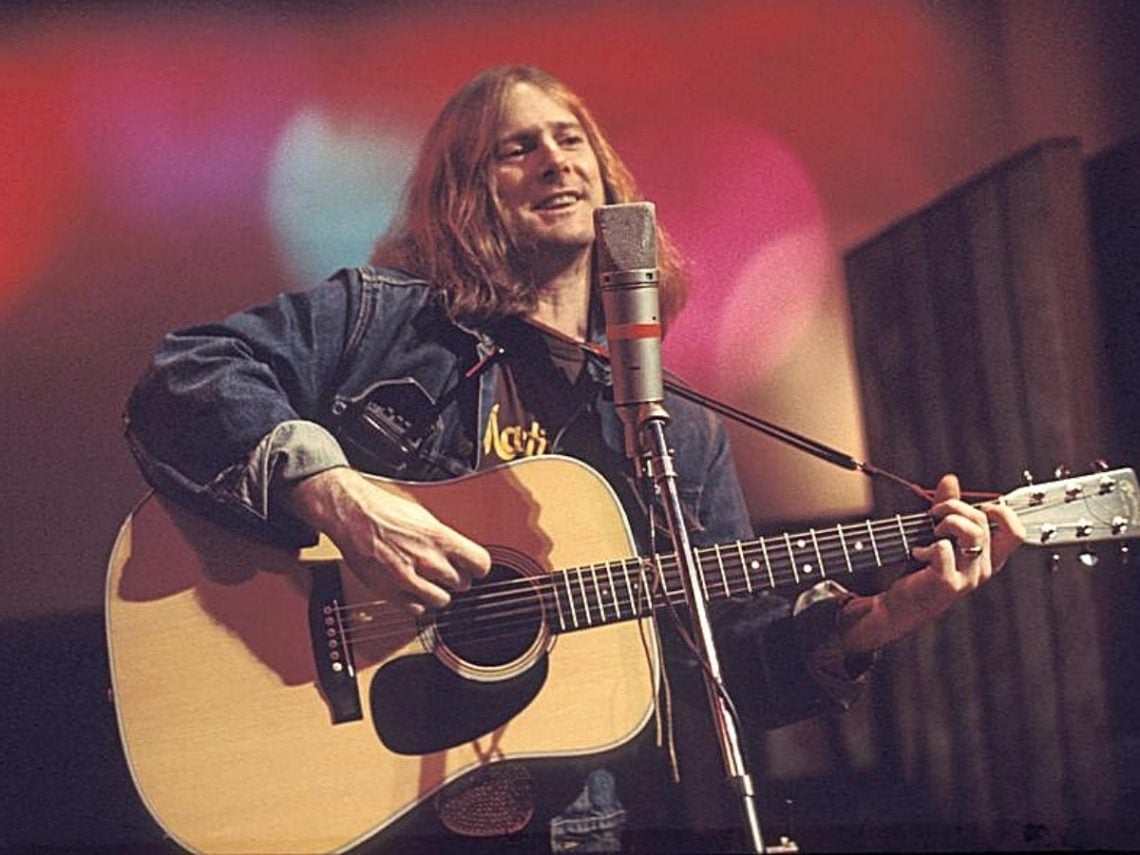
The “charged up” song Roger McGuinn would listen to every morning

The British invasion of the 1960s made it impossible for most new talents to get their voices heard, but The Byrds’ Roger McGuinn seemed to come equipped with a secret no one else knew about at the time.
More than just another rock group, The Byrds represented the real power of unified collaboration, with each member an independent virtuoso in their own right, with something unique to bring to the table. Poised with his 12-string guitar, McGuinn shaped an explosive response to the bustling British scene, introducing a new intricate entity that would change the game forever: folk rock.
Like many of his peers, though, McGuinn first got a taste of the magic of guitar-playing when he discovered the one person who put rock ‘n’ roll on the map: Elvis Presley. “I was 13 years old when I heard Elvis Presley over my transistor radio,” he told Melissa Hellstern. This simple discovery is what inspired McGuinn to pick up a guitar in the first place, before a visit to his school from Bob Gibson made him realise the meaning of folk music, a prophetic moment considering a new school of folk had just opened up down the road.
While these were very much the seminal stages of McGuinn’s journey, he would develop skills that would later shape the rest of his creative vision, like playing the banjo, which “had a direct result on how I played the 12-string electric Rickenbacker, which I have been associated with in The Byrds”. But beyond shaking up the waves of a mass scene that defined the entire decade, McGuinn wasn’t alone in his ability to challenge the tide of the British Invasion.
Another empire known as The Beach Boys was also surfing thick and fast, one that wasn’t necessarily distinctly the antithesis of the Merseybeat sound as much as a direct means of innovating it in a completely different way. The Beach Boys didn’t imitate anything that was emerging overseas, but they embraced the Californian mindset in a way that emerged in tandem, like a breath of fresh air, if the air had been infiltrated with a daylight version of bands like The Beatles and The Rolling Stones.
Like many of his peers, both inside the British scene and outside of it, McGuinn was completely and utterly mesmerised, enthralled by these impossible sounds by absolute musical geniuses and inspired further by their ability to run with something that was so different from everything else that was going on at the time. Like many of his peers, it was also one song in particular that solidified their place in the entire game, one song that many musicians have called the greatest song of all time: ‘God Only Knows’.
For McGuinn, the song wasn’t just “unique”; it ended up soundtracking those early-morning moments when he was in need of a trusty pick-me-up. “I loved Pet Sounds,” he once said. “My favourite track was ‘God Only Knows’. I played that song every morning and felt charged up for the day. It’s such a unique piece with Carl’s beautiful lead vocal and the Wrecking Crew’s incredible backing track with horns, strings and percussion on [of all things] the bottoms of orange juice containers.”
This is a sentiment shared by countless others, from Pete Townshend to Peter Gabriel (who called it a “masterpiece”), not only because of its timeless melody but because of the way it stalked through the gritty scene with an unexpected sheen, placing emotional grandeur and polished, innovative arrangements at the forefront of something obvious yet completely unexpected, like there was still room for other sounds, ones that existed just slightly outside of any ruling movement.
