


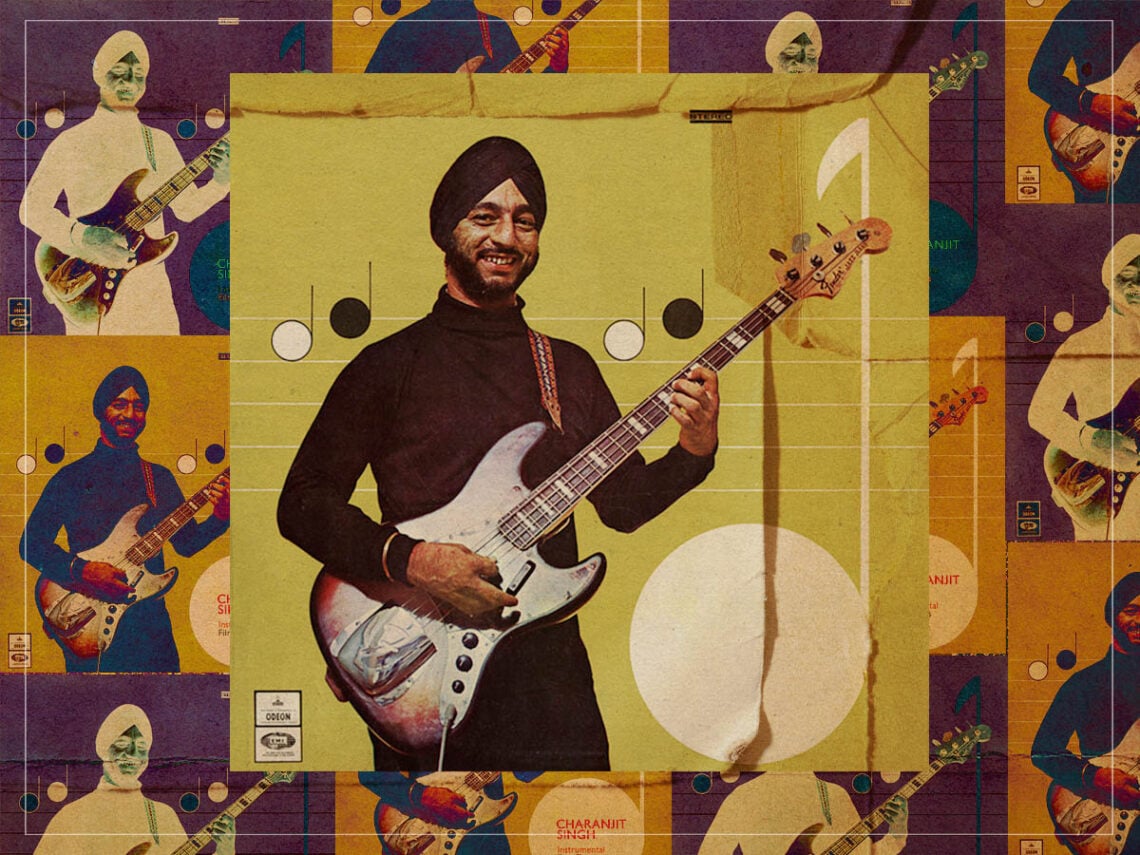
Charanjit Singh: the accidental father of acid house

Synonimising genres with locations is often an easy way of understanding what would be at the time and otherwise new or almost alien sonic concepts. The latter could definitely be said with the introduction of Acid House in the early 1980s: alien, unprecedented and certainly innovative. The avant-garde soundscape of this new genre that centred around the Roland TB-303 and its characteristic squelch has often been attributed to the subcultural pockets of Chicago. But was that really the birthplace of the now iconic genre?
In discussions about the genre’s history, you would have likely heard Sleezy D and Phuture as flagbearers, for their 1987 track ‘Acid Trax’ is often considered the epitomising record. But the album some consider the true beginning of Acid House pre-dates that by five years. Charanjit Singh’s LP, Ten Ragas to a Disco Beat, was created in Mumbai in 1982 and produced on a combination of a Roland TB-303 and Roland TR 808. The record boasted the soon-to-be thought of as Acid House sensibilities: four-on-the-floor rhythm, with a flurry of synthesised melodies dancing around it.
Perhaps our misunderstanding of the true roots of Acid House can be attributed to Singh’s diffusing take on his own innovation. In a 2011 interview with The Guardian, Singh said, “There was lots of disco music in films back in 1982, so I thought why not do something different using disco music only. I got an idea to play all the Indian ragas and give the beat a disco beat – and turn off the tabla. And I did it. And it turned out good.”
With the Roland TB-303 not being manufactured until 1981, its position within the music industry in 1982 was still very much one of experimentation and education. So when Singh purchased one in Singapore during ’81, his interpretation of it within the recording process would have been one of the first. Naturally, his initial creative process with the instrument leaned into familiarity, and he began experimenting with the aforementioned disco sound and Indian Raga music.
Like scales, Raga music is a melodic framework for improvisation in India and, therefore, the perfect companion for a burgeoning electronic instrument that provides a consistent electronic output but with an as-of-yet-unheard-of tonal composition. In keeping with the improvisational nature of the Raga genre, Singh’s approach was relatively impromptu, and his learning of how to use the instrument can be heard in the finished record: “At home, I practised with the combination, and I thought ‘It sounds good – why not record it.”
Since then, the legend of Ten Ragas to a Disco Beat has lived on with many pockets of subcultural internet forums discussing the record to newcomers and fervently defending its place as the architect of the now beloved genre. But up until his passing in 2015, Singh’s reflection on the record was unassuming at best. So much so that some conspiracy theorists have questioned the album’s innovative legitimacy, in turn perceiving his compositional experimentation and subsequent downplaying of such as an admission of deceptive guilt.
Upon its 1982 release, the record was considered somewhat of a commercial failure and didn’t garner more public interest until Edo Bouman re-released it in 2010. Much like Rodriguez’s Cold Fact, the post-modern appetite for information in the digital age bred a community of listeners who were eager to learn more about the origin of important genres and subsequently found Ten Ragas to a Disco Beat. Over 40 years after its original release, and due to the relatively large amount of ignorance towards Singh’s work and its importance in modern music evolution, an age-old question presents itself: What has a bigger impact, music marketing or the music itself?
