


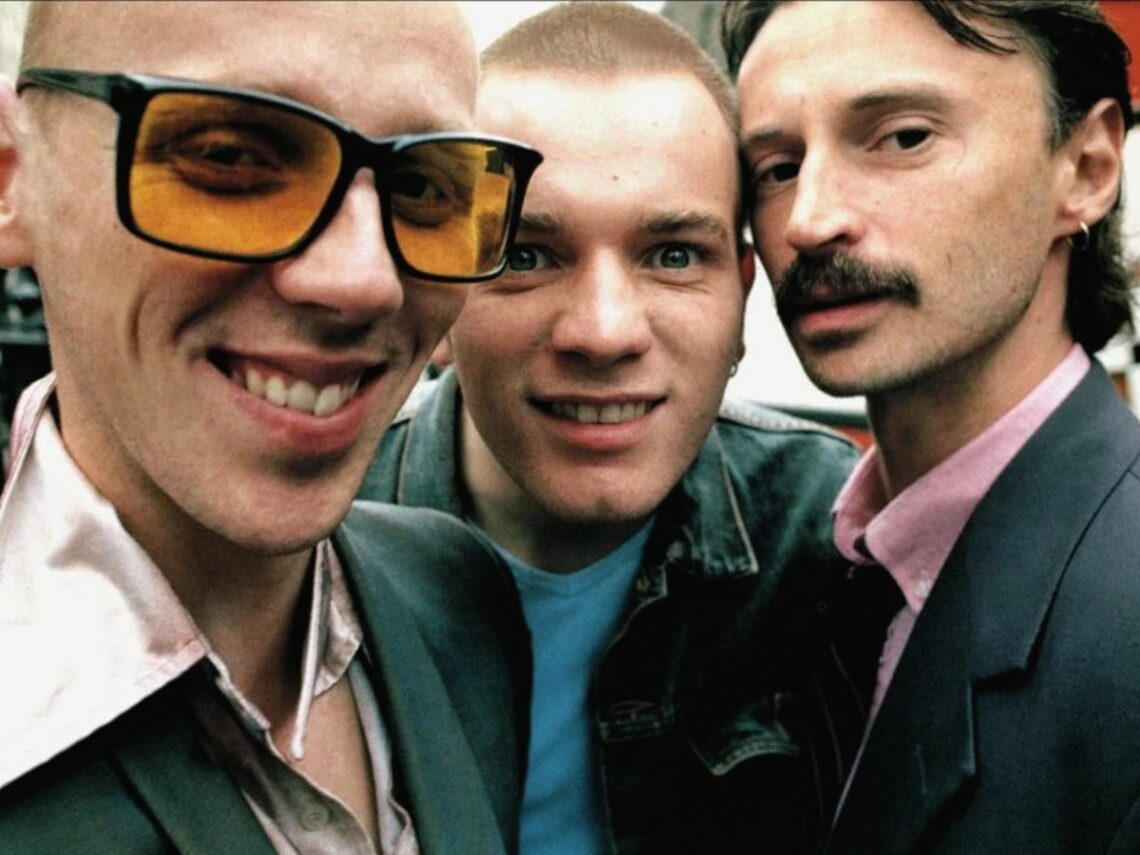
From ‘Trainspotting’ to ‘The Acid House’: the manic adaptations of Irvine Welsh’s work

“Choose life,” says Ewan McGregor’s Renton during the start of Trainspotting, as a montage of him running through the streets of Edinburgh plays out, soundtracked by Iggy Pop’s ‘Lust for Life’. These words can often be found on the walls of teenage bedrooms and university houses, courtesy of the HMV poster selection. But there’s a reason why the poster remains a popular choice with young people (besides the cheap price tag) – Trainspotting is a movie that continues to resonate with young people, even those who have never touched a drug in their lives.
The film perfectly encapsulates the feeling of being young and restless – wanting more from life but finding yourself trapped in an endless cycle of difficulty and failure or lacking opportunities, turning to whatever form of escapism takes your fancy. The main cast of Trainspotting are addicted to heroin, but that’s because they’ve found themselves affected by the poor political and economic state of the country, unable to find employment but more than able to score cheap drugs and get a temporary hit of relaxation and distraction.
Trainspotting was adapted from Irvine Welsh’s novel of the same name, which he released as his debut novel in 1993. Welsh, who grew up working-class, found himself moving through a series of odd jobs in the ‘70s and ‘80s, immersing himself in the punk scene. However, the ‘90s saw him take to writing after he decided to get his act together due to several run-ins with the law.
His novel is mainly written in a Scottish dialect, using lots of slang words that many foreign readers are unfamiliar with. Welsh’s approach to writing is experimental and often plays with form and perspective, which is brilliantly executed in Trainspotting.
The novel is bursting with energy and frustration, and the film adaptation works perfectly to convey this electric sense of youthful dissatisfaction. It’s fast-paced and full of humour, and it’s hard not to be compelled by even the most heinous of characters. The movie leans into Welsh’s experimentalism, such as when Renton reaches into a toilet and suddenly finds himself swimming underwater or when he sees baby Dawn crawling on the ceiling during a withdrawal episode.
But that’s not the only Welsh novel that has been adapted for the big screen. Besides T2 Trainspotting, the sequel that arrived 21 years later, The Acid House, Ecstacy, Filth and Creation Stories have also had star treatment, with an adaptation of The Blade Artist in the works, too. The Acid House is easily the most quintessentially Welsh, and it’s also highly underrated.
Directed by Paul McGuigan, the film features different segments inspired by the short stories inside the book, such as ‘A Soft Touch’ and ‘The Granton Star Cause’. It’s a strange and surreal trip of a film, provoking laughter and disgust through its darkly comic tales. There’s even a scene where a man turns into a fly and uses his insect legs to place dog poo inside some food as a revolting form of revenge on his ex-girlfriend.
Like Trainspotting, The Acid House really feels like an encapsulation of an era that was politically uneasy, with the movie exploring unemployment, prostitution and drug use. Filth was another successful adaptation, coming in 2013, revelling in the surreal nature of Welsh’s story by blending bleakness with unbridled humour. It’s cynical yet wholly enjoyable, with James McAvoy playing a thrillingly awful police officer who hates everyone.
The essence of Welsh’s work – both humorous and lively but also grotty and grim – is perfect movie fodder, and these adaptations prove that when his stories are placed in the right hands, you’re in for a great time. Welsh’s most well-known adaptation might be Trainspotting, but others, like The Acid House, are basically required watching for all fans of his work.
