


Celebrating Miles Davis’ funk masterpiece ‘On the Corner’ at 50

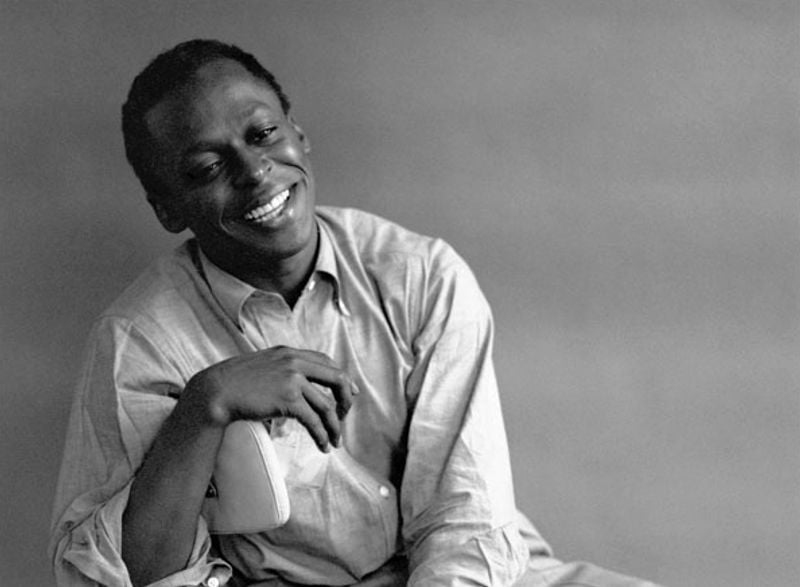
Miles Davis was a man with many peaks. As one of the premiere trumpet players to rise out of the New York bebop explosions of the late 1940s, Davis soon pivoted and became the forefather of the cool jazz movement. As his experiments with modal jazz produced his most acclaimed work, Davis refused to be pigeonholed, branching out into using full orchestras and atypical instruments like tablas and marimbas. Soon, Davis’ mastery of multiple genres led to the term “fusion”, which would become the style from which most audiences in the 1970s would listen to their jazz. The old colours were dead, and Davis knew it.
As a musician, Davis was never afraid to leave what was contemporaneously popular behind in search of something new. That desire to explore produced some of the most forward-thinking jazz albums of all time, including the world-music precursor Sketches of Spain, the proto-ambient In a Silent Way, and the rock-infused Bitches Brew. Davis’ “electric period”, as it came to be known, would be one of the most brazen and controversial eras of any musician’s career, regardless of genre. That’s because Davis himself often disregarded jazz in favour of whatever the then-modern sound was. In 1972, that sound was funk.
Throughout the 1960s, pioneering R&B singers like James Brown and George Clinton began to lean harder on rhythm and groove, producing the early vestiges of funk music. By the time 1970 rolled around, prominent acts like Stevie Wonder, Marvin Gaye, and Sly & the Family Stone were bringing funk music to the masses, with a new stream of musicians like Curtis Mayfield and The Ohio Players perfecting the sounds by focusing heavily on the bass and plugging in wah-wah pedals. 1972 was the year funk went mainstream, with songs like ‘Superstition’, ‘Freddie’s Dead’, and ‘Papa Was a Rollin’ Stone’ all finding crossover success. Davis wasn’t about to sit back and let the future pass him by.
With that in mind, David assembled a band of old and new collaborators with one goal: to reconnect with contemporary black audiences. “I don’t care who buys the record so long as they get to the black people so I will be remembered when I die,” David defiantly told Melody Maker in 1972. “I’m not playing for any white people, man. I wanna hear a black guy say, ‘Yeah, I dig Miles Davis.'” To do that, Davis needed his next album to be unmistakably black, from its sound to its song titles to its artwork. On the Corner was another step into the future.
It didn’t come without precedent, however. Davis’ previous album, 1971’s Live-Evil, was a major dive into the unknown as Davis spliced together live recordings with studio compositions into a jazz-funk amalgamation. Despite being the most famous jazz musician in the world, Davis decided to break even further from the genre with On the Corner. That meant partnering with bassist Michael Henderson, whose roots in R&B drove home the fact that On the Corner was a funk album first and foremost.
Davis was still insistent on using some of his closest jazz collaborators, which included legendary names like Don Alias, Herbie Hancock, John McLaughlin, and Chick Corea. But Davis’ view of funk wasn’t straightforward, as shown by the distinct influence of traditional Indian music through the use of tabla and electric sitars. Davis was going for his own unique sound, so he went the extra mile and refused to include musician credits. The dense mix of instruments could only be parsed through after the fact.
What can be heard through the arrangements is Davis embracing a completely different approach to composing and playing. Davis’ signature trumpet tone is nowhere to be found throughout On the Corner. Most of the time, Davis sat at the organ while his band swirled around him. When Davis did use his trumpet, it was connected to a wah-wah pedal, creating tones that were more common to guitar than to horns.
After giving relatively basic instructions to whichever musicians were assembled on each particular day, Davis and his band would jam endlessly over grooves and rhythms. The modal approach made a return on On the Corner, but it was now stripped back even further, emphasising single notes or hits that repeated endlessly. When the jams were finished and recorded, Davis saved the tape and brought in new musicians to start the process all over again.
With hours of jams on tape, Davis and producer Teo Macero turned to another new source of inspiration: Karlheinz Stockhausen. Stockhausen’s experimental approach to electronic music included revolutionary concepts of tape manipulation and post-performance composing. Davis was fascinated by this way of putting music together by splicing different performances into something new, and after he and Macero compiled nearly an hour of cohesive material, Davis went back in to overdub everything from keyboards to sitars.
The results were On the Corner, one of the most instantly vilified albums of all time. When The Guardian ran a retrospective on the LP in 2016, On the Corner was given the dubious label of ‘The Most Hated Album in Jazz’. Even some of the album’s musicians, like saxophonist Dave Liebman, have continued to trash the work as one of Davis’ worst. At the time of its release, On the Corner was savaged by critics and practically abandoned by Columbia Records’ marketing team, making it one of Davis’ lowest-selling albums in his entire catalogue.
Davis’ approach was still jazz in the exploratory sense, but its strong deviation from traditional improvisational avenues confounded listeners who just wanted Davis to play his trumpet and swing. Davis was spurned by the reception – he wouldn’t record another studio album until nearly a decade later with 1981’s The Man with the Horn. He all but retired in 1975, falling back on heavy drug use and residual cheques he received from his previous successes.
After decades in the wilderness, On the Corner has experienced a renewed wave of acclaim in the 21st century. Retrospective reviews now highlight the cutting-edge nature of Davis’ approach to funk and the restless creative spirit at the heart of the album. It’s not jazz in any traditional sense, but On the Corner is an engrossing listening experience that can help bring in non-jazz fans to the genre. 50 years after it represented Davis’ lowest point, On the Corner now reads as another mighty peak in the Davis catalogue, one that can even contend with some of his greatest work.
