


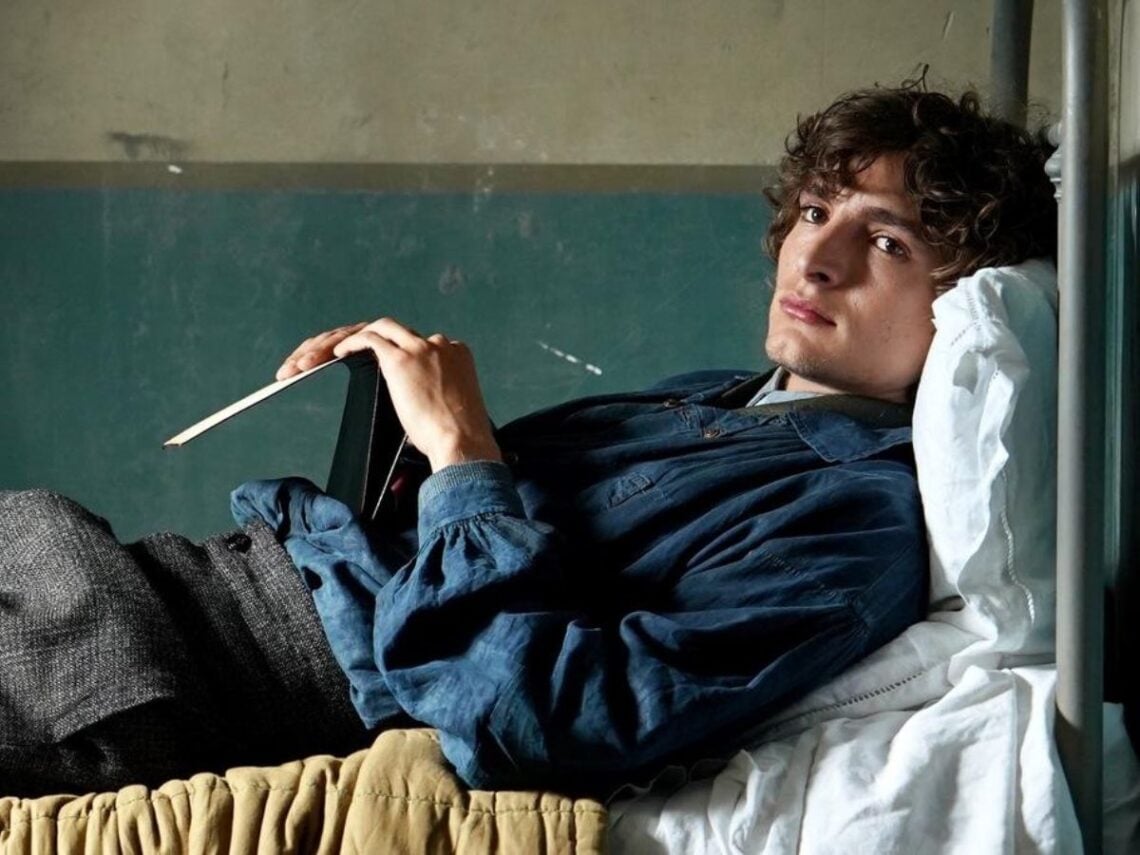
‘Colours of Time’ movie review: an unusual character study

A creative era in France’s history and its impact on the present is the central theme in the thoughtful drama Colours of Time.
Cédric Klapisch, award-winning director of Rise and French TV series Dix Pour Cent, has taken on an unusual character study, a French-Belgian collaboration which juxtaposes past and present. Its original French title, La Venue de L’avenir, or approximately ‘Road to the Future’, describes it more directly. Past and present events play out in parallel to one another, displaying the influence the past has on the present, and comparing the eras, particularly in the area of art, creativity, and aesthetics.
The film begins with a meeting of a group of cousins, all descendants of a woman named Adele Meunier. Following a genealogical search, they are to inherit the late Madam Meunier’s house and property, including a collection of paintings and artefacts that may be of value.
As the cousins examine the Normandy farmhouse and its contents, the film moves back in time to find a young Adele Meunier (played by Suzanne Lindon) in the late 19th century, leaving her rural home to travel to Paris in search of her mother, who left her in the care of relatives as an infant. The storyline follows Adele’s travels and discoveries, alternating between her experiences and the actions of her descendants, the events of each era illuminating those of the other.
In an interview at the film’s opening at Cannes, director Cédric Klapisch explained that he chose the 1890s because “it was a period of technological invention… It was the birth of photography, and painting evolved in response.” There was speculation at the time that the advancement of photography might make painting irrelevant and cause it to disappear as an art form.
Instead, painting took on new forms, bringing about the Impressionist movement, among others. Colours of Time portrays these developments in the fine arts through the young protagonist’s eyes. Adele encounters the artistic life of Paris for the first time, even meeting some of the leading lights of the period, including Claude Monet (Olivier Gourmet), groundbreaking photographer Felix Nadar (Fred Testot) and even a brief encounter with Sarah Bernhardt (flamboyantly played by Philippine Leroy-Beaulieu). Adele’s lack of experience allows us to see familiar art forms and social movements with fresh eyes, from the perspective of someone for whom they are completely new.
Adele’s adventures, including her emotionally taxing search for her parents, her encounters with the Paris art world, and her own journey of self-discovery, make for an engrossing tale on their own. The parallel account of her descendants’ lives, as they search the old house filled with remnants of Adele’s past, adds a dimension to the story. As the family puzzles over artefacts and letters, each item’s origin and significance is explained by a chapter from Adele’s time in Paris. At the same time, contemporary scenes demonstrate the effects past thinking and actions may have on the present day, showing us what director Klapisch calls the “intangible heritage” we all possess.
The very rarity of images in the 19th century is one factor the director wanted to point out; in the present day, “we are so flooded with images” that there is no longer any reverence for their production, and yet, he notes, creativity in the visual arts is still possible.
The plot is creatively stretched at one point to bring the two eras together beyond what reality allows. As the inheritors learn more, and their fascination with Adele’s past grows, they are allowed to share her experiences more directly, through a fanciful but effective sub-plot that borders on magical reality. This approach brings the audience, along with the present-day inheritors, to experience Adele’s time in an imaginary but intriguingly direct way.
Scenes from the Belle Epoque have a special appeal, in that the film tries to capture the sense that art was in the air, that there was a drive to add beauty or creative imagery to even the most ordinary things: clothing, furniture, shop windows. Even the landscapes and street scenes from the 1890s seem influenced by avant-garde artists’ visions of them, through careful camera work.
This aspect was something of a challenge; Klapisch notes that this is his first attempt at a period drama, which he admits “requires a large team and a lot of patience” to recreate the era adequately, but he found it a “painstaking but rewarding process”, and has certainly succeeded in bringing the time and place to life.
