


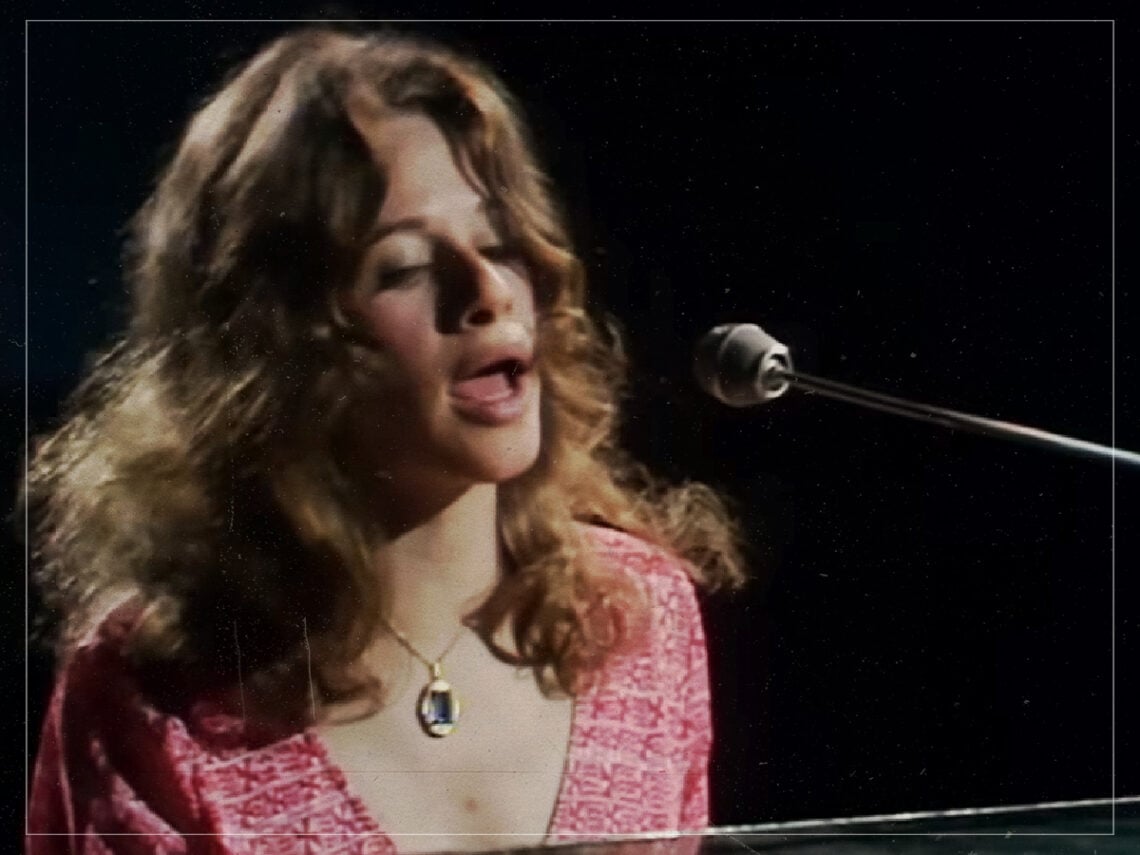
The 1960s musician who “sets the bar” for all singers and Carole King

Despite being one of the most prolific songwriters of the late 1960s, experiencing chart hits in a time when the competition was rife, for some bizarre reason, Carole King didn’t quite believe in herself as much as she should have.
For too long, she assumed the quiet role of songwriter. Alongside her partner Gerry Goffin, King was responsible for delivering hits that other artists made famous, most notably Aretha Franklin’s ‘(You Make Me Feel Like) A Natural Woman’ and ‘You’ve Got a Friend’ by James Taylor.
Those two artists were the grateful beneficiaries of King’s kindness, which was also laced with timidness, a warped idea that, for some reason, she belonged in the wings rather than on stage. In fairness to King, Franklin and Taylor, perhaps, proved her point, as they weren’t hamming up her initial compositions in some baseless cover performance but rather taking the words she had written and elevating them to their own styles.
The way in which they interpreted her great work only went further to prove that some writers are better at fulfilling the unsung role while others are born to perform it. And while Franklin’s voice was one of a generation, it was actually Taylor who affirmed that idea for King, noting the folk icon as someone whose genius was so unbearably difficult to comprehend that it frightened her into singing herself.
“I work at it,” she timidly said, in keeping with her modest manner, “James Taylor sets the bar because James has always had the attitude that if you don’t use it, you’re going to lose it. And so when I sit at home, I put together a playlist, and I sing along. If I can’t make the notes, I sing harmony. But I do sing every couple of days just to make sure I use my voice. And so far, so good. Knock on wood.”
Maybe King took Taylor’s words to heart, though, because while she was willing to gift ‘You’ve Got a Friend’ to the folk musician, for his record Mud Slide Slim and the Blue Horizon, she too decided to include it on her record of the same year, Tapestry.
On Tapestry, you could hear the process of King breaking out of her songwriting shell and becoming an artist who was honing her craft through repetition. Like Taylor, she was abiding by the rule of if you don’t lose it, you’re going to lose it.


And so, it didn’t matter that her songs were now living in the shadow of Franklin’s powerful vocals or the delicacy of Taylor’s delivery; they could exist happily in her own world, lifting the soul of the song, which felt more powerful than ever she was performing it.
Once King hit her stride on Tapestry, performing songs like ‘It’s Too Late’ and ‘Will You Love Me Tomorrow?’, hits that hadn’t been touched by the influence of anyone else, she was operating at a level of her own. No longer did Taylor feel like the standard, but rather an ally at the very top of the music mountain.

Never Miss A Tale
The Far Out Classic Rock Newsletter
All the latest Classic Rock content from the independent voice of culture.
Straight to your inbox.