


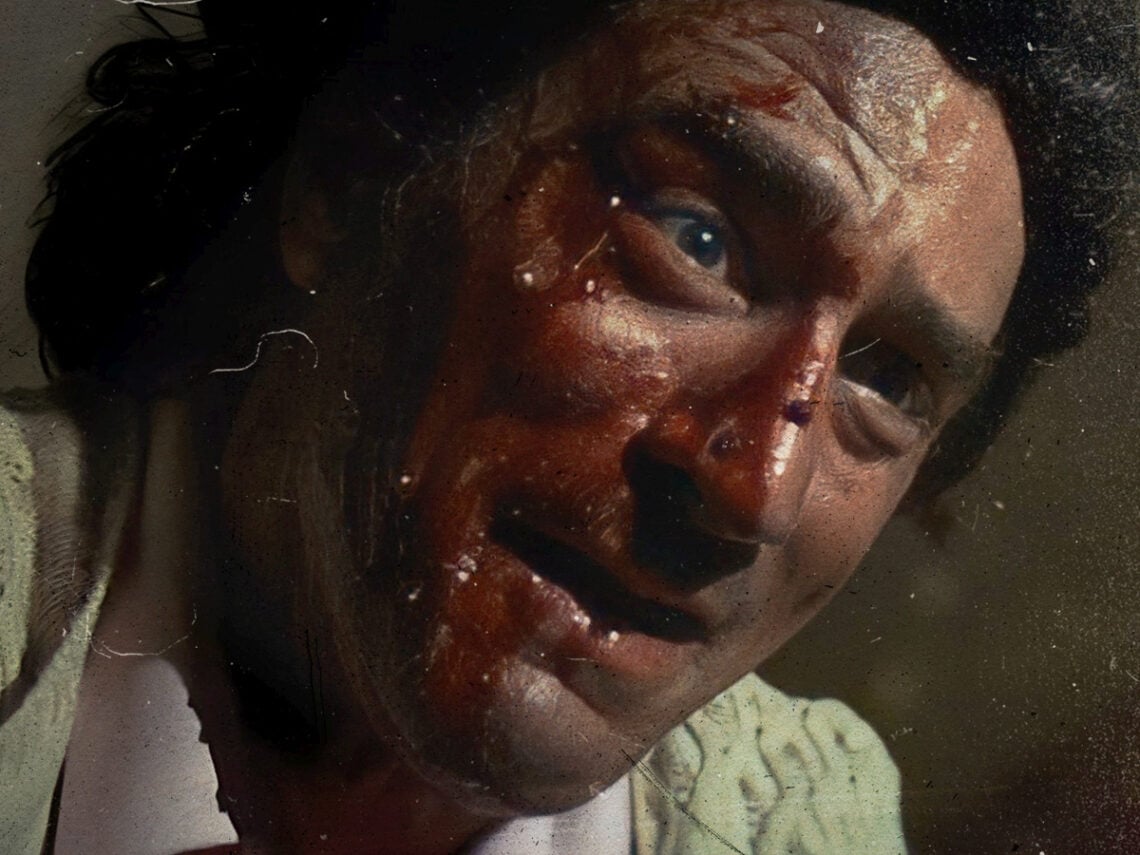
Is ‘Cape Fear’ Martin Scorsese’s most challenging movie?

In more ways than one, 1991’s Cape Fear marked a huge departure for Martin Scorsese as a filmmaker, and not just because he was venturing outside of his original wheelhouse to direct the remake of a literary adaptation.
Cape Fear also broke new ground genre-wise, with the tale of Robert De Niro’s Max Cady terrorising the family of Nick Nolte’s Sam Bowden after he knowingly withheld evidence that forced the former to spend 14 years behind bars, marking his first foray into the pulse-pounding thriller.
While Scorsese had proven himself mightily adaptable on a stylistic, narrative, and thematic level countless times over during his lengthy and storied career, he wasn’t beyond admitting that Cape Fear posed a unique set of challenges that he’d never encountered before, and not just his exclamation to The LA Times that “I’ve made so many films about Italians!”
Although it’s the most common method of structuring a narrative feature, Scorsese found himself unused to working with a linear plot. Originally inspired by the New Wave era, the director admitted that dealing so heavily with A-to-B story progression and exposition was something he wasn’t familiar with: “It’s handling the exposition that is most challenging and disturbing to me at the same time. And a lot of times I feel my strengths are elsewhere,” the director commented. “I certainly don’t throw it away; I try to express it in camera moves, turns, close-ups, tracking shots, whatever. There is a sequence of locking up the house that’s kind of funny, kind of nice. A lot of wild compositions and stuff. Camera at weird, disorienting angles, to keep it edgy.”
To put his own distinct spin on the linear format, Scorsese also shot dialogue-heavy scenes with two cameras running at the same time, with his longtime editor, Thelma Schoonmaker, explaining his determination to make something as seemingly simple as an exchange between two characters pop off the screen: “[He used] very dramatic camera moves, deliberately making them more visible to the eye,” in order to create tension from images on the periphery of the frame as much as the dialogue.
Even the haunting interaction between Cady and Juliette Lewis’ Danielle Bowden was shot unconventionally, with the duo not rehearsing the scene once. Instead, it was captured three times from two different angles by Scorsese, so there wouldn’t need to be any cuts made in post-production.
Scorsese famously wasn’t sold on the prospect of Cape Fear to begin with, and it took external pressure from both De Niro and Steven Spielberg to make it happen. In fact, part of his reasoning was that he owed a debt of gratitude to Universal, after the studio had supported him through the controversy that came attached to The Last Temptation of Christ.
For the majority of filmmakers, shooting a thriller with not only literary grounding but a previous live-action adaptation doesn’t sound as if it would be a monumental challenge, but it speaks to Scorsese’s approach to cinema that the concept of helming a linear narrative that many audiences would already be familiar with presented its own set of brand new headaches.
With a remake having been announced for the small screen with Spielberg and Scorsese both attached to executive produce, the next person to pick up the mantle on Cape Fear has a tough act to follow.
