


Can a parody song ever be truly great?

In just a few short weeks, the legacy of Spinal Tap will either be immortalised or left in ruins – that’s the risk they run by doing a sequel.
But as the rocks of ‘Stonehenge’ once again begin to quake in fear, it begs the question of whether, by its very nature of being a parody, things are actually meant to be just a bit rubbish.
It may seem a very rudimentary point to make to the legions of those who worship comedy music like the sacred texts, but surely, by calling a parody song great, it’s a bit of an oxymoron in itself. By the virtue of something which mocks or derides another art form, there’s nothing of good quality or high taste about it – yet still people lap up parodies almost more than the originals.
Spinal Tap is the most pertinent example, with the fictional heavy metal trio shortly set to reunite for one final rodeo – or, at least, that’s the story they’re fooling us with so far. Certainly, they’re pulling out all the stops to make it seem like the unmissable event of the century, with Elton John even lending a hand to the newly-released version of their hit single ‘Stonehenge’ and making a cameo appearance in the film alongside Paul McCartney. But even 30 years ago, would these bona fide rock legends and very serious musicians be seen dead turning themselves into laughing stocks?
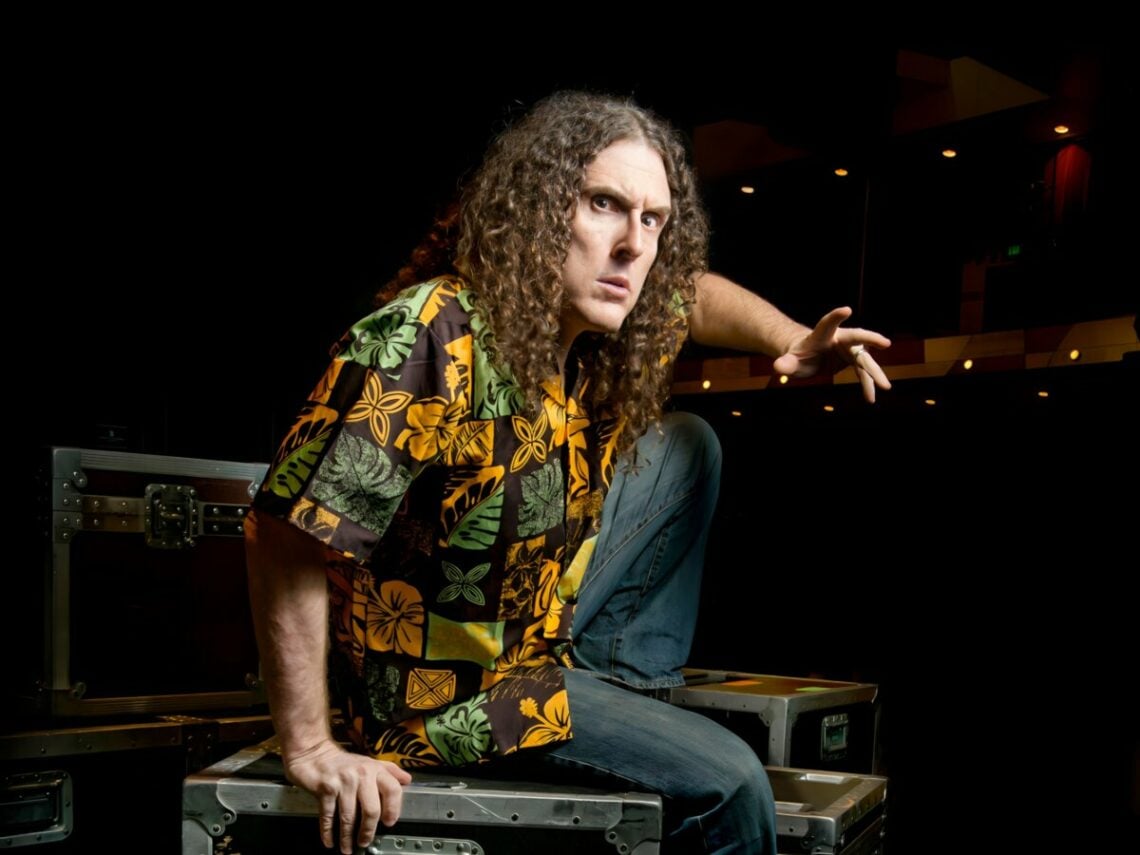
The answer is most likely not, but what’s changed in that time is that parody sells. No one likes the pomp and the flair of the music industry as much as they once did, and it actually does better for your image just to take the mick. It’s the reason why comedy and parody artists have had a second wind in recent years in the mainstream, with everyone from Spinal Tap to ‘Weird Al’ Yankovic cashing in on the zeitgeist.
Of course, Yankovic is no stranger to this, having playfully taken aim at a litany of artists over the years, from Green Day to Lady Gaga to James Blunt. But as much as we may all enjoy the ribbing of the latter’s ‘You’re Beautiful’ into ‘You’re Pitiful’, it’s just not what you can class as profound art – not that everything needs to be that way, though typically this is a precondition of greatness.
However, that then leads you down the rabbit hole of questioning what the notion of greatness really consists of, if it is only to be regarded among the upper echelons of society. Surely its closed-mindedness inadvertently makes it a sham too? Taking Yankovic and the likes of Flight of the Conchords into account, whose songs have roundly received critical acclaim in the form of Grammys and Emmys, by gaining recognition from the elite, is that making a mockery of the original mockery?
Before anyone breaks out in a strong sweat, it’s maybe worth stepping back for a little perspective. Of course, a parody song can be considered great on the basis of its comic ingenuity and the metatextuality of the artist or track it is taking aim at, and rightly deserves its own league of status in that respect. But when you lace it in with the real world, the genuine and the comedic can risk becoming too intertwined, where true efforts risk being cast off as parody, and the mockeries considered pastiche.
Yet there is one outlier in all of these definitions: Bo Burham. His music is not quite parody, not quite comedy, not quite outright pop. Just somewhere in between. There are elements of mockery towards the pop canon laced throughout the course of his work, particularly on projects like Inside, which then got reflected back on to him when musicians such as Phoebe Bridgers decided to cover those songs.
But even long before them, taking into consideration a song like ‘Art is Dead’, there’s almost a parody within a parody. Mocking the nature of fame and attention, while singing a song to attract fame and attention, is all very meta – but it also elicits the sense of true parodical greatness, after a long time of searching.
Picture the scene: Burham was a rising comedian back in 2010, but through his special Words Words Words, where he sat down at a piano and performed ‘Art is Dead’, which then launched him on to even bigger critical acclaim, he became his own demon in the lyrics: “My drug’s attention, I am an addict/ But I get paid to indulge in my habit.”
Creating your own parody, without even realising it, might be the greatest parody of all.
