


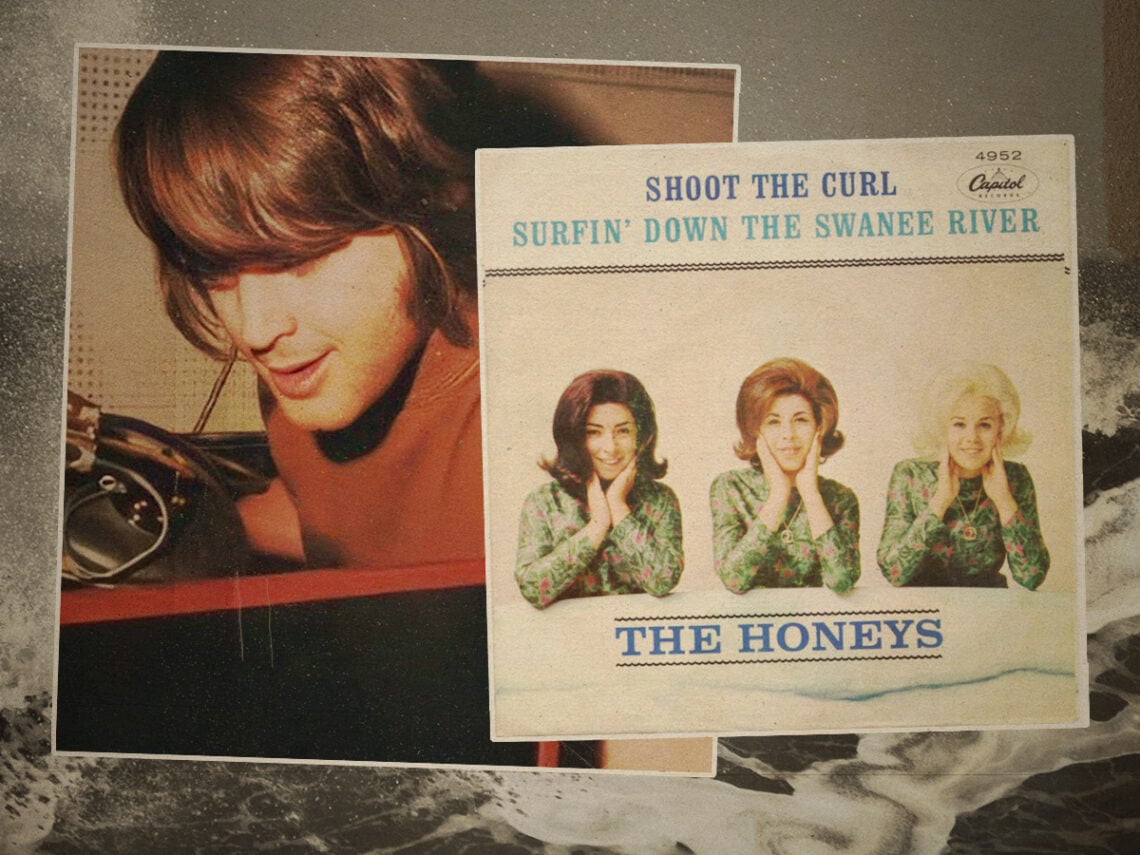
When Brian Wilson became a music mogul and started his own girl group

Brian Wilson was many things – a genius and a pioneer, certainly, but a music mogul is perhaps not a talent that instantly springs to mind. Yet his foray into management was simply just another addition to the many strings to his bow, so much so that it largely got overlooked in defining the legacy of a sonic icon. But believe it or not, he tried to give his own Beach Boys a run for their money by creating a band of surfing girls.
Of course, to name them The Beach Girls would have been far too on the nose, but this was essentially the genesis of the idea when he stumbled across The Rovell Sisters and took them under his wing, eventually renaming them The Honeys. The band’s family bond, much like The Beach Boys themselves, meant that the three sisters had a lot in common with America’s favourite shining surf group, and it was on this craze that Wilson was keen to capitalise.
Indeed, the choice of name with The Honeys was not intended to be as objectifying as it perhaps sounds, as on the California circuits on which they were all raised, it was considered a slang term for girls who surfed. As such, with the sisters Barbara, Diane, and Marilyn Rovell seen as the perfect beachy counterparts for hitting the waves, their success as the next big girl band was inevitable – or was it?
The thing is, as much as Wilson was seen as a god among men in his own right, his powers were not so omniscient that he could dictate the path of popularity. Only the singular force more potent – the masses – could decide that. Success came a little in the band’s direction when Barbara left and was replaced with their cousin Ginger Blake, thus instigating their name change, but they were still waiting to catch their first wave.
As the years rolled on, the 1960s largely became defined for The Honeys on singing back-up for various other male surf bands, including The Beach Boys themselves on ‘Be True to Your School’ as well as the likes of Jan and Dean with ‘The New Girl in School’ and ‘The Little Old Lady from Pasadena’. But despite Wilson’s usual mystical ways in music, ultimately nothing could get The Honeys shifting up the charts in their own right.
In the end, it took until the best part of two decades later, in 1983, for The Honeys to release their own album, Ecstasy. But with the sound of the ‘60s surf left long behind, there was nothing about the band that resonated in the cultural zeitgeist, and the record was critically panned, leaving the girl group’s sonic destiny as one that had spark but never turned into a firework.
However, the more eagle-eyed Beach Boys fans among you may have noticed a familiar name cropping up amid all the commercial misery. Indeed, a large part of Wilson getting behind The Honeys was because he started dating Marilyn Rovell, whom he would later go on to marry and have his children with. Although their union wasn’t the most harmonious – Wilson’s mental breakdown in 1966 was attributed to their divorce – the melodies of their marriage were, in many ways, reflective of The Honeys themselves. It had potential, but just didn’t manage the end result.
It just goes to show that Wilson wasn’t completely infallible. Music, money, fame, and power took him a long way without question, but when it came to trying to manipulate the sonic fates of others – well, that’s something that’s written in the stars, never to be seen by those who are simply attempting to connect the dots.
