


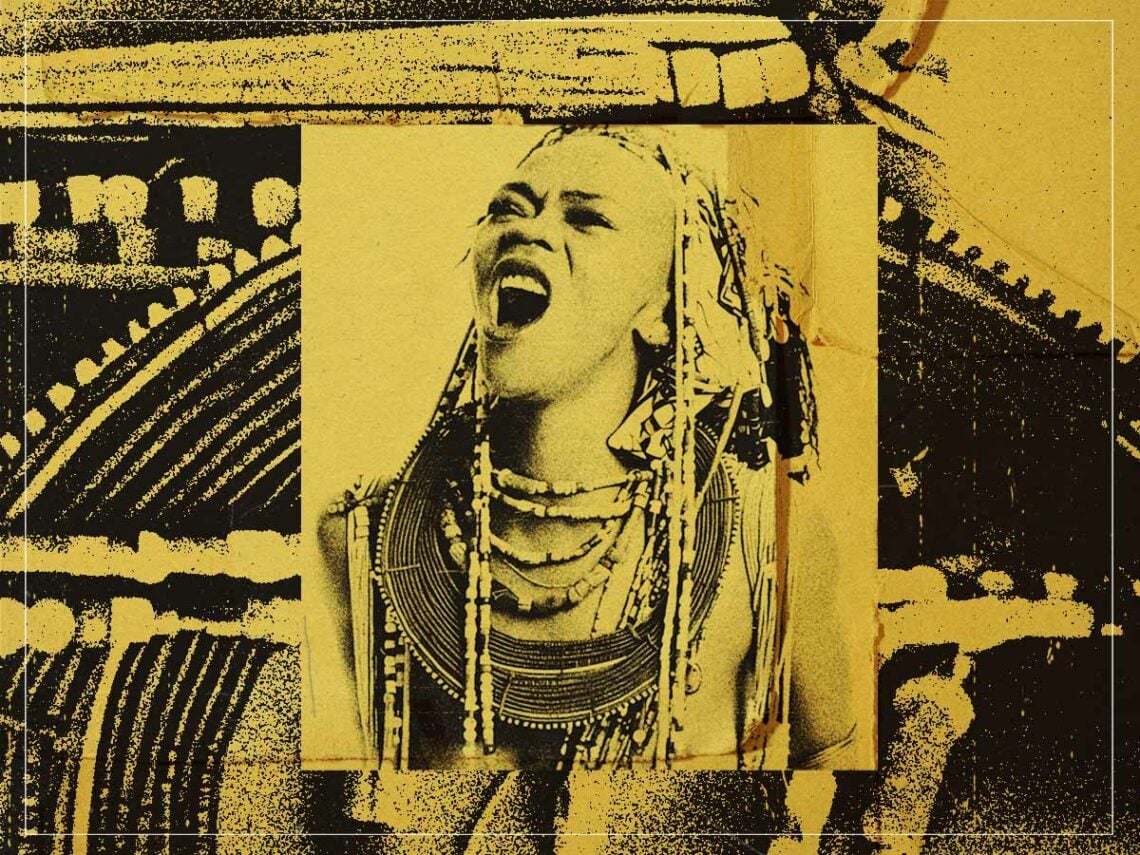
Brenda Fassie, South Africa’s answer to Bob Dylan?

With a personality as vibrant as her anthemic songs, Brenda Fassie was a true icon of South African pop music. From her beginning in a disco-inspired bubblegum group to her trailblazing solo career, her material served as the soundtrack to her country’s liberation from apartheid. Given her exploits, Fassie’s political songwriting and diva persona saw her compared to both Bob Dylan and Madonna in her time.
Brenda Nokuzola Fassie was born in Langa, Cape Town, in November 1964. Across the water, less than 30 miles away, Nelson Mandela had just been imprisoned at Robben Island. Her career over the next few decades would one day see her perform for Mandela and release the anthem ‘Black President’ as a tribute to him.
Fassie’s interest in music started at an early age. She started her first band – the aptly named Tiny Tots – at just five years old, supported by her pianist mother. She honed her talent throughout her childhood and was soon on the radar of South Africa’s producers and record labels. At 16, Fassie met producer Koloi Lebona and moved to Johannesburg to start her professional music career. It was here that she joined the soon-to-be-legendary group, The Big Dudes. Their 1983 bubblegum single ‘Weekend Special’, with a young Fassie on vocals, sold over 200,000 copies. And just like that, Brenda Fassie had found her fame.
In the late 1980s, Fassie split from the Big Dudes and began to release music as a solo artist, starting with her record Brenda in 1987. The bright synths and powerful vocals on the opening track ‘Izolabud’ heralded Fassie’s arrival as a pop musician in her own right. Her greatest triumph, though, would be in 1990, when she released ‘Black President’.
Far from the disco-influenced sound she was known for, ‘Black President’ is a soulful, almost gospel-like ode to Nelson Mandela and his campaign against apartheid. The lyrics recount the “brutality” of Mandela’s arrest and the “many painful years of hard labour” that he and other anti-apartheid activists endured. Its explicitly political message meant it was immediately banned by Frederik de Klerk, South Africa’s president at the time. Despite this, ‘Black President’ became a rallying cry for Mandela’s own presidency and cemented Fassie’s beloved status.
Fassie’s music made her a celebrity, but her outrageous personality made her an icon. Her electric stage presence mirrored a riotous personal life that included love affairs with both men and women and even being sued for fraud alongside her husband, Nhlanhla Mbambo. As is sadly the case with many artists who find stardom young, Fassie also faced a lifelong struggle with substance abuse.
Tragically, Fassie’s rock star lifestyle would eventually lead to her death from a cocaine overdose in April 2004, aged just 39 years old. Over nearly four decades, Fassie had seen her country experience apartheid, struggle and hard-won liberation. As reported by BBC News following her death, Fassie’s family said her fans should not mourn her but should celebrate her memory with her music. Many of her hits are still adored in South Africa today, from Cape Town to Johannesburg and beyond.

Never Miss A Tale
The Far Out Bob Dylan Newsletter
All the latest stories about Bob Dylan from the independent voice of culture.
Straight to your inbox.