


‘Boyfriends and Girlfriends’: Éric Rohmer’s tale of scrutiny and stifling indecision

“I wish I could be as happy as I am with you now, with someone else”.
Éric Rohmer was a true master of capturing emotional grey areas, articulating feelings and quandaries that anyone else might find impossible to put into words. Through his scathing yet compassionate perspective, he would subtly expose the intricacies of the human psyche through characters in the midst of moral and romantic dilemmas, creating moments that could be cliché in the hands of anyone else, but avoiding so by exploring the emotional fallout of each situation with true depth and nuance, leaving no stone unturned.
His stories are full of life, colour and authenticity, imposing a fly-on-the-wall feeling to those who observe them, seeing life unfold in its simplest form. They enrich our understanding of the world and innermost desires of the people all around us, creating a vivid universe in which everything revolves around the whims and selfish desires of the characters who populate them, often mirroring human infallibilities and flaws that we all share.
But while many of Rohmer’s films focus on characters who are searching for love and intimacy, there is one film of his that looks at the tail-end of this plight, revolving around two women who claim to be searching for love, but are secretly pining for something else that contradicts this, leading to one of Rohmer’s most poignant and devastating tales from Comedies and Proverbs series.
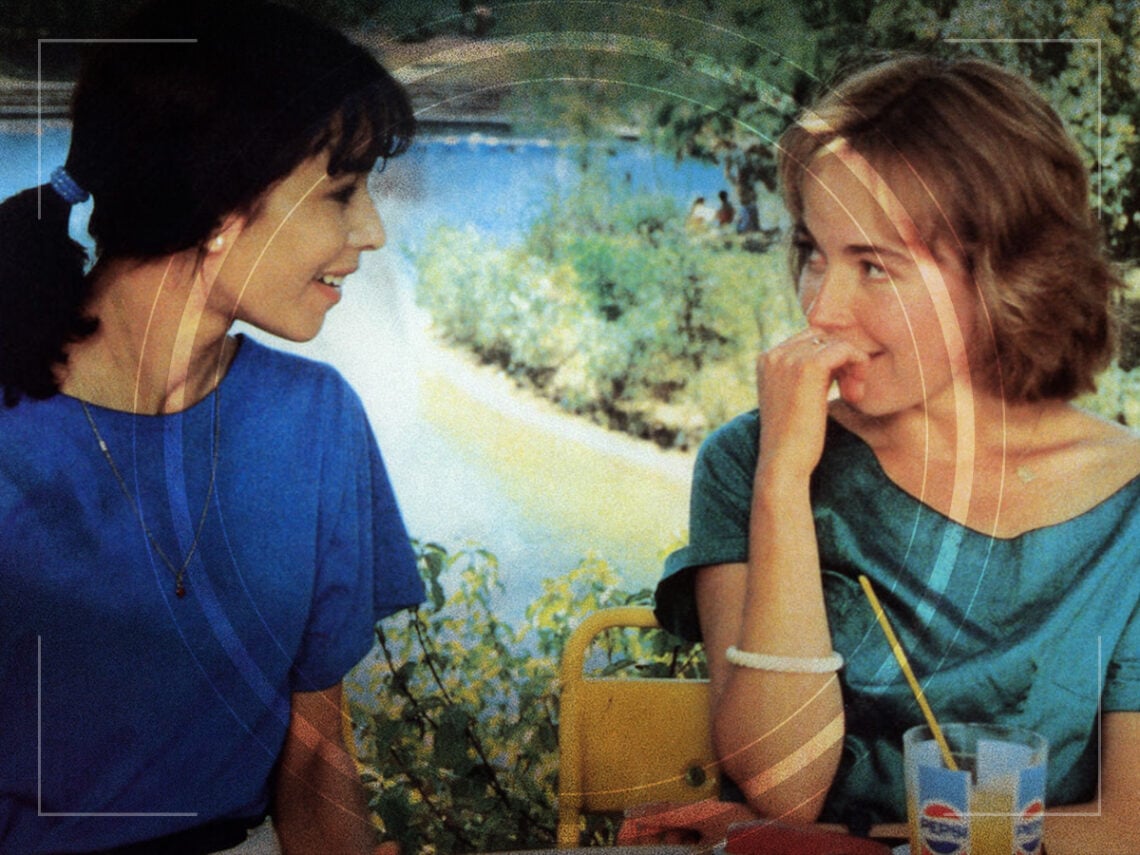
Boyfriends and Girlfriends, released in 1987, is based on the French proverb “Les amis de mes amis sont mes amis”, which translates to “my friend’s friend is my friend”. The story follows two women, Blanche and Léa, both with new jobs and apartments in a small town, who one day meet serendipitously and become friends.
On the outside, their lives appear to be perfect—they live in a newly designed town, both in stylish apartments, with comfortable jobs that afford them financial stability and agency. This is very much a common strand within Rohmer’s work, with his stories reflecting the feminist ideas that began to bleed into cinema, hinging around working women who have achieved economic liberation, but are somewhat stuck and unfulfilled in their personal lives. In films like The Green Ray and Full Moon In Paris, the women might have jobs, apartments and holiday homes, but often their greatest struggle comes from not being able to find true love or respect from men, something that manifests in a fascinating way in Boyfriends and Girlfriends.

What is interesting about Blanche and Léa, is that while both of them are supposedly searching for love to complete the package of adulthood, the pair are secretly pining for something else: not love, but validation from people who affirm the versions of themselves they want to be, leading them to feel trapped when faced with true love from people who hold a mirror to their true selves. The struggle is further complicated by the fact that both women fall for the other’s boyfriend, creating a sticky situation that highlights the vapidity of our desires and what it means to deny our true feelings for the sake of maintaining a false image that ultimately isolates us.
Throughout the film, both women find themselves tempted and tortured by their feelings for their friend’s boyfriend, despite initially not liking either of these men because they go against their carefully curated images. Both are in their 20s and on a journey of misguided self-discovery, trying to live lifestyles that will make them appear as though they have it all. But after they both fall for men who aren’t their boyfriends, they spiral into a state of panic as they become suffocated by their own indecision and the overwhelming scrutiny they feel about making a final choice.
Both begin to distance themselves from each other, feeling guilty about dating the other’s partners while also stringing along their current boyfriends. This sense of scrutiny is highlighted by the setting of the film, taking place in a modern town that is defined by huge open spaces in which everything is exposed and laid out in the open. As they sneak around town with the other’s lovers, there is this heightened feeling of scrutiny and being under a microscope, something that is also exaggerated by the layout of their apartments. Blanche’s apartment in particular is designed like a panopticon, with huge windows that overlook a plaza with hundreds of other windows that gaze at her own, increasing her sense of judgement and visibility as she struggles to make a decision over which man to be with.
Rohmer also explores their sense of indecision through the colour palette, opting for a range of bright primary hues in which each character is defined by a clear colour scheme. But throughout the film, as their desires change, their individual palettes start to change, eventually fully switching to the colour palette that the other was wearing.
By the end of the film, both women no longer see each other and have completely swapped boyfriends, finally making peace with who they truly are, and the romantic partners reflect this. They are no longer concerned by the illusions of self they were trying to maintain, free from their internal sense of probing pressure. It’s a surprisingly optimistic ending from Rohmer, where many of his films end with characters who don’t find peace or continue down self-destructive paths for fear of finding intimacy that will reveal their most vulnerable selves.
The final scene shows Blanche and Léa bumping into each other again after switching boyfriends, wearing the colour scheme that the other wore at the start of the film. Neither are upset or disturbed by the obvious implications of what has happened, greeting each other as long-lost friends, almost as though nothing happened, accepting love that affirms who they truly are, free as the corners of the city they inhabit.
