


‘Is It Love’: Tracking the origins of a forgotten northern soul floor-filler

Northern soul is a scene that has always favoured the obscure, overlooked and forgotten artists of days gone by. Ever since the scene first sprang up in the industrial towns and cities of northern England back in the late 1960s and early 1970s, northern soul obsessives have been on a seemingly endless quest to find old American soul records which have never been heard before. Today, decades after the original wave of northern soul, there are still countless gems hidden in crates of vinyl singles.
I was born too late to visit Wigan Casino, The Twisted Wheel, or any of the other venues which became infamous in the heyday of northern soul, but my appetite for musical discovery, along with a growing record collecting addiction, quickly led me down the path of northern soul obsession. Now, my spare time is invariably spent scouring record stores, second-hand shops, and online forums looking for infectious soul sounds that might have passed the mainstream by. This is how I first came across the groundbreaking sounds of Boston Tea Party.
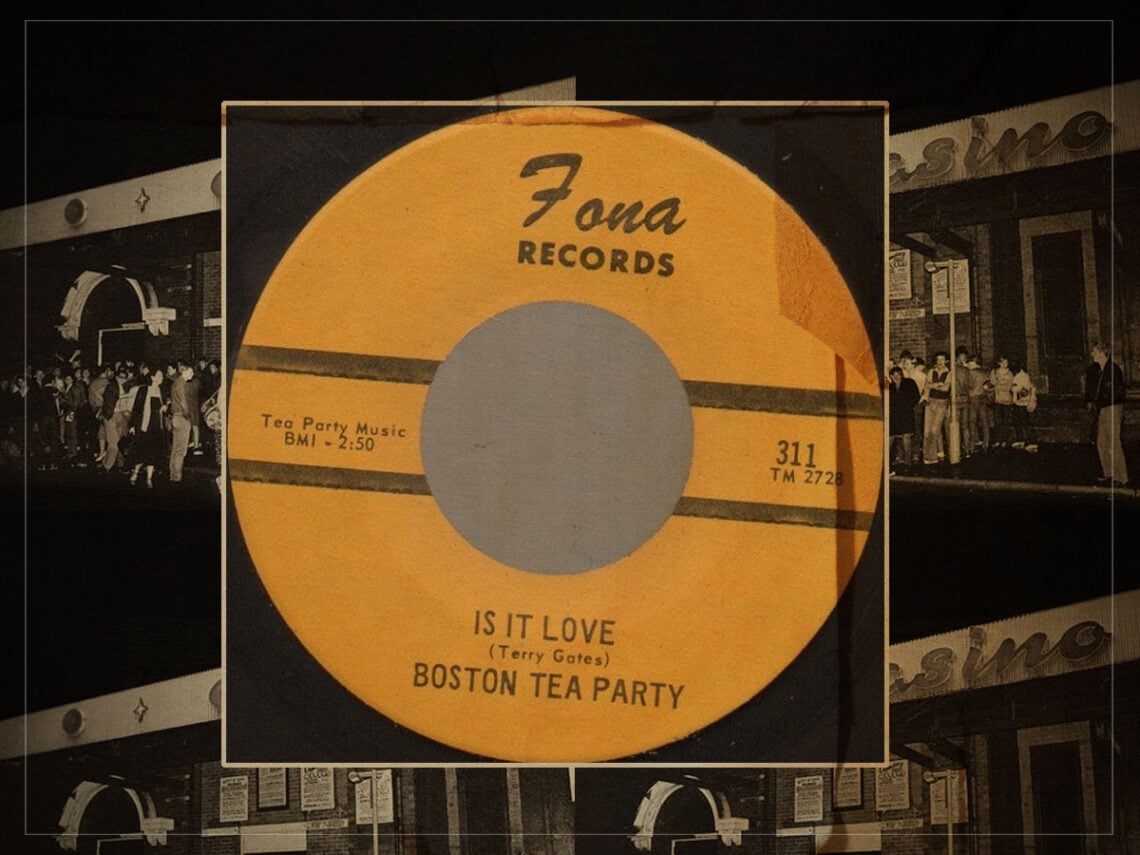
Hiding within a handful of singles I had bought from a northern soul dealer on various whims was a shiny black disc with a bright yellow label. The writing on said label told me the record was ‘Is It Love’ by Boston Tea Party, a band I had never heard of before on a label, Fona Records, which was a similar mystery. Still, the song commanded my attention as soon as my stylus clicked into the groove.
Opening with an intense, distorted voice questioning, “Is it looooooooove?” before kicking into a commanding R&B beat, the single stopped me dead in my tracks. I felt as though I had just discovered one of the best-kept secrets in R&B history, and my mind was instantly filled with questions: Who were these people? Did they record anything else? And why does nobody else I speak to know about this song?
In an effort to spread these infectious sounds to wider audiences, I inserted the single into my DJ sets for a number of months. The psychedelic introduction and booming groove cut through the dancefloor with ease, and ‘Is It Love’ quickly became a highlight of my sets, but those questions were still rattling around in my brain. I had to find out more about the origins of this mystical R&B outfit, but the only information that the internet could tell me was that the band was from Chicago, existed at some point during the 1960s, and only released that one single.

Eventually, however, my research led me to Al Dawson, an Illinois percussionist who claimed to have had a stint with Boston Tea Party during his teenage years, before going on to join The Cryan’ Shames. “I was probably 16 or 17 years old at the time and my recollections are vague at best,” Dawson told me, but the drummer did kindly point me in the direction of Terry Gates.
As it turns out, Gates was the mastermind behind Boston Tea Party, performing vocals and rhythm guitar for the band, in addition to writing ‘Is It Love’ and its B-side, ‘Don’t Leave Me Alone’. Dawson fondly recalled, “Terry had to make fake IDs for me (he was quite good at it) so I could play in the bars, which was forbidden if you were under 21,” and, before too long, an email landed in my inbox from the man himself.
Eager to share memories and stories from his days with Boston Tea Party, Gates and I went on to exchange multiple emails, which shined an unparalleled light on the history of this forgotten band. According to Gates, the band started out in the Glenview and Northbrook areas of Chicago, under the name Bots in around 1965.
During those early days, the band performed regularly at local venues, with The Cellar in Arlington Heights sticking out for Gates. ”It was the home of the Shadows of Knight,” he recalled. “On their album [Gloria], the back cover is a picture of the stage with the word ‘Bots’ on the wall, that was our name in 1965.”
Bots was built around Gates’ partnership with guitarist Bill Waidner, but it expanded to include various Chicago performers when it morphed into Boston Tea Party in 1968. “Bill Waidner and myself were the core of that band,” he shared. “We added Mike Carr on B-3 plus sax and Dave Curtis on bass. Bill became lead guitar, I played rhythm guitar and sang. We added horn players and had Frank Donalson on drums. He became Ramsey Lewis’ drummer later.” Gates and Dave Curtis are now the only surviving members of that original line-up.
With that original line-up, the band earned a spot as the live band behind Archie Bell and The Drells. As Gates put it, “[Boston Tea Party] came about from a tour we had in 1968. We were the band behind Archie Bell and the Drells – ‘Tighten Up’, a number-one hit.” Explaining how a Chicago garage R&B outfit ended up supporting Archie Bell, he shared, “Archie was in the army when the record hit. The Army released him from Germany for a tour including stops in the USA. We did TV shows and toured the USA.”
It was this tour with Archie Bell that properly launched Boston Tea Party. “We made over $2k a week on the road,” Gates fondly remembered. “We were hired by his manager from Houston, Texas, while playing at the Aragon Ballroom in Chicago. We were working with a producer from Chess Records in Chicago. I believe ‘Is It Love’ was recorded there.”

In the end, the single was issued on Russ Carlyle’s short-lived Chicago label Fona, rather than the soul powerhouse of Chess. Seemingly, though, Boston Tea Party were having far too much fun on the road with Archie Bell to mind. Over the course of multiple email exchanges, Gates regaled me with tales of performing on national television with The Temptations, rubbing shoulders with the stars of Motown, and living the archetypal life of a young group immersed in the golden age of American music.
“‘Is It Love’ was played on many stations while out on tour. Coming over a hill in Philadelphia, we heard it on the radio; the van went nuts hearing it,” he remembered. “The Temptations had a party after the TV show; there were many Motown people there.” He added, “We went back to Chicago just in time for the Democratic convention of ‘68 – saw all the riots and burning of the West Side.”
Although it was amazing to hear these tales from back in the day, one question still remained in my mind: what happened next? It doesn’t make sense for a band to tour the US, appear on television, release a single, and then disappear into the ether. As Gates recalled, their time with Archie Bell came to an end when “Archie went back to Germany to finish his tour of duty.” Waidner and Mike Carr then reportedly splintered off to join fellow Chicago group Four Days and A Night.
The lineage of Boston Tea Party continued, however. Waidner ended up joining the folk-prog outfit Aura, and can be heard on their self-titled 1971 album, while Gates worked for many years as a stagehand, roadie, and sound engineer for countless bands passing through Chicago, ranging from The Rolling Stones to U2.
Meanwhile, Al Dawson went from his teenage stint with Boston Tea Party to The Cryan’ Shames, who were inducted into the Illinois Rock and Roll Hall of Fame in 2023. “We recorded three albums for Columbia Records, although I was drummer for only the last (and best!) one, Synthesis,” Dawson told me.
Although it seems that ‘Is It Love’ is the only single Boston Tea Party ever got to record, Gates was kind enough to send me an unreleased track recorded by himself, along with Waidner, Curtis, and a handful of other Chicago musicians during the early 1980s. Entitled ‘Heaven Knows’, the track sees the former Boston Tea Party members take on a more rock-centric sound. According to Gates, the song came about as part of an album deal that seemingly never came to fruition.
Boston Tea Party might only have lasted for a few years, but their music can still command a dancefloor in the 21st century, as I have found out first-hand through my DJ sets. My journey tracking the origins of ‘Is It Love’ gave me an insight into an entirely different world.
I cannot imagine what it was like to be a touring R&B outfit during late-1960s Chicago, with a backdrop of political unrest and trailblazing artistic expression, but the stories of Terry Gates and Al Dawson, along with the driving beat of ‘Is It Love’, provided unparalleled insight into that period. So now, when other crate diggers and soul obsessives stumble upon a battered copy of ‘Is It Love’, they will at least know the tale behind that awe-inspiring track.
