


Keep The Faith: Exploring the expensive world of northern soul vinyl

There once was a time when you could pick up second-hand vinyl records for pennies, but you only need to float through a record fair to realise that those days are certainly behind us. A brand-new LP could set you back as much as £40, and – while you can acquire those plastic suitcase turntables for less than a ton – a decent hi-fi system could easily reach the £500 mark. Vinyl collecting is a financially demanding hobby, but the strain on your bank balance can multiply tenfold when you start getting into the world of northern soul records.
For the uninitiated, northern soul emerged on the dance floors of northern England during the late 1960s and early 1970s. Taking heavy inspiration from the all-night dances of the mod subculture, venues like Manchester’s Twisted Wheel, The Torch in Stoke, and the famous Wigan Casino played host to hundreds of amphetamine-fueled youngsters dancing the night away to the sounds of obscure American soul records.
Originally, these dances relied on the sounds of Motown, Stax, and Atlantic Records for their infectious soul rhythm, but pretty quickly, DJs began to engage in competitions to see who could unearth the most unknown and infectious soul singles. Collectors of northern soul searched high and low for these unknown tracks, usually on smaller labels like Ric-Tic, Okeh, and Golden World, and often attempted to hide details about the artists or singles in order to keep the song a secret – or a ‘cover-up’, as it became known in northern soul singles.
Inevitably, this search for obscure and unknown singles uncovered some absolute gems, but the vast majority had been pressed in very small numbers in the United States by artists and labels that no longer existed by the time they hit the dancefloors of Wigan. As you can imagine, this meant that certain records boasted hefty price tags on the second-hand market, depending both on their rarity and the danceability of the tracks themselves.
Eventually, labels like Motown – who, by that time, had bought out many of America’s smaller soul labels – caught wind of the northern soul scene and began to re-release songs like The Four Tops’ ‘Reach Out (I’ll Be There)’ or Edwin Starr’s ‘Twenty-Five Miles’. These represses could be picked up for relatively cheap, but dedicated northern soul fans have always coveted original pressings, which invariably cost an arm and a leg.

As with any business, the northern soul market revolves around supply and demand. Take Sandi Sheldon’s ‘You’re Gonna Make Me Love You’, for instance: the song was a colossal floor-filler in the early days of northern soul, but little to no information existed about the artist and countless soul fanatics searched in vain to find a copy of the single.
The single in question had been pressed on Okeh Records in 1967, but failed to sell well and was quickly forgotten about until uncovered by the soul scene. Given its obscurity, few genuine original copies existed, and even fewer could be found in good condition on this side of The Atlantic, which makes its current value of £800-£1,000 seem a little more reasonable.
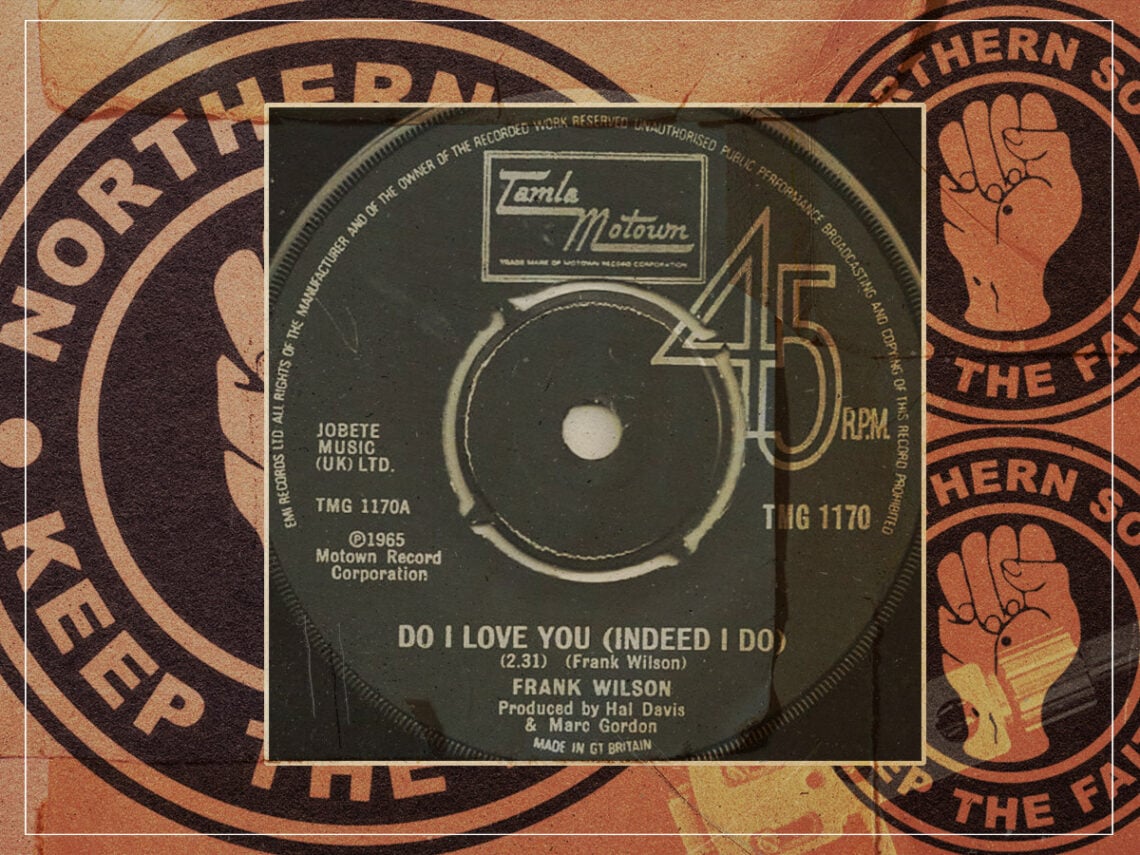
Another prominent example is Frank Wilson’s ‘Do I Love You (Indeed I Do)’, which is inarguably one of the biggest northern soul stompers ever recorded. However, Motown boss Berry Gordy ordered all promo copies of the song to be destroyed, and it is thought that fewer than five survived. Its rarity is unparalleled, and so is its popularity within the northern soul scene. Still, the fact that a copy of the single sold in 2020 for £100,000 (2.4 times the average yearly salary in the UK) seems more than a little ridiculous.
In the intervening decades between the heyday of the northern soul and the present day, many of those original records have become harder to get a hold of. Couple that with an increased level of disposable income for many OG soul heads – many of whom are pushing 70 years old at this point – and you begin to see why many northern soul singles remain incredibly expensive.
Moreover, the recent revival of vinyl as a music format has turned more people onto the infectious sounds of northern soul and has, in turn, driven prices up for soul singles. However, this has also meant that year after year, more of those original northern soul anthems are being reissued on labels like Kent, Outta Sight, and Deptford Northern Soul Club, which offer a cheaper alternative to pursuing original pressings. Sure, these represses might not command the same respect from original soul fans, but we won’t tell anybody…promise.
Of course, you can still pick up a lot of northern soul classics and original singles for under £100, provided you know where to look. However, once you start chasing those obscure cult classics and forgotten soul singles, the hobby of collecting northern soul can become very pricey very quickly. You have been warned.
