


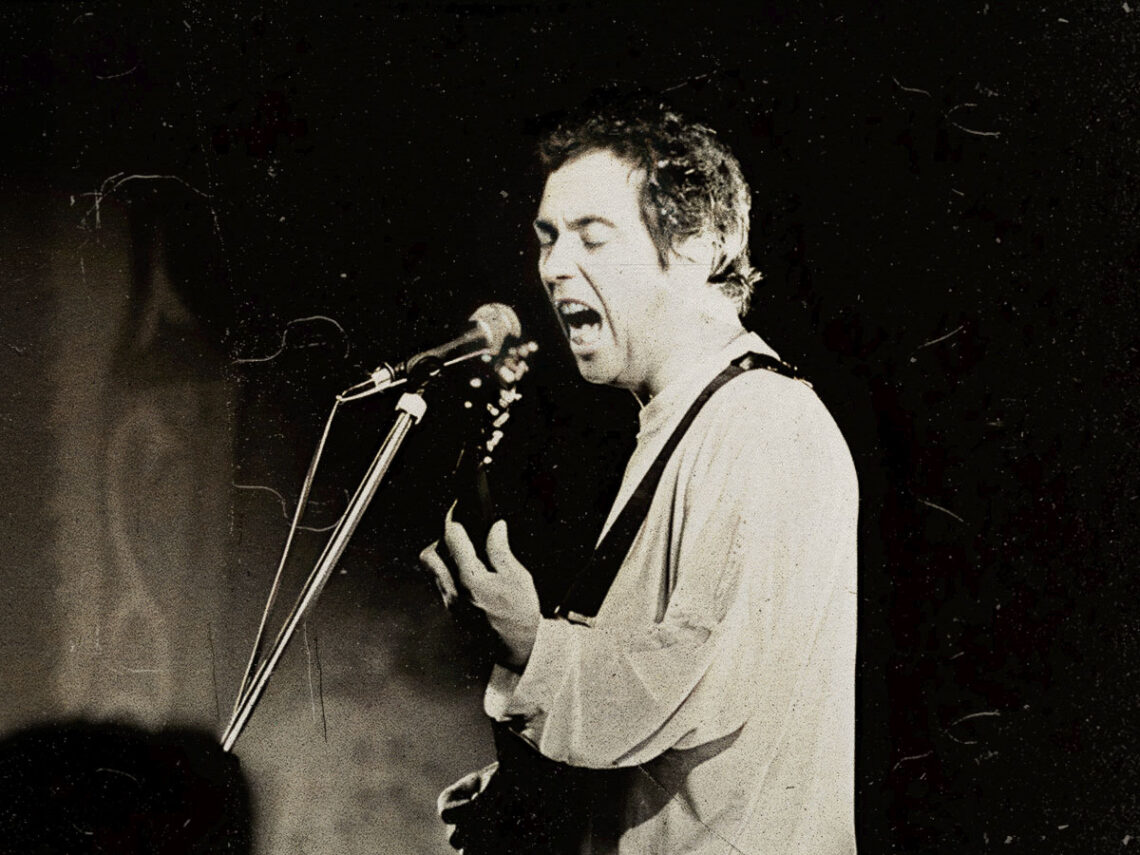
‘Boredom’: How a Buzzcocks anti-guitar solo typified the punk era

From the days of Scotty Moore and the original wave of rock and rollers, guitar solos have always been part and parcel of the musical landscape. By the mid-1970s, though, the advent of heavy metal and hard rock had paved the way for a plethora of overly complex, self-congratulatory solos, which never sat well with the harbingers of the punk revolution.
Punk aimed, after all, to take rock back to its rawest roots, doing away with all the superfluous solos and substanceless guff that had become commonplace within mainstream rock. Hence why clubs like CBGBs and The Roxy were some of the only rock venues of the mid-1970s where you weren’t likely to encounter some bloke with long hair and ludicrously tight trousers entering the tenth minute of his rather dull guitar solo.
That is not to suggest, however, that the punk realm was completely void of guitar solos. If you look back at the early emergence of outfits like the Sex Pistols or The Damned, in fact, solos border on commonplace, even if they were much shorter and far less complex than their prog or metal counterparts. If there was ever a guitar solo that summed up the sonic attitudes of the punk rock revolution, though, it was Pete Shelley’s iconic solo on Buzzcocks’ ‘Boredom’.
A landmark release that paved the way for the entirety of the indie boom, Buzzcocks’ self-released 1977 EP ‘Spiral Scratch’ marked a momentous occasion for the punk world, and ‘Boredom’ was perhaps its biggest stand-out. Reflecting the kind of ‘No Future’ attitude preached by the Pistols, the Shelley-Devoto composition perfectly captured the gloomy spirit of late-1970s Britain, and Shelley’s guitar solo was its crowning jewel.
While other guitarists spend their solos moving frantically across the length and breadth of a fretboard, the ‘Boredom’ solo is composed entirely of two notes – the fifth fret of the B string, and the seventh fret of the high E string – repeated over and over again, thus creating the perfect anti-solo. Not only does that solo fit the track and its ‘hum-drum’ lyricism perfectly, but it also typifies the raw power and DIY ethos of the punk boom.
When punk first emerged in the UK, its manifesto could be summed up in the motto “here’s three chords, now form a band”. The entire scene was about putting the means of musical production back in the hands of ordinary kids, rather than unattainable rock stars like Rod Stewart, who was incapable of speaking directly to the younger generation. None of the original punk bands were particularly skilled musicians; it was all in the attitude.
With ‘Boredom’, Shelley and Buzzcocks boil that ethos down to its core principles, opting for simple power chords and perhaps the easiest to play solo that has ever been recorded. That track acted as a rallying cry for countless other budding young musicians, now armed with the revelation that they didn’t need to be as skilled as Jimmy Page or Eric Clapton in order to be a great guitarist.
It is no surprise that Spiral Scratch went on to become a musical revolution in its own right, paving the way for a multitude of independent labels and self-released records in its wake; it was more of a political manifesto than just another punk EP. ‘Boredom’ and its solo were even referenced in Orange Juice’s indie smash ‘Rip It Up’ years later, reaffirming its punk and indie credentials in the process.
Those long, sprawling guitar solos that cannot help but inspire awe in the minds of rock and roll fanatics certainly have their place, but when it came to the DIY power of punk, nothing could top the sheer revolutionary simplicity of ‘Boredom’ and its enduring anti-solo.

Never Miss A Beat
The Far Out Punk Newsletter
All the latest Punk content from the independent voice of culture.
Straight to your inbox.