


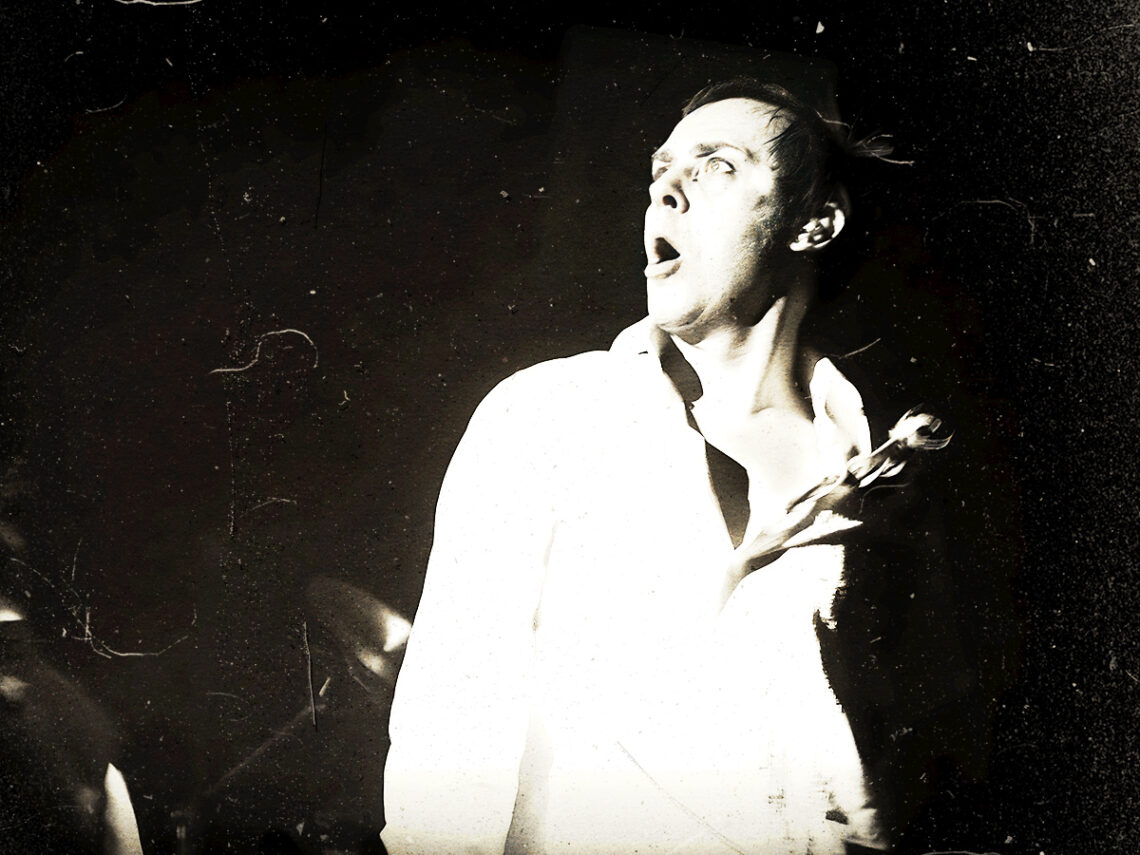
The books that inspired Peter Murphy and Bauhaus

It’s a tag the band are loath to celebrate, but Northampton post-punks Bauhaus are indeed the ‘Godfathers of Goth’, whether they like it or not.
Always cutting a spooky and arcane mark among the UK punk crowd, Bauhaus wrapped their combative aggression with atmospheric keys, frosty pop arrangements, and a strange theatre true to their intrepidly creative fancies while rubbing up the music press the wrong way. In one of the greatest single debuts of all time, 1979’s nine-minute ‘Bela Lugosi’s Dead’s’ haunting dub bass and pestilent guitars would forever cast a shadow over the band like the Count’s eerie outstretched arm: a gothic classic that still shivers evocatively all these years later.
Crucially, they were art students. Bauhaus didn’t just name their band after the famous German modernist school, but borrowed Oskar Schlemmer’s uniform typeface and geometric facial emblem as their defining visual motif. Behind their obvious glam, punk, and psychedelic influences, Bauhaus frontman Peter Murphy was a keen devourer of literature, with numerous authors and their respective works guiding his romantic and stirring lyrical wanderings.
In answer to a fan’s question on his official site in 2024, Murphy collated several key books that have served as inspiration for Bauhaus’ songs, and beyond, in his solo endeavours. As expected, Murphy rustles up a batch of lofty titles that encompass theology, esoteric incorporeality, and key classics from centuries past.
Presenting as a foundational totem and “wellspring of any inspiration”, Murphy plumbs for Julian of Norwich’s Revelations of Divine Love, a collection of Christian mysticism dating back to the 14th century. Then he jumps back 300 years earlier for Sufi preacher Abdul Qadir Gilani’s Futuh Al Ghaib: The Revelations of the Unseen, his most enduring discourses on Allah’s enlightenment. So influential, he was honoured with the title Muḥi al-Dīn and reviver of the Sufi faith.
From here on, Murphy reels off a numbered list with no explanation for its ordering. First off, Oscar Wilde’s The Picture of Dorian Gray from 1890, the only novel the Irish playwright ever published. Depicting the phantasmic tale of the titular aristocrat’s Faustian pact for eternal youth while his portrait soaks up his hedonistic abandon and eerily ages in the attic is breathed to morbid life in Bauhaus’ second single, ‘Dark Entries’. It’s a cracked mirror to the novel’s weird examination of poisonous vainglory and noxious narcissism.
With an oeuvre that dwells in existential fog and cerebral ice, it’s no wonder that Murphy keeps returning to humanity’s key heritage texts from aeons ago. With a presence in both Islamic and Hebrew traditions, King David’s Biblical Book of Psalms is second in Murphy’s literary list, followed by 13th-century Balkh Sufi mystic Rumi’s vast litany of epic poems. Then, staying put in the world of Sufi teachings but pulling us forward to 1979 with Reshad Feild’s The Invisible Way: A Time to Love-A Time to Die.
Lastly, Murphy reaches into the Elizabethan age for Christopher Marlowe’s tragedy Doctor Faustus. A predecessor to Wilde’s aforementioned ghost story and origin of the soul-selling expression, Marlowe’s supernatural play introduced the world to the demon Mephistopheles, Lucifer’s sinister middleman, who gifts Faustus with expert magic skills in exchange for his soul and certain eternal damnation. It’s all hefty and rich material to sink your fangs into, and no doubt has found its way into Bauhaus and Murphy’s solo work on a deep and subterranean level.
Texts that inspire Peter Murphy:
- Revelations of Divine Love by Julian of Norwich
- Futuh Al Ghaib: The Revelations of the Unseen by Abdul Qadir Gilani
- The Picture of Dorian Gray by Oscar Wilde
- Book of Psalms by King David
- Collection of epic poems by Rumi
- The Invisible Way: A Time to Love-A Time to Die by Reshad Feild
- Doctor Faustus by Christopher Marlowe
