


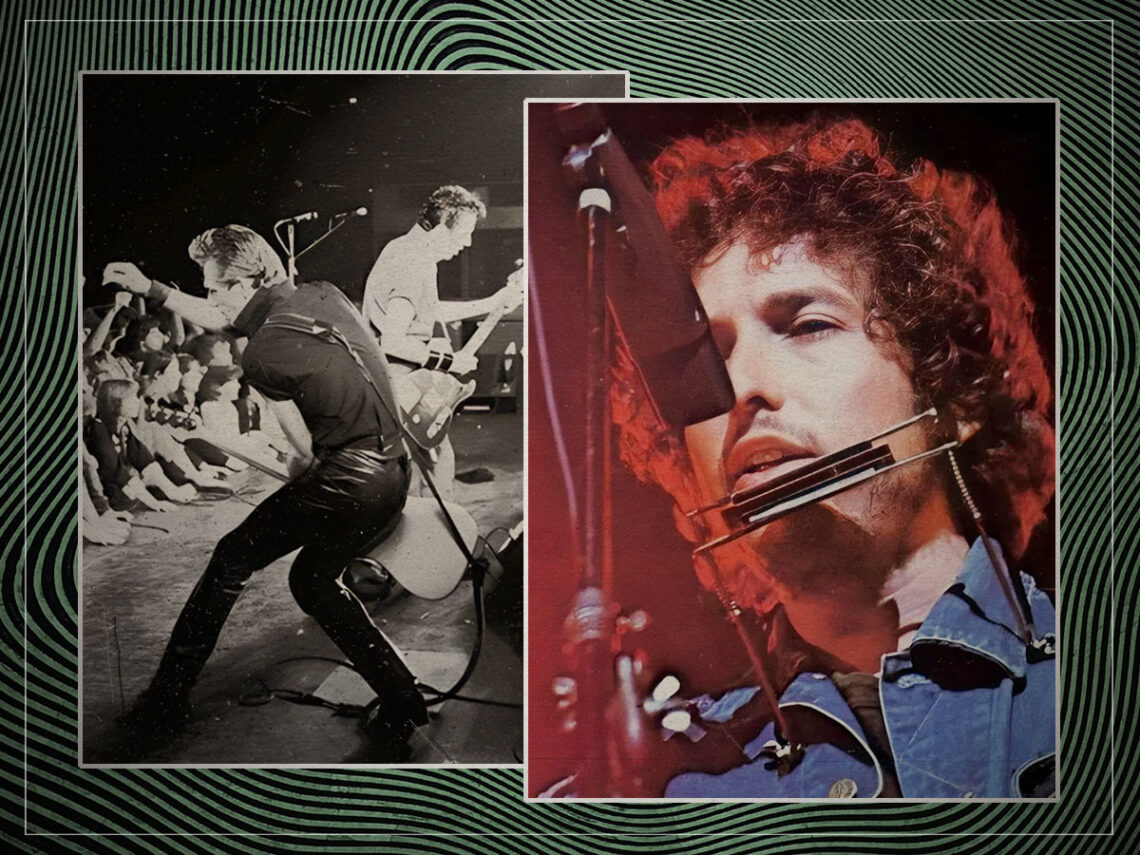
“They have to get it all in”: Bob Dylan’s surprising critique of The Clash

The art of songwriting usually takes years of experience to get completely right. As much as some people like the idea of making their best material right out of the gate, the only way for any artist to reach that first good song is to write a couple of bad ones before learning from their mistakes. Then again, Bob Dylan knew better than anyone that it’s easy for someone to paint themselves into a corner and have nowhere to go after a while.
That’s part of why Dylan’s music always sounded so different whenever he made his records. He was nowhere near the kind of musical chameleon that someone like David Bowie was during his time, but going from folk music to rock and roll to transitioning to country and then later into gospel albums meant that he was always trying to work on something new that would challenge him as a songwriter.
But that kind of artistic discipline didn’t always lead to the fans being happy with him all the time. There were always a few that were willing to go along for the ride every time he made a new record, but there were many instances where people were expecting him to show them the way forward for rock and instead were greeted with a strange musical detour that no one saw coming.
If Dylan had stayed the same, though, he would have never been as legendary as he is today. Even when making his born-again albums in the late 1970s, he seemed to be as concerned with bucking the trend in music as the younger generation was when punk rock was first being created. Each of them wanted to defy convention, but The Clash were one of the few that were actually serious.
“The Clash are different. Theirs is the music of desperation.”
Bob Dylan
For all of the dangerous behaviour that the Sex Pistols got into behind the scenes, it was clear that some of it was an act on John Lydon’s part. When listening to Joe Strummer sing, though, he sounded like what Dylan would have been like if he were a decade younger, taking the tropes of rock music and transforming them into musical assault weapons when working on tracks like ‘Complete Control’ and ‘White Riot’.
Dylan definitely had a keen ear for people like Strummer, but he did realise that the punk legend could be a bit too self-indulgent at times, saying, “The Clash are different. Theirs is the music of desperation. They were a desperate group. They have to get it all in. And they have so little time. A lot of their songs are overblown, overwritten and well-intentioned. But not ‘London Calling’. This is [them] at their best and their most relevant.”
And compared to their former political songs, what Dylan says holds up here. ‘London Calling’ doesn’t have any of the fat of their older songs, and since many of their later records would see them adopt different textures, hearing Strummer make a song this succinct with a message to the British public had everyone at attention the minute that Paul Simonon’s bass tone came roaring in.
Would the band continue to be self-indulgent? Absolutely. One listen to an album like Sandinista will tell you that, but it was never at the expense of being pretentious. Strummer never said anything he wasn’t 100% sincere about, so when he was making music, it was about trying to cram as much of his beliefs into a few minutes as he could.

Never Miss A Tale
The Far Out Bob Dylan Newsletter
All the latest stories about Bob Dylan from the independent voice of culture.
Straight to your inbox.